
Review · THAI COOKING CLASSES
Sukhumvit: Hands-on Thai Cooking Class & Market Tour in BKK
Four meals, made by you in Bangkok.
This Sukhumvit class is interesting because you start with fresh ingredients and end with the skills to cook Thai dishes you actually recognize, not just copycat versions. You also get hands-on training for curry paste and coconut milk preparation, plus you cook and eat four traditional dishes you make yourself.
What I like most is how practical the structure feels: you’re not just watching. The class is built around clear step-by-step guidance, you taste what you cook while it’s still hot, and you leave with recipes sent after class so you can repeat the dishes at home.
One drawback to weigh before you book is simple: the market tour is only for the morning class. If you choose afternoon or evening, you’ll do mango carving instead of the market browse, and that changes what you get to experience.
Key Things That Make This Class Worth Your Time
- Morning market tour for ingredient shopping, with afternoon and evening swapping in mango carving
- Curry paste from scratch, plus coconut milk prep, so the flavor foundation is real
- Four-course hands-on cooking, with each dish served while it’s still hot
- Recipe access after class by email, so you can recreate what you cooked
- Dietary accommodations for vegetarian, halal, kosher, and allergies with advanced notification
- No MSG used, which matters if you’re MSG-sensitive or just prefer cleaner flavor
Finding Your Way: BTS Asoke and MRT Sukhumvit Meeting Point
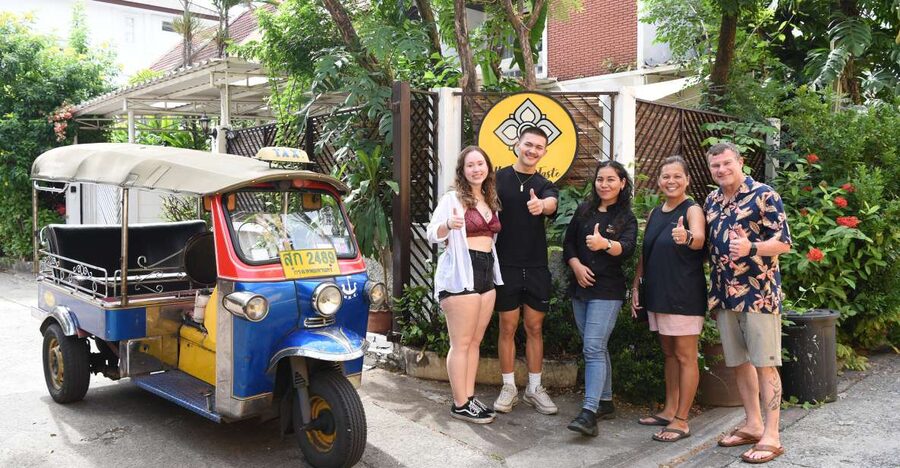
For the morning class, your day starts right in central Sukhumvit. Meet at the street floor of BTS Asoke Exit 3 and MRT Sukhumvit Exit 3. If you’re using Google Maps, pin the meeting point to Hey! Coffee MRT Sukhumvit to avoid that “where exactly is the door?” moment.
Why this matters: Bangkok cooking classes live or die on timing. If you’re 10 to 15 minutes early, you have room to regroup, locate the group, and get settled without stress.
If you book an afternoon or evening slot, the start point changes. You meet at the school in Sukhumvit 4. For those sessions, you skip the morning market component and focus more on ingredient introduction and cooking in the kitchen environment.
One practical tip: wear comfortable shoes. Even with a guided setup, you’ll be moving and walking as you go between stops.
Aprons on for another Thai kitchen
- Bangkok: Hands-on Thai Cooking Class and Market Tour
★ 4.9 · 1,614 reviews - Bangkok: Tingly Thai Cooking School Half-Day Cooking Class
★ 4.9 · 1,191 reviews - Bangkok: Maliwan Thai Cooking Class with Market Tour
★ 4.9 · 1,133 reviews
Morning Market Tour vs Afternoon and Evening Mango Carving
This class is offered on multiple days, and the experience shape depends on the time slot you choose.
If you book the morning class
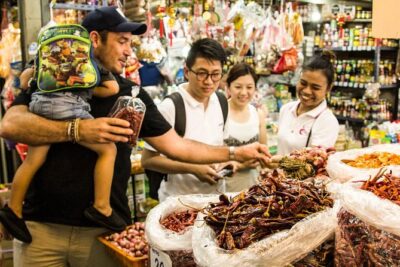
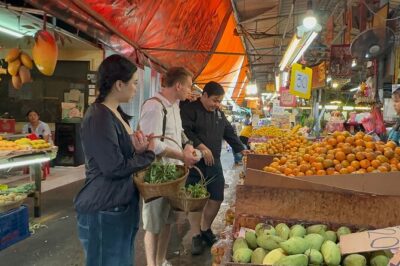
You’ll go out to a nearby market with a guided tour. The point is ingredient literacy. You browse for vegetables, rice, herbs, spices, and other Thai staples, then bring that knowledge back to the kitchen. In the morning, you also get the benefit of fresh context, meaning you understand what you’re cooking with, not just how to cook it.
In practice, morning classes are also the most “out in the city” version, and some sessions include a short ride between the market and the cooking kitchen.
If you book the afternoon or evening class
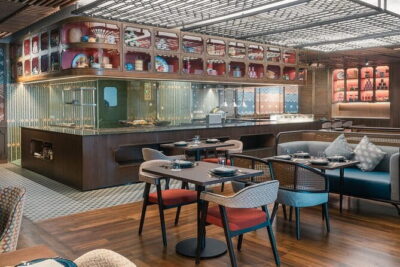
You won’t do the market tour. Instead, you’ll do mango carving, and the ingredient introduction happens at House of Taste Thai Cooking School in Sukhumvit 4. It’s a fun skills add-on that still connects to Thai food culture, especially because mango is a major theme in the dessert served at the end of the meal lineup.
Pick based on what you enjoy. If you like market energy and learning to shop Thai produce, go morning. If you’d rather spend more time in the kitchen and skip the outdoor ingredient hunt, afternoon or evening is a better fit.
More markets and shophouse lanes




The Kitchen Core: Coconut Milk and Curry Paste from Scratch
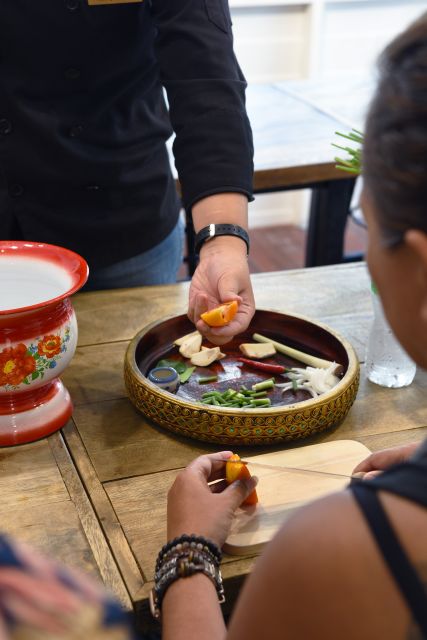
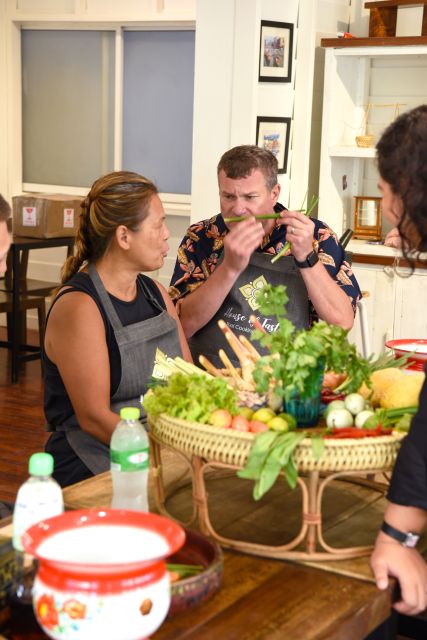
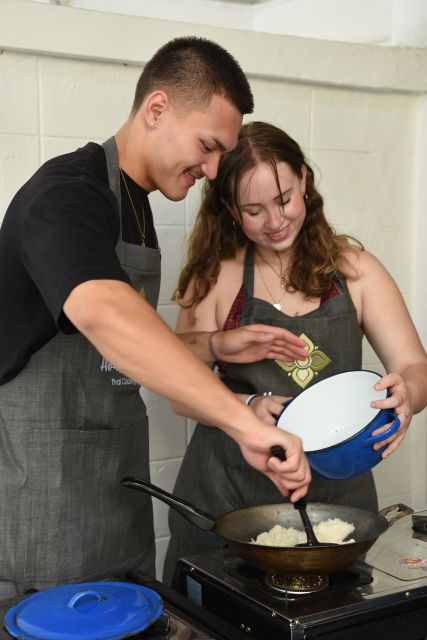
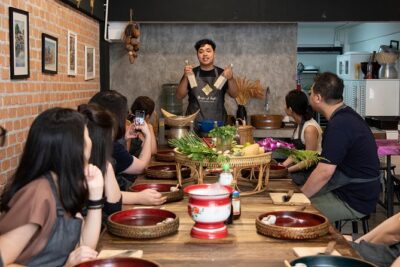
The heart of the experience is the hands-on cooking. You’ll spend about two hours creating four dishes and working directly with ingredients, tools, and Thai flavor foundations.
The big star is making curry paste from scratch. That one detail is why this class has lasting value. Curry paste is not just “spice mix.” It’s aromatics, ground textures, and balance. When you make it yourself, you learn what gives Thai curries their depth and why “that green curry flavor” tastes the way it does.
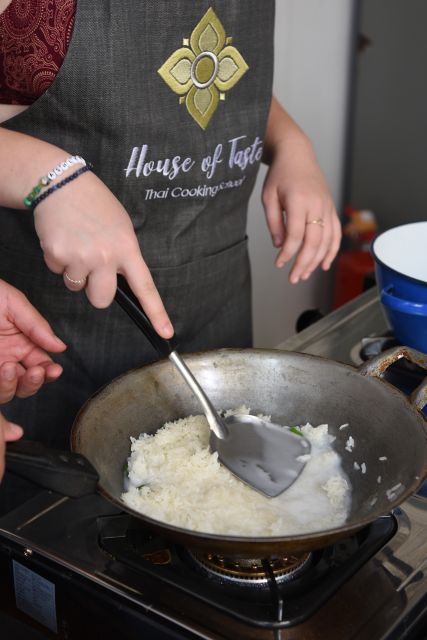
You also learn how coconut milk is prepared for your cooking. Coconut milk is a balancing act in Thai cuisine. It cools heat, rounds sharpness, and carries the curry aromatics. Once you understand the role it plays, your at-home curries stop tasting like a bottled shortcut.
I also appreciate the no-nonsense approach to flavors. The class states they do not use MSG. That gives you another reason to pay attention to seasoning balance and aromatics, because the taste you’re aiming for has to come from real ingredients, not additives.
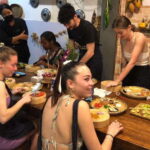
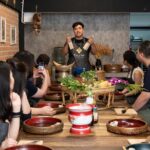
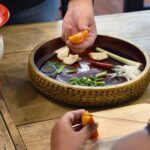
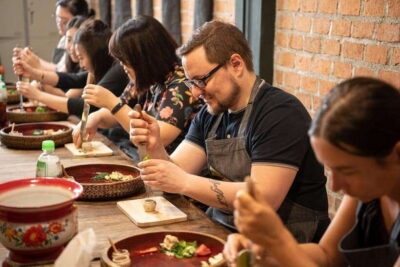
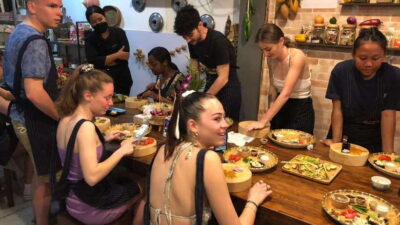
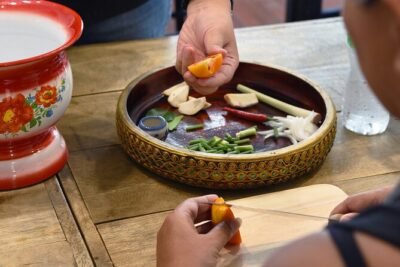
And yes, you get to get your hands involved. This isn’t a “watch someone cook and snack.” It’s a “you do it” format, with trays and organized ingredient setups so you can move without chaos.
Four Dishes You Cook, Then Eat Hot and Fresh
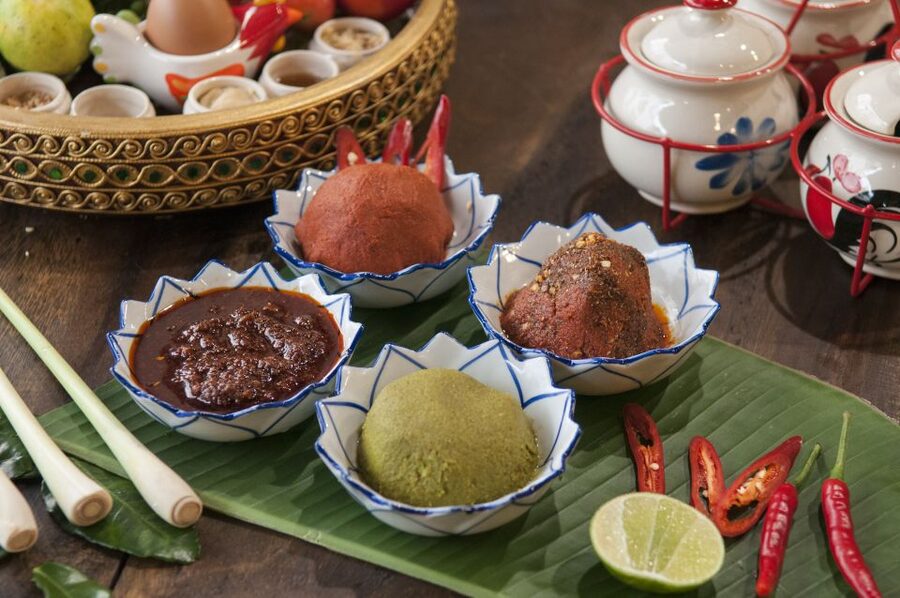
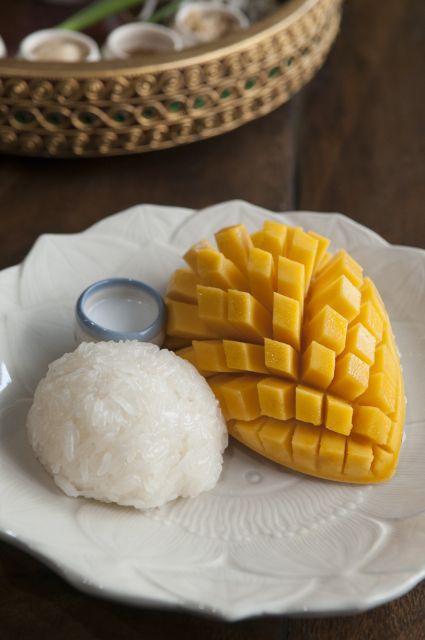
Across the week, the four dishes change by day, but the “shape” of the menu stays consistent: you cook four traditional dishes, and you also get mango sticky rice as a sweet finish.
Here’s what you can expect each day, based on the day’s schedule:
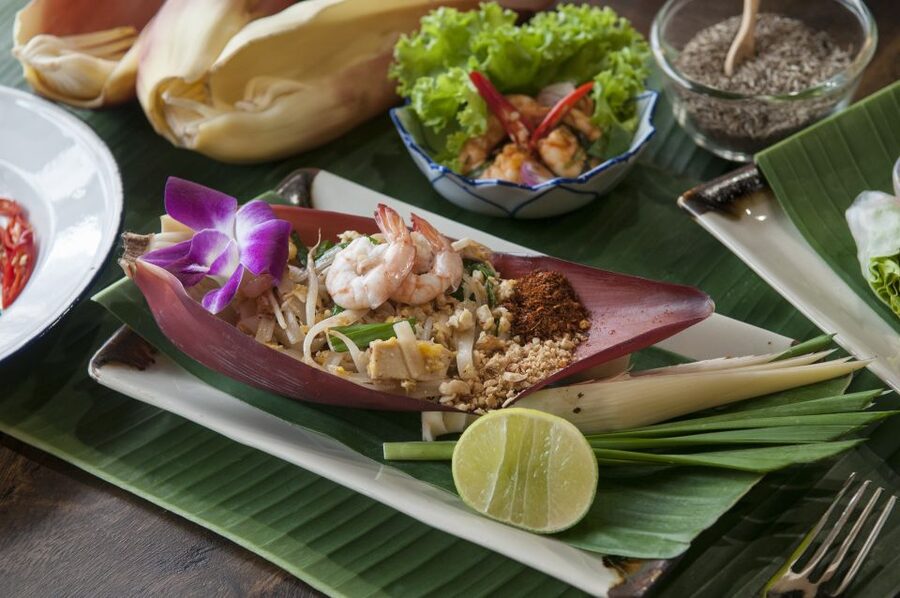
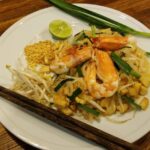
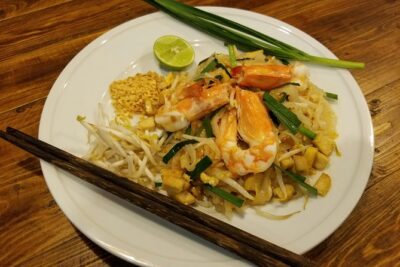
- Mondays: Thai papaya salad (Som Tum), stir-fried noodles with shrimp (Pad Thai), green curry with chicken, mango sticky rice
- Tuesdays: tom kha gai, pad krapow gai, red curry with chicken, mango sticky rice
- Wednesdays: tom yum goong, pad see ew, green curry with chicken, mango sticky rice
- Thursdays: larb gai, pad thai, panang curry with chicken, mango sticky rice
- Fridays: Som Tum, pad krapow gai, red curry with chicken, mango sticky rice
- Saturdays: tom kha gai, pad thai, green curry with chicken, mango sticky rice
- Sundays: tom yum goong, pad see ew, panang curry with chicken, mango sticky rice
Why this lineup is smart for value: you’re not just repeating one kind of Thai dish. You get salads, stir-fries, curries, and soups. That covers a lot of Thai cooking logic in one sitting.
You also get to savor each dish on the spot, while it’s still hot. That matters. Thai food is about layers, and flavors show up differently when a dish is fresh off the stove versus cooled and reheated. Here, you taste it at the moment it’s supposed to taste best.
A note on substitutions and diets
The class says they can provide substitute ingredients for vegetarian, halal, kosher, and allergy needs with advanced notification. That’s a big deal because Thai menus often assume meat and fish-based flavors.
If you have dietary restrictions, message ahead so they can tailor your experience. With the right setup, you still get the technique and flavor logic without forcing you into a compromise that makes Thai food feel “off.”
Technique Skills You Can Actually Use at Home
After the class, what you take home is more than recipes. You get a new mental map for Thai flavors.
Curry paste and herbs are the real lesson
When you practice curry paste from scratch, you learn to treat herbs and spices as the engine of Thai taste. The class includes learning about exotic ingredients like vegetables, rice, herbs, and spices, plus how coconut milk and curry paste come together.
At home, this changes how you shop. Instead of buying a curry paste and hoping for the best, you can start thinking, I need the right aromatic base, then I balance it.
You’ll also learn workflow, not just ingredients
Multiple instructors are described as organizing ingredients on nice trays and guiding you clearly through each stage. That kind of prep is what makes Thai cooking feel manageable for beginners.
Even if you’re new to cooking, you can copy that workflow. Pre-measure your ingredients. Set up your herbs and sauces. Cook in a rhythm where each dish comes together without waiting.
Recipes arrive after class
You get standard recipes by follow-up email. It’s not just a vague memory of flavors. You’ll have a written path for recreating your four dishes later.
If you’re the type who likes to cook again soon, this makes the class stick in your routine. If you’re not, the recipes still help you remember what you did and why it worked.
One small practical suggestion: if you want to bring food home, consider bringing a small container. Not every cooking class makes leftovers the priority, but having a plan helps you avoid wasting good food.
Price and Value: Why $45 Feels Fair Here
At $45 per person for about 210 minutes, this class lands in the “good deal” zone, mainly because you get a lot of what you normally pay for separately.
You’re paying for:
- Four dishes you cook and eat, not just one snack
- All ingredients and equipment
- A drink of drinking water
- A personal locker
- Recipe access by email
Most Bangkok food experiences either give you shopping plus cooking, or cooking plus a meal. Here, you get all of it packaged into one session. The market component is included only in the morning class, but even if you choose afternoon or evening, mango carving and ingredient introduction still turn your time into a hands-on Thai food lesson.
Alcohol is not included, but it is available to purchase. So if you want beer or cocktails, you’ll pay extra.
For a couple, this can also be a strong value because you share the cooking work and you both eat the results. For solo travelers, it’s also efficient: you leave with a full meal and a skill you can reuse.
Who This Class Suits Best in Bangkok
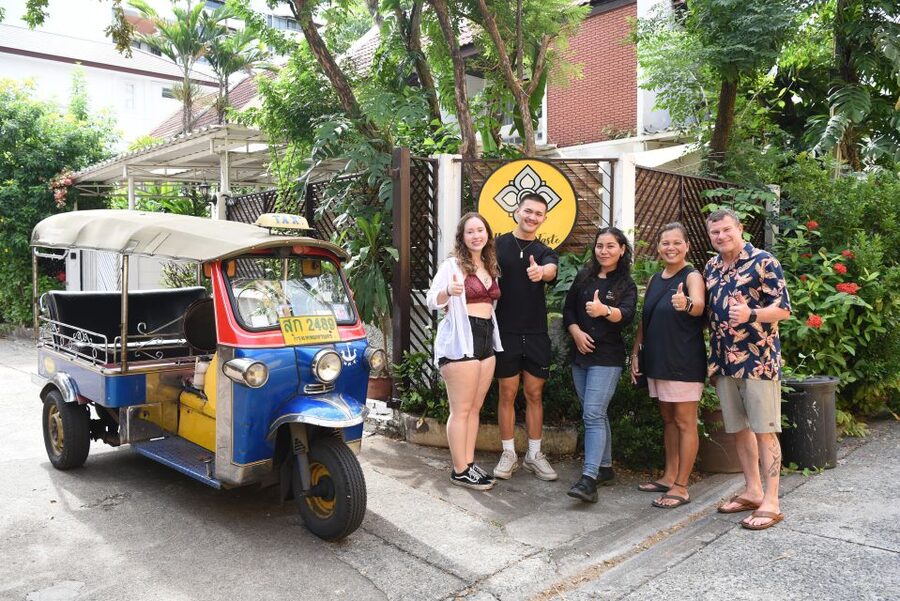
This experience is best for you if you want Thai food in a format that’s structured but not stiff.
You’ll likely enjoy it if:
- You’re new to Thai cooking and want clear guidance
- You like learning by doing, not just watching
- You’re hungry, because you will be eating a four-dish lineup
- You want to shop for Thai ingredients when possible, especially for the morning market option
It’s also a good activity for friends or couples who want an afternoon with a shared task and a clear finish.
If you’re traveling with dietary needs, it can still work well, but you must notify in advance so substitutions are arranged.
If you have mobility concerns, pay attention to the fine print. The activity is listed as wheelchair accessible, but it is also marked not suitable for people with mobility impairments. If that’s you, contact the provider and ask what accommodations are actually possible for your specific needs before booking.
Should You Book Sukhumvit Thai Cooking at House of Taste?
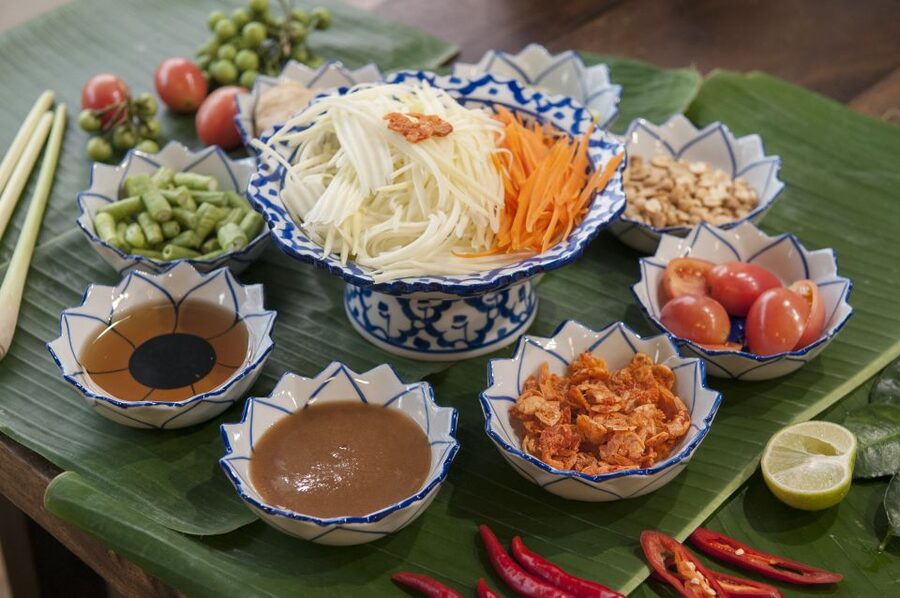
Yes, I think you should book this class if you want Thai cooking you can repeat.
The reason is simple. You’re not learning random dishes. You’re learning the flavor foundation (curry paste and coconut milk) and then applying it across salads, stir-fries, curries, and soups. Add mango sticky rice to the mix and you’ve got a satisfying full meal.
Book the morning class if you want the market tour, ingredient shopping, and the extra “see it first, then cook it” feel. Book afternoon or evening if you prefer staying at the school, cooking through the techniques, and adding mango carving instead of the market browse.
One last decision helper: choose the day based on your favorite dishes. The weekly menu rotates, and each day includes mango sticky rice, so you’re not gambling. If you’re dreaming of som tum, pad krapow, tom yum, or green curry, pick the day that matches your cravings.
FAQ
How long is the cooking class?
The duration is 210 minutes.
Where do I meet for the morning class?
Meet at the street floor of BTS Asoke Exit 3 and MRT Sukhumvit Exit 3.
Where do I meet for the afternoon or evening class?
Meet at the school in Sukhumvit 4.
Do I get a market tour?
Only the morning class includes a market tour. Afternoon and evening classes include mango carving instead.
What dishes do I cook?
You cook four dishes, and the menu varies by day. Mango sticky rice is part of the lineup every day.
Do I get recipes to take home?
Yes. Standard recipes are sent to you by follow-up email after the class.
Are vegetarian or halal meals available?
Yes, substitute ingredients can be provided for vegetarian, halal, kosher, and allergy needs if you notify the provider in advance.
Is alcohol included?
No. Alcoholic drinks are available for purchase, but not included.
Does the class use MSG?
The class states that no MSG is used.
Is it wheelchair accessible?
It is listed as wheelchair accessible, but it is also marked not suitable for people with mobility impairments. If you have mobility needs, check with the provider before booking.
More Tours in Bangkok



More Tour Reviews in Bangkok




Cook It Yourself: Thai Classes

Just In: Fresh Bangkok Reviews




Thai Cooking Classes, compared.
 ★ 4.9Hands-on Thai Cooking Class and Market TourFrom $451,614 reviews
 ★ 4.9Tingly Thai Cooking School Half-Day Cooking ClassFrom $411,191 reviews
 ★ 4.9Maliwan Thai Cooking Class with Market TourFrom $401,133 reviews
 ★ 5.0Hands on Thai Cooking Class and Market TourFrom $45660 reviews
 ★ 5.0Tingly Thai Cooking Class with Morning Market TourFrom $42589 reviews
 ★ 5.0Hands-on Thai Cooking Class & Market Tour in SukhumvitFrom $45571 reviews
 ★ 5.0Pink Chili – Thai Cooking Class and Market Tour in BangkokFrom $38416 reviews
 ★ 5.0Authentic Thai Cooking with the Largest market visit &TukTuk rideFrom $44350 reviews
Browse the lists this tour appears in