
Review · THAI COOKING CLASSES
Hands on Thai Cooking Class and Market Tour
Smell, chop, and cook your way through Bangkok. This 3.5-hour class at House of Taste pairs Asok market ingredients with hands-on guidance, and you go home with recipes for four classic Thai dishes. One catch: pick your departure time carefully, because the market visit is only for the morning class.
You can go more craft-focused too. Afternoon and evening sessions swap the market for a mango carving workshop, then you still cook, learn ingredients, and sit down for a full homemade meal.
Logistics are simple and low-stress. The school is set up for groups of up to 18, you’ll have an air-conditioned prep space, and you end back at the same meeting point after the class, often with a quick tuk-tuk ride when you do the morning market.
Key things to know before you go
- Asok Market (morning only) for ingredient shopping, not just photo stops
- Mango carving (afternoon and evening) if you skip the market
- Curry paste from scratch plus a chef who guides you step by step
- A fixed menu of Thai favorites including Pad Thai, Thai curries, and Mango Sticky Rice
- Small group size (maximum 18) makes it easier to ask questions
Getting Oriented at House of Taste, Near Sukhumvit
This class meets at 147/4 Soi Sukhumvit 4, in Bangkok. It is convenient if you are already staying around Sukhumvit, and the area is described as near public transportation. You do not need a hotel pickup, so plan on getting yourself there.
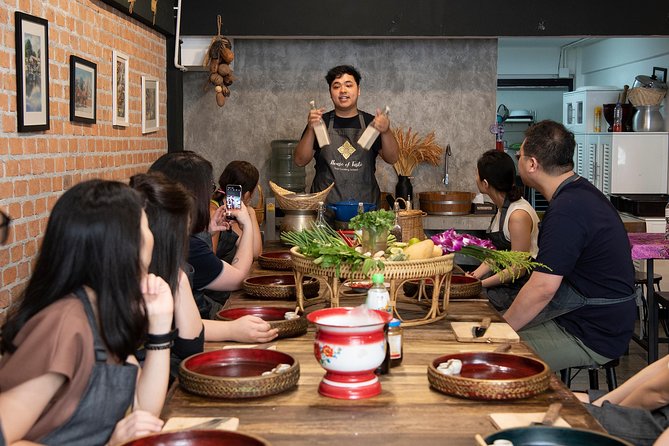
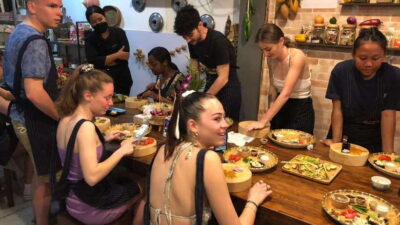
Once you arrive, the vibe is practical and clean. The setup splits time between prep and cooking areas, with an air-conditioned classroom space for learning the why behind Thai flavors. There is also a personal locker, plus cold and hot drinking water, so you can stay comfortable without constantly tracking your gear.
You should also wear comfortable shoes. The tour includes a small amount of walking, and that matters because you may move between the market, transport, and the cooking space depending on your departure. If your feet get cranky, this is the kind of activity where good shoes pay off.
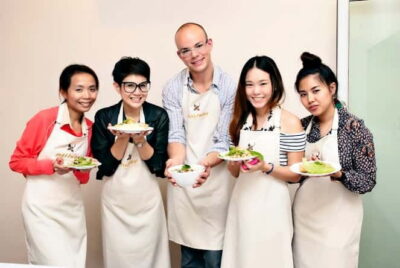
Group size stays small, up to 18 people. That is a big deal for cooking classes. It means you get more direct attention while you are chopping, stirring, tasting, and asking, instead of standing back and hoping the chef reaches your station.
Aprons on for another Thai kitchen
- Bangkok: Hands-on Thai Cooking Class and Market Tour
★ 4.9 · 1,614 reviews - Bangkok: Tingly Thai Cooking School Half-Day Cooking Class
★ 4.9 · 1,191 reviews - Bangkok: Maliwan Thai Cooking Class with Market Tour
★ 4.9 · 1,133 reviews
Choosing Morning Market vs Afternoon Mango Carving
This experience has two different “storylines” depending on the time you book.
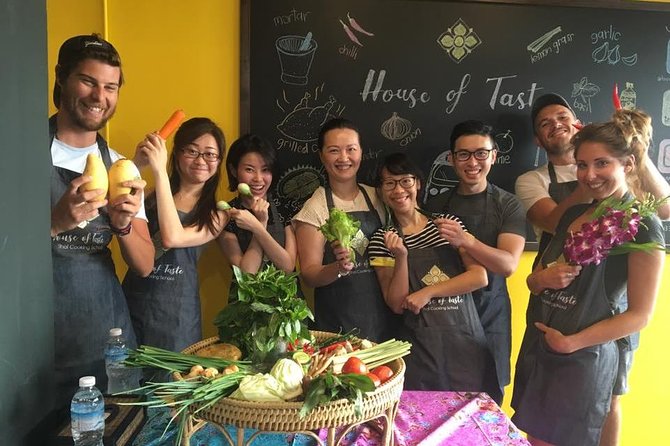
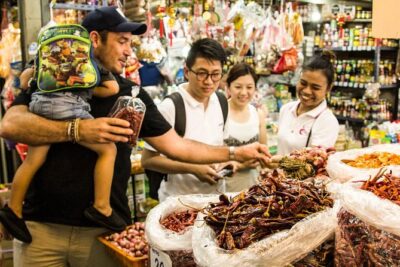
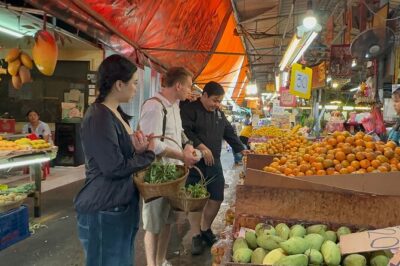
Morning departures include a guided visit to Asok market. You shop for ingredients first, then head to the school to cook. It is a straightforward way to understand how Thai meals start, with real items you can recognize later when you cook at home.
Afternoon and evening departures replace the market visit with a mango carving workshop. You still get cooking time and the full Thai food experience, but the prep begins with something more artistic. If you want a lesson you can show your friends, this workshop is fun and visual.
Here is the trade-off to think about: if you care most about ingredient shopping and learning what to buy, you should choose the morning. If you prefer a creative cultural activity, and you would rather spend your first hours making something by hand, go afternoon or evening.
Either way, expect an active 3 hours 30 minutes. The pacing is designed so you shop or carve, then cook four dishes, then eat a sit-down meal.
Asok Market Shopping: What You’ll Actually Gain (Morning Only)
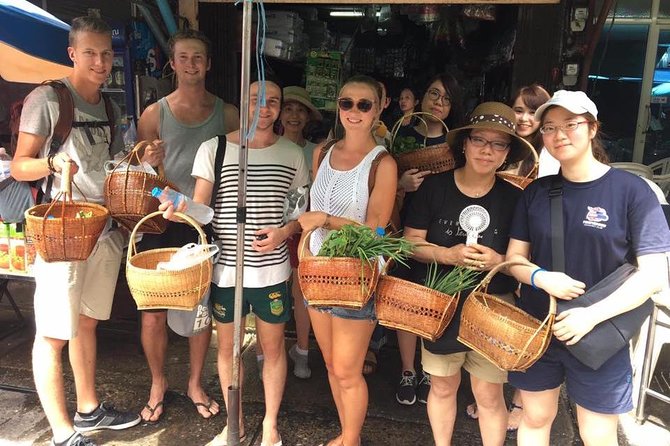
The morning market stop is not just window dressing. You are guided through Asok market to shop for the ingredients you will later use in your dishes. That matters because Thai cooking can feel confusing if you only know the final dish name. Seeing ingredients in person makes a huge difference.
When you shop with guidance, you also learn what ingredients do in the flavor system. Spices and herbs are not interchangeable, and Thai cooking does not rely on one magic jar. It is layers: aromatics, seasoning, texture, and balance.
You get a tuk-tuk transport from the market as part of the experience, then you head to the cooking school. That short ride is small but useful, because it helps you keep the morning from turning into a self-guided scavenger hunt through Bangkok traffic.
A practical tip: if you want the market portion to feel meaningful, arrive with a clear idea of what you want to cook later. The class menu is fixed, so you will be shopping for ingredients tied to those Thai dishes, not random items. That helps you stay focused in a busy market environment.
Also, the market option is only offered in the morning. If you book afternoon or evening, you are not getting Asok market shopping.
Curry Paste from Scratch and the Chef’s Step-by-Step Teaching
At the cooking school, you cook with a professional chef. The experience is designed to be suitable for all abilities, which you will feel in how the class runs. Instead of assuming you already know how to mince, slice, or balance spice, the teaching is structured and you get guidance as you work.
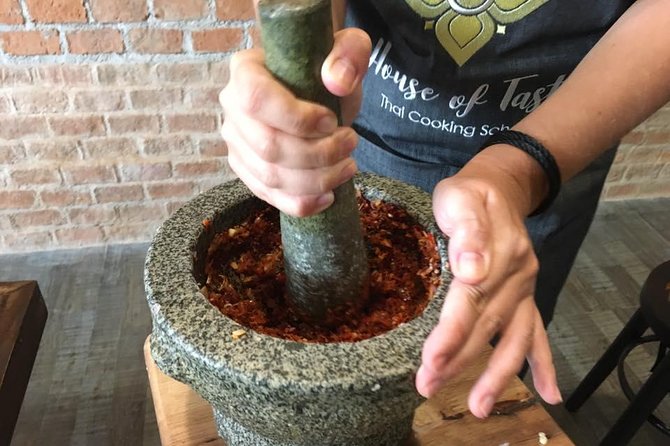
One of the most rewarding parts is that you make curry paste from scratch. That is where Thai cooking gets real. You stop thinking of curry as a single jar product and start understanding it as a blended base with its own flavor logic.
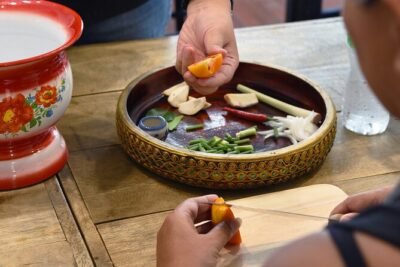
The class introduces you to Thai ingredients, including vegetables, spices, and herbs. That ingredient education is not fluff. It helps you answer questions like why something smells sweet and spicy instead of just hot, or why fresh herbs change the taste right before serving.
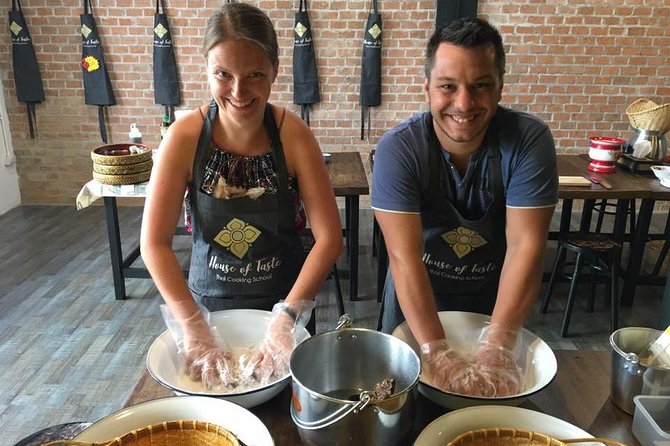
The cooking approach is hands-on and active. The kitchen setup includes prep and cooking areas, which helps prevent the typical class problem where everyone watches while one person cooks. Here, you are working through dishes as the lesson progresses.
You will also have an easier time learning because the class is organized around a daily fixed menu. You are not jumping between dozens of unrelated recipes. You build confidence through repetition, and then you get the printed standard recipe so you can recreate it later.
Finally, if you want to match the energy of the room, show up ready to taste. Thai food is not shy about sour, salty, sweet, and spice. Tasting is part of the instruction, not an afterthought.
More markets and shophouse lanes




The Four Dishes You Cook, and What Each One Teaches
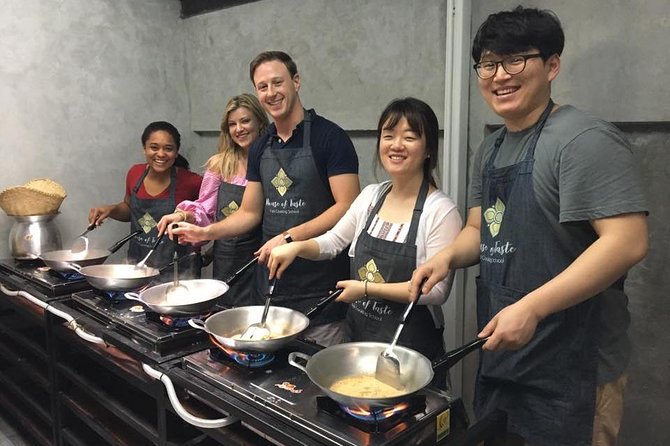
The school follows a fixed daily menu. From that menu, you cook four favorite Thai dishes as part of the class experience. The menu options include a mix of appetizers, soups, mains, and dessert, which gives you a good snapshot of how Thai meals feel as a system.
Here is what the menu covers, and what it teaches you:
Soups, salads, and snack-style starters
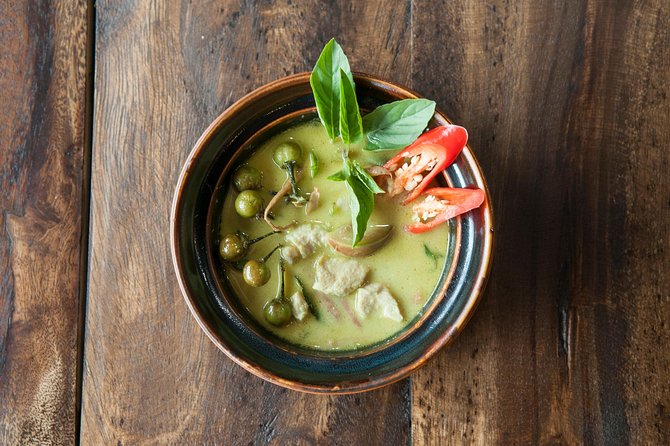
You can have dishes like Tom Yum Goong (spicy and sour soup with shrimp) or Tom Kha Gai (spicy coconut soup with chicken). There are also choices such as Spicy Lemongrass Salad, Spicy Shrimp Salad, and Green Papaya Salad. You may also see Deep Fried Spring Rolls on the menu.
These teach balance. Thai starters often set the tone: sour and spicy in one bite, herbal freshness in another, and crunch when you want texture.
Pad Thai for the stir-fry fundamentals
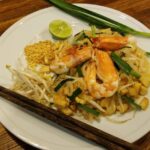
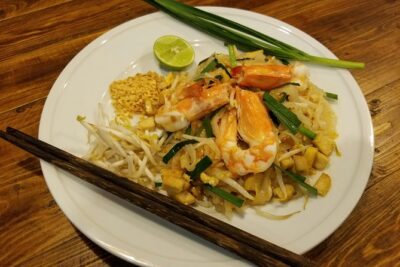
Pad Thai Goong is listed as the first main course. This is a great anchor dish because it focuses on stir-fry technique, timing, and how Thai sauces cling without turning gluey.
Thai curries, your big flavor payoff
Your second main course is one of several chicken curries: Red Curry, Green Curry, Massaman Curry, or Panang Curry. These options matter because they show different curry styles, from creamy and fragrant to deeper, earthier tones.
If curry paste is the foundation, the curry stage is where you learn to adjust final flavor. You see how Thai cuisine builds layers, not just heat.
Mango Sticky Rice for the sweet ending
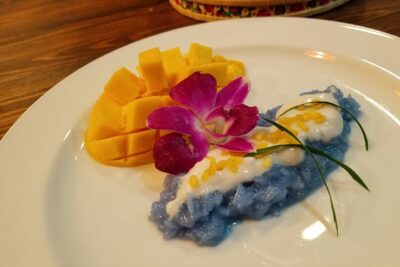
For dessert, Mango Sticky Rice is on the menu. This is not a complicated dish, but it is a great lesson in how Thai desserts balance sweetness with texture and freshness.
If you are thinking about cooking at home, these four dish categories are a smart set. You end up learning stir-fry, curry base work, soup or salad style flavor balance, and a dessert that depends on ingredient quality.
Lunch or Dinner: Eating the Meal Like a Chef
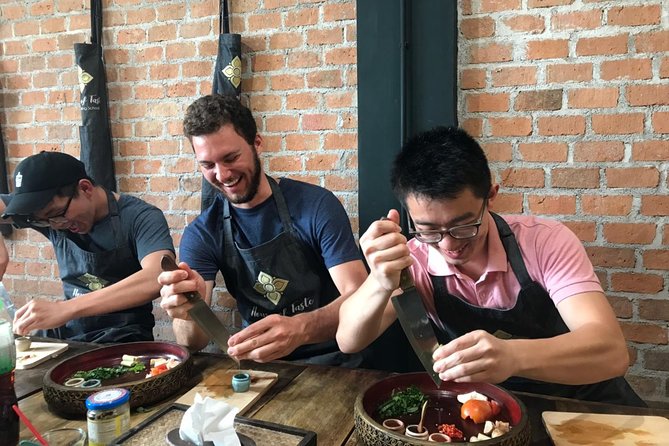
After cooking, you sit down to eat a homemade lunch or dinner. Meals are included, and you get what the class serves as part of the itinerary. This is not a tiny tasting. One consistent theme in the experience is that you should expect to eat well.
There are a couple practical reasons the meal part is valuable. First, it reinforces your learning. If you taste the dish right away, you remember what you did with the ingredients. Second, it gives you a real sense of how Thai food is served as a complete meal, not just separate recipes.
Some classes like this also include staff support to keep the table service smooth, such as someone helping set up so you can get back to eating without juggling logistics. Even without those details, the included meal is timed to close the loop on the cooking lesson.
One small warning: do not treat this like a light snack evening. If you eat a huge breakfast or lunch right before, you might feel too full to enjoy the meal you worked so hard to make. Come hungry, with enough room to taste.
Value Check: What You Pay and What You Get Back
The price is $45.66 per person, for about 3 hours 30 minutes. That may sound low for a professional chef class, but value is really about what is included.
You get:
- A professional chef-led, hands-on cooking session
- Four Thai dishes to cook
- Curry paste from scratch
- A fixed menu structure
- A free standard recipe to take home
- Included meals
- Drinking water
- A personal locker
Not included is alcohol, and there is no hotel pickup or drop-off. For most people, the lack of pickup is fine because the meeting point is reachable by local transport.
To judge value, I think about two things. First, can you learn enough to cook similar food at home? With curry paste and four dishes, you are not just tasting Thai food, you are learning core techniques. Second, can you avoid paying extra for guided ingredient shopping or add-ons? The morning market option includes guided shopping, and the afternoon and evening options include mango carving, both tied to the overall class.
Also, the group limit of 18 keeps the learning more personal. That matters for value because it affects how much the chef can respond to what you are doing.
Overall, at $45.66, this is a strong deal if you want real cooking instruction and a meal, not just a short cultural show.
Small Tips That Make the Class Feel Easier
A few practical things can improve your experience fast.
First, plan your food timing. If you are one of those people who always eats right before an activity, adjust. You will likely make multiple dishes and then eat again. Build some space for that.
Second, bring an open mind about spice. Thai food often mixes heat with sour, sweet, and aromatic herbs. The goal is balance, not just burning your tongue.
Third, handle dietary needs early. You can request substitutes for vegetarian, halal, kosher, and allergies. But you must advise at booking. Don’t wait until the day of the class, because substitutions depend on the ingredients available and the menu choices.
Fourth, choose your departure based on your priorities. Want ingredient shopping and market context? Book morning. Want a hands-on Thai craft activity? Book afternoon or evening for the mango carving workshop.
Finally, expect a little walking. Comfortable shoes are not optional fluff, they are the difference between feeling fine and feeling annoyed halfway through.
Who This Bangkok Cooking Class Fits Best
This is a strong fit if you want Thai cooking skills, not just entertainment. The class is built for all abilities, with guidance that works whether you are brand new in the kitchen or you cook often at home.
It also fits families and mixed-age groups because the pace is structured, the teaching is supportive, and the activity has both food and an optional craft component. If someone in your group enjoys hands-on making more than watching, this will work.
If you are traveling solo, you still get personal attention because the group is small. If you are a couple, you will share the experience and then share the meal, and it is easy to compare tastes while you cook.
If you are short on time, the 3 hours 30 minutes is manageable. You are also not stuck with a full-day tour format.
The only people I would steer carefully are those who hate walking a bit, or those who absolutely want a market visit but book the afternoon or evening by mistake. Choose the time slot for the experience you actually want.
Should You Book This Thai Cooking Class and Market Tour?
Book this if you want one of the most practical Thai experiences in Bangkok: cooking four dishes with a professional chef, plus learning key ingredients along the way. The price is fair for what you get, and the take-home recipes make it more than a one-day memory.
Skip it only if you are not interested in hands-on cooking, or if you booked the wrong time and needed the Asok market visit. Morning gives you market shopping. Afternoon and evening give you mango carving instead.
If you want a class that teaches you how Thai flavors work, not just what Thai food tastes like, this is a smart bet.
FAQ
What is the duration of the Hands on Thai Cooking Class and Market Tour in Bangkok?
The tour lasts about 3 hours 30 minutes.
How much does it cost per person?
The price is $45.66 per person.
Is there an Asok market visit, and when does it happen?
The market tour is available only for the morning class.
What happens during the afternoon and evening classes instead of the market tour?
Afternoon and evening classes include a mango carving workshop.
How many dishes will I make during the class?
You will cook four favorite Thai dishes.
What meals and drinks are included?
Meals are included as part of the class, along with cold and hot drinking water.
Are vegetarian and allergy-friendly substitutions available?
Yes. Vegetarian options are available, and the school can provide substitute ingredients for vegetarian, halal, kosher, and allergy needs if you advise at booking.
Is alcohol included?
No, alcoholic drinks are not included and are available to purchase.
Is hotel pickup or drop-off included?
No. Hotel pickup and drop-off are not included, and the activity ends back at the meeting point.
More Tours in Bangkok



More Tour Reviews in Bangkok




Cook It Yourself: Thai Classes

Just In: Fresh Bangkok Reviews




Thai Cooking Classes, compared.
 ★ 4.9Hands-on Thai Cooking Class and Market TourFrom $451,614 reviews
 ★ 4.9Tingly Thai Cooking School Half-Day Cooking ClassFrom $411,191 reviews
 ★ 4.9Maliwan Thai Cooking Class with Market TourFrom $401,133 reviews
 ★ 5.0Tingly Thai Cooking Class with Morning Market TourFrom $42589 reviews
 ★ 5.0Hands-on Thai Cooking Class & Market Tour in SukhumvitFrom $45571 reviews
 ★ 5.0Pink Chili – Thai Cooking Class and Market Tour in BangkokFrom $38416 reviews
 ★ 5.0Authentic Thai Cooking with the Largest market visit &TukTuk rideFrom $44350 reviews
 ★ 5.0Tingly Thai Cooking School Evening ClassFrom $40335 reviews
Browse the lists this tour appears in