
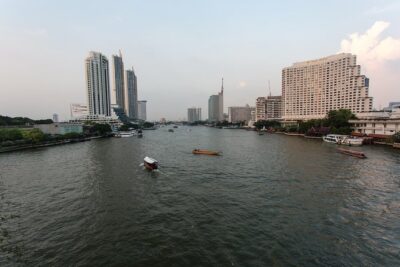
Bangkok moves fast, so ride it. This 2-hour tuk-tuk tour is a fun way to see major landmarks without the usual hassle of haggling, and you get a mix of palace-and-temple stops plus two of my favorite Bangkok scenes: Chinatown and the flower market. You’ll also enjoy classic views across the Chao Phraya River, with Wat Arun as a standout photo moment.
I really like two things about this experience. First, the tour runs with a licensed English-speaking guide who helps you understand what you’re seeing as you go. Second, the plan includes the flower market (Pak Khlong Talat) and a traditional folding lotus flower activity, so it’s not just “look and leave,” you get a couple of hands-on breaks.
One thing to consider: tuk-tuks are shared, with a maximum of two passengers per tuk-tuk, so if your group is bigger you may be split up. Add Bangkok traffic, and you’ll want to show up on time at the meeting point so you don’t miss the start.
Key highlights you will actually feel
- 2 hours, many stops: Grand Palace area, Giant Swing, Metal Castle, Chinatown, flower market, Wat Arun, and Wat Pho.
- Wat Arun river photos: You get a timed chance to see the temple from the Thonburi side, with a view across the river.
- Pak Khlong Talat timing: You’ll spend real time at Thailand’s large wholesale flower market, open 24/7.
- Free stops mixed in: Most major culture stops along the route are free, so your day stays predictable.
- Small group, shared tuk-tuks: Max 30 travelers, and max two per tuk-tuk, which keeps the ride lively but not cramped for the whole group.
- Little cultural hands-on moment: Folding a lotus flower gives you something to do besides just sitting and staring.
Why a typical tuk-tuk tour works so well in Bangkok
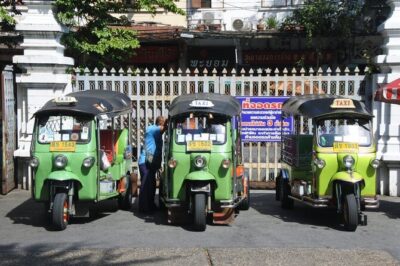
A tuk-tuk in Bangkok is more than a transport option, it’s part of the city’s energy. The ride itself is a quick, open-window way to feel how fast the streets move, and it helps you cover ground that would take longer by foot or tangled transit.
The biggest practical win is that you are not spending time negotiating fares. In a city where traffic can scramble your plans, being on a scheduled route with a guide who knows the rhythm of the day keeps things calmer. You get a real tour flow, not a random collection of stops.
I also like the balance of landmark power and street-level scenes. You’re not only doing temples with perfect symmetry. You also get to slow down for a visual feast at a flower market and see Chinatown atmosphere up close.
Price and value: what $28.70 includes (and what costs extra)
At $28.70 per person for about 2 hours, this is a value-focused way to get your bearings. You’re paying for a licensed English-speaking guide, a typical tuk-tuk ride, and a few included extras that matter in the moment: one bottle of drinking water and the folding lotus flower activity.
You should plan for one clear paid stop. The Grand Palace stop includes time on-site, but its admission ticket is not included. Everything else listed on the route is marked free, including the Giant Swing, Loha Prasat, Chinatown time, Pak Khlong Talat, Wat Arun, and Wat Pho.
Also, keep gratuities in mind. Tuk-tuk driver and guide gratuities are optional, but in Thailand it’s common to budget something if the service is excellent and safe.
Timing reality: 2 hours, short stops, and how to not get stressed
This tour is built around short visits at several big places. Each stop is around 10 to 20 minutes, with the total ride time doing the heavy lifting. That means you will see a lot, but you should not expect time to explore deeply inside every complex.
Bangkok traffic is notorious, and that affects tuk-tuk timing the same way it affects everything else. The tour also runs rain or shine, and weather changes do not automatically qualify for a refund. Bring a light rain layer if you travel during rainy season, because your tuk-tuk ride will not pause for showers.
One more timing detail that can make or break the experience: your group can wait a maximum of 10 minutes after the scheduled start. If you’re late, the guide will begin. So when you set out, build in a buffer from your hotel, and use the meeting pin carefully.
Stop 1: Grand Palace fast look, plus the entrance fee you must plan for
The Grand Palace is the kind of place that makes you look up, even before you fully understand it. You’re dealing with a royal complex connected to the Chakri Dynasty, originally built in 1782 by Rama I. Even with a short time window, it’s one of those “you’re in the right place” moments.
The stop duration here is about 15 minutes, and the palace admission ticket is not included. Practically, that means you should either have your entrance plans sorted before you arrive or accept that your time may be mostly exterior and quick photo focused depending on access.
The upside of a fast stop is you don’t lose your whole day in line management and slow wandering. The drawback is simple: if you want to read every detail and move slowly through the halls, this tour pace might feel rushed.
Stop 2: Sao Chingcha (Giant Swing) for a classic Bangkok landmark moment
Sao Chingcha, also known as the Giant Swing, is a religious structure and it ties to older ceremonial use in Brahmin tradition. It’s one of Bangkok’s most recognizable icons, and it’s also a quick stop that gives you a “postcard” landmark moment without draining the schedule.
You get about 15 minutes here, and access is free. This is a smart use of time because the swing is visible and photo friendly from multiple angles, and you don’t need a long sit-down to get the gist.
If you’re coming for photos, wear shoes you can move in. Even a quick stop can involve uneven pavement and people shifting around you.
Stop 3: Loha Prasat (Metal Castle) at Wat Ratchanatdaram
This stop is one I appreciate because it feels different from the more common gold-and-ceramic temple scenes. Loha Prasat is also called the Metal Castle, and it sits on the grounds of Wat Ratchanatdaram. It was built in 1846 under King Rama III, and the design was inspired by two similar temples in India.
You’ll typically get around 15 minutes, and it’s free. The short timing is good for skimming the structure, spotting the metal-roof feel, and getting that distinctive look you’ll remember later.
The main consideration is that 15 minutes can be too short if you love architectural details or want to linger in quieter corners. Think of this stop as a highlight taste.
Stop 4: Chinatown Bangkok, a fast hit of street culture
Chinatown in Bangkok is known as one of the largest in the world, and it has a reputation for feeling less “rebranded” than many other tourist areas. In this tour, you spend about 20 minutes here, and it’s free.
This is a great stop for quick snacks, people-watching, and shopping, but remember the pace is still tour-paced. You will likely move as a group and keep it short. So if you want one specific thing, have a simple plan: pick the food you want to try or the type of souvenir you’re hunting, then stick to it.
Also, keep an eye on where your group is heading next. In busy areas like this, it’s easy to drift for a photo, then realize you’ve fallen behind.
Stop 5: Pak Khlong Talat flower market, Thailand’s wholesale scene
This is where the tour becomes visually unforgettable. Pak Khlong Talat is Thailand’s largest wholesale flower market, and it’s open 24 hours a day, 7 days a week. The name loosely means market at the mouth of a canal, and the area began as a floating market.
You’ll get about 30 minutes, and it’s free. That extra half hour is a big deal because flower markets are not just about looking, they are about colors, scents, motion, and the quiet rhythm of vendors arranging bundles.
If you want photos, this is your best bet for action shots. If you want to buy something, keep in mind you will still have more stops after. That means bring a way to carry purchases comfortably, or keep buys small.
Stop 6: Wat Arun (Temple of Dawn) and the river-view photo stop
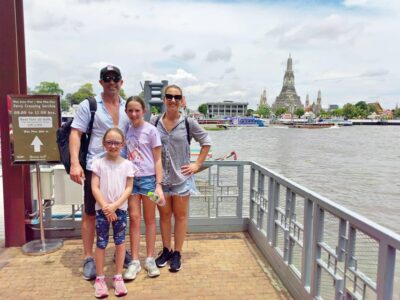
Wat Arun is one of Bangkok’s major river landmarks. It sits on the Thonburi side of the Chao Phraya River, and it’s locally known as Wat Chaeng. Even with limited time, it delivers those “this is Bangkok” visuals, especially when you can see it from across the water.
You get about 10 minutes here, and it’s free. This is usually a photo-forward stop, and it works best if you’re ready to move quickly and take photos from the best angles as your guide times it with the group.
One consideration: 10 minutes disappears fast in a crowd. If you’re traveling in a group that wants slower photos, you may find yourself waiting for each shot. Go with the flow, and prioritize the angle you care about most.
Stop 7: Wat Pho stop, plus a calm temple rhythm
The final cultural stop centers on Wat Pho. Wat Pho is one of the oldest temple complexes in Bangkok, and it’s known for having the largest collection of Buddha images in Thailand. The tour includes a visit labeled as a Wat Po Thai Traditional Massage School stop, which fits the same Wat Pho area and helps you understand why this complex is still active today.
Your time here is about 15 minutes, and it’s free. This works well as a closing act because it shifts you from street scenes and market colors into something more structured and contemplative.
This stop also pairs nicely with the tour’s included folding lotus flower activity. Whether you’re new to Thai temple etiquette or just want a small guided cultural moment, having something hands-on in the middle of the day keeps fatigue down.
The guide and drivers: where the tour really wins
A short tour needs a strong guide, and this one emphasizes a licensed English-speaking guide. In practice, that usually means you get quick context that helps you look smarter at each place, not just faster.
The guides connected with this experience in the feedback you provided include names like Anna, Enjoy, Pu, Paul, Johann, Bella, and Ken. No matter which name you see on the day, the consistent theme is clear communication, friendly energy, and helping the group stay safe and on track.
The drivers also matter. You’re on a typical tuk-tuk, which means you are moving through traffic exposure. A safe, steady driver makes the ride feel fun instead of stressful, and that’s a huge part of whether you remember this tour as “cool” or “exhausting.”
Who should book this tuk-tuk tour, and who might skip it
This tour fits best when you have limited time in Bangkok and you want a practical sampler platter. If it’s your first day, or you’re doing a short stopover, the structure helps you cover the big visual hits: Grand Palace area, Giant Swing, Metal Castle, Chinatown, flower market, Wat Arun, and Wat Pho.
It also suits families and people who like a light schedule. One of the perks of this format is that kids can see a lot without the grown-up pace of long temple wandering.
Skip or consider a different format if you need lots of time inside the Grand Palace, or if you dislike short stops. Also keep in mind that tuk-tuks have limited headroom, so taller passengers may find it harder to see landmarks while the tuk-tuk is moving. The good news is the tour still gives you time to get off and look during the stops.
Should you book? My simple decision guide
If you want the Bangkok highlights in 2 hours, with free temple stops mixed with one paid admission spot, and you value a guide who keeps things organized, this is a smart buy. The inclusion of water and the folding lotus activity makes it feel more than just transport.
I would book it if you:
- Have one short day and want a hit list you can trust
- Want a mix of temples, river views, Chinatown energy, and a flower market
- Like photo stops with enough time to get your shots without sprinting all day
I would think twice if you:
- Want deep, slow museum-like temple exploration
- Are very sensitive to timing constraints and crowds
- Need long time at the Grand Palace specifically
If your goal is to get oriented fast and leave Bangkok with images and context, this tuk-tuk route is a strong choice.
FAQ
What is the duration of the tuk-tuk tour?
The tour lasts about 2 hours.
How much does the tour cost?
The price is $28.70 per person.
What is included in the ticket?
It includes a licensed English-speaking tour guide, a typical Thai tuk-tuk ride, 1 bottle of drinking water, and a folding lotus flower activity.
Is admission included for the places you visit?
Admission for the Grand Palace is not included. The other listed stops are marked free.
Where does the tour start and end?
It starts at Museum Siam (Phra Borom Maha Ratchawang, Phra Nakhon, Bangkok). It ends on Yaowarat Road (Samphanthawong, Krung Thep Maha Nakhon).
How many people can ride in one tuk-tuk?
The tour is shared, with a maximum of two passengers per tuk-tuk.
Does the tour run in bad weather?
The tour operates rain or shine, and weather cancellations are not eligible for a refund.
Is the group size limited?
Yes, the tour has a maximum of 30 travelers.
Are gratuities required?
Gratuities for the tuk-tuk driver and guide are optional. Personal expenses are not included.
Tuk Tuk Tours, compared.
 ★ 5.0Bangkok by Night: Temples, Markets and Food Tuk-Tuk TourFrom $793,752 reviews
 ★ 5.0Bangkok Midnight Food Tuk Tuk TourFrom $812,542 reviews
 ★ 4.4Michelin Guide Street Food Tour by Tuk TukFrom $201,274 reviews
 ★ 4.7Guided Tour in a Typical Thai Tuk-TukFrom $28830 reviews
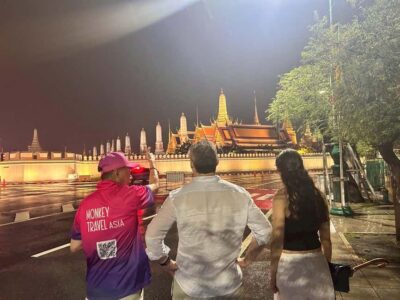 ★ 4.3Tuk Tuk Adventure Chinatown Michelin Food & TemplesFrom $18725 reviews
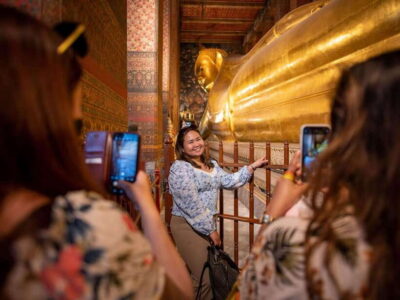 ★ 4.6Evening Tour with Wat Arun, Wat Pho & Tuk Tuk RideFrom $41701 reviews
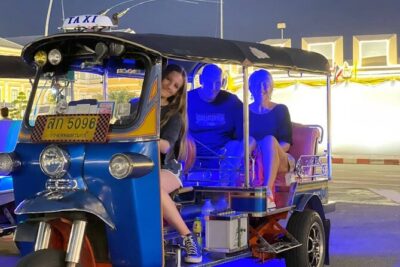 ★ 5.0Bangkok Tuk-Tuk Tour by Night with Chinatown Street Food MealFrom $40635 reviews
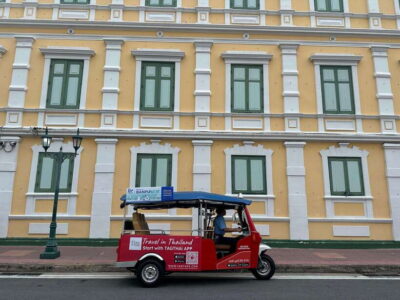 ★ 4.2Tuk Tuk Day Pass App & Boat Chao Phraya RiverFrom $22593 reviews
Browse the lists this tour appears in