
A longtail boat and temples in one short trip sounds busy, but it works. You start with a local tuk tuk ride, then switch to a canal long-tail boat to see Bangkok’s old waterways, with temple visits and fruit tastings along the way.
I like two things most. First, the day mixes big sights with local rhythm, so you get more than checkmarks. Second, the guide explanations (for example Yui, Yuri, or Bo on different departures) turn the stops into context you can actually use.
One thing to consider: this is lots of moving. You will hop between vehicles and walk around temples, so bring comfortable shoes and keep an eye on your energy if you have a back issue or get uncomfortable sitting for long stretches.
Key things that make this tour worth your time
- MRT meeting point that is easy to find: guide meets you at Itsaraphap station exit 2 (Soi 23) with your name list
- Two meaningful temple stops: Wat Khun Chan for the biggest seated Buddha in Bangkok, plus Wat Pak Nam Fang Tai with a stupa and relics
- Long-tail boat time on real canals: you view the old capital waterways and local scenes from the boat
- Fruit tastings and small food moments included: not just water and temples, you get shared seasoning fruit taste
- Short metro hop: a quick 10-minute subway/metro segment helps keep the route efficient
- Transport quality is highly rated: 94% of reviewers gave transport a perfect score
MRT Itsaraphap to tuk tuk: the start that sets the pace
Your day begins at MRT Itsaraphap station exit 2 (Soi 23). The guide waits there with a list of names, but you need to show up early. Plan to be there at least 15 minutes before the start time so you do not lose time to Bangkok traffic or confusion at the platform level.
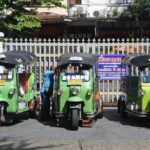
From the meeting point, you slide into a local tuk tuk ride for about 15 minutes. This short intro ride matters. It is not a long slog on the road, and it puts you in the right mindset quickly. You are not stuck staring at Bangkok through a bus window. You feel the street energy, hear the sounds, and start moving like a local rather than a sightseeing package.
Practical tip: temples are next, so do not arrive in the wrong outfit. Bring a scarf or plan to have one ready to cover up when you reach temple entry points.
More gilded rooftops: other temple runs across the old city
- From Bangkok: Ayutthaya Temples Guided Tour with Lunch
★ 4.7 · 10,535 reviews - Bangkok: City Highlights Temple and Market Walking Tour
★ 4.5 · 3,990 reviews - Bangkok by Night: Temples, Markets and Food Tuk-Tuk Tour
★ 5.0 · 3,752 reviews
Wat Khun Chan: the biggest seated Buddha stop
The first temple visit is Wat Khun Chan, with about 30 minutes on site. This stop is the one built around a clear highlight: you come here to see the biggest seated Buddha in Bangkok.
Here is why I think this stop is valuable. Seeing a major Buddha statue is not only about photos. It helps you understand how Thai religious spaces are meant to be lived in and respected, not just looked at. With a live English guide, you get basic context about what you are seeing and why it matters, instead of guessing.
What to watch for:
- Dress matters. You will want a scarf or sarong ready before entry.
- Budget time for quiet moments. Even with a short visit window, you can slow down once you are inside and take in how the space is laid out.
The tour style stays efficient. You are not wandering for hours, but you still get enough time to actually take it in.
Wat Pak Nam Fang Tai: stupa, relics, and a museum element
Next comes Wat Pak Nam Fang Tai, with about 40 minutes. This temple stop has a different feel from Wat Khun Chan. You are not just looking at one main figure. You also visit a beautiful stupa containing Buddha relics, plus a museum area connected to Wat Pak Nam.
This is a great contrast if you like your sightseeing with layers. One temple teaches you with a major visual symbol, and the other adds background through relic history and museum displays. Even if you only catch parts of it, the guide helps connect the dots so it does not feel like random rooms.
Practical consideration: temple rules often mean slower walking and more standing still than you expect, especially if the place is busy or you stop for explanations. Wear shoes that can handle uneven ground.
Also, this is part of the reason the tour is priced the way it is. Two temple entries plus guide time plus included transport means you are paying for access and interpretation, not just movement.
Khlong Bang Luang from the water: Bangkok’s canal culture moment
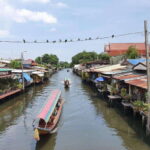
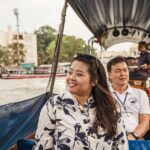
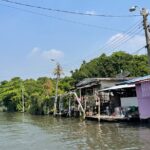
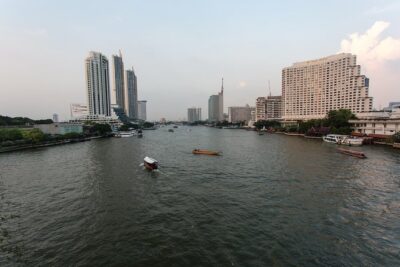
After the temple sequence, you shift to what many people really came for: time on Bangkok’s canals. You hop onto the long-tail boat to explore along the old capital waterways. The ride is described as about 2 hours focused on canal viewing and sightseeing.
During this boat time, you get views of local scenes from the water. The tour highlights include:
- Ban Silapin artist house seen from the boat
- Khlong Bang Luang floating market area seen from the boat
This matters because Bangkok’s canal culture is best understood visually. From street level, you often only see a narrow edge of the lifestyle. From the boat, you see the relationship between homes, water access, and the market rhythm.
A note on expectations: this is sightseeing from the water, not a museum-level lecture on boats. You will still get guide commentary, but the real star is the perspective.
What I like about this segment is the pacing. You are moving, but not in an exhausting way. Sitting on the boat gives you a break from constant walking, and the sights keep coming without you having to navigate streets.
Back onto the khlongs, a few more longtail runs
The fruit tastings and those quick food surprises
Food is not the main point of most Bangkok temple tours, which is why I appreciate that this one includes tastings. You get:
- drinking water included
- sharing seasoning fruit taste included
- other small food moments can appear during the route, depending on the flow
One review mentioned an eel-related stop as a surprise tasting moment. The key takeaway for you is simple: you are not just buying snacks on your own. There are built-in small food chances that help you connect with daily life, not only religious monuments.
If you are the type who likes to eat your way through a destination, this will feel like a bonus rather than a random add-on. If you have strict dietary needs, you should plan carefully. The only clearly stated included option is the fruit tasting, so treat other tasting stops as potentially optional or not always guaranteed for everyone’s preferences.
The short subway/metro hop and getting back out efficiently
Some tours in Bangkok feel like they wander all over the map. This one does not. After the canal portion, the itinerary includes a 10-minute subway/metro segment. That helps you cut down time lost to traffic and keeps the total trip within the stated 2 to 3 hours window.
Then comes the final transition out of the tour loop. You are dropped off at Rachinee pier, and the tour ends there. The idea is smart. You are not dumped in the middle of nowhere. You land near options you can keep exploring, like:
- flower market visits
- Wat Pho
- the royal grand palace
- Thatien market for Thai food
There are also listed drop-off locations, including สถานีสนามไชย and an address near ถ. ราชินี. So if you care about where you finish, it is worth confirming your exact drop-off point when you book.
Price and value: why about $25 can still make sense
At $25 per person for a 2 to 3 hour guided route with entrance fees included, this tour is positioned as value. Here is the math that matters:
You are paying for:
- an English-speaking live guide
- two temple visits with entrance included
- a tuk tuk ride
- a long long-tail boat canal experience
- included drinking water and fruit tasting
You are not paying only for time in a car. Two major forms of transport are part of the experience, and the temples are not just walk-by photo stops. The guide explanations are a real part of the package because they help you understand what you are looking at, especially around Buddhism and what you are seeing at each site.
When this might not feel like great value: if you already know Bangkok canal culture well and you only want the quickest possible highlight of Big Buddha, you could cover some of the same areas on your own. But if you want the guide context plus the canal ride without planning, this price tends to feel fair.
Transport quality also gets strong marks, with 94% giving transport a perfect score. That matters in Bangkok, where vehicle comfort can vary wildly by day and driver.
What you should bring (and what to wear) for temple comfort
This tour has simple requirements, and they help you avoid stress.
Bring:
- comfortable shoes
- scarf (for temple entry and shoulder coverage)
- sarong
- passport or a copy accepted
Also, keep in mind the tour states that alcohol and drugs are not allowed. That is common for shared tours, but it is good to be aware so you do not get turned away.
Dress tip: plan for temperature. Bangkok can be hot and humid. Choose breathable fabric. Then cover up properly at temples with your scarf or sarong so you feel respectful and comfortable.
Who this tour is best for, and who should think twice
This works especially well if you want a short, focused Bangkok experience that combines street life with temple culture and canal views. It suits:
- first-time visitors who want a guided overview without spending a full day
- people who like mixing transport styles, tuk tuk and longtail boat
- anyone who prefers less time on big tourist detours and more time on canal-based Bangkok scenes
Not suitable for:
- people with back problems
- people over 220 lbs (100 kg)
I would add a common-sense note for you: if you get motion sick on boats, the long-tail boat segment is the key moment to consider. You might be fine, but it is the one part with the most movement.
Should you book this Bangkok long-tail boat and temple tour?
I would book it if your goal is a guided taste of Bangkok that includes Wat Khun Chan, Wat Pak Nam Fang Tai, and a real long-tail boat canal ride with included fruit tastings. At $25, you are not paying premium for luxury, you are paying for a structured route, transport, and temple access with English guide commentary.
I would skip or rethink it if you dislike walking around temples, have a mobility or back issue, or you only want one or two photo stops and nothing else. Also, if you hate food tastings in general, know that fruit tasting is included, and there can be additional small food moments.
If you want a compact, culturally guided canal day with Big Buddha and local water life, this is a strong fit.
FAQ
Where is the meeting point for this tour?
You meet at MRT Itsaraphap station exit 2 (Soi 23). The guide will be there holding a name list. Meeting point can vary depending on the option booked.
How early should I arrive?
Arrive at least 15 minutes before the tour start time, since the guide meets you at the station.
How long does the tour take?
The tour duration is 2 to 3 hours.
Is there an English-speaking guide?
Yes, there is a live tour guide in English.
Which temples are included?
You visit Wat Khun Chan and Wat Pak Nam Fang Tai. The stops include seeing the biggest seated Buddha in Bangkok and also a stupa with Buddha relics and a museum area at Wat Pak Nam.
What food and drinks are included?
You get 1 drinking water and sharing seasoning fruit taste is included.
What is not included in the price?
Shopping and extra drinks are not included.
Do I need to cover up for the temple visits?
Yes. The tour notes you should wear or prepare a scarf or sarong before entering temples.
Is cancellation free?
You get free cancellation up to 24 hours in advance for a full refund.
Is alcohol allowed on this tour?
No, alcohol and drugs are not allowed.
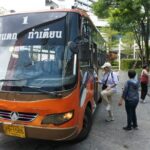
Around the City by Tuk Tuk

Back on the Khlongs
More of Bangkok Temples
Just In: Fresh Bangkok Reviews
Grand Palace & Temple Tours, compared.
 ★ 4.7From Bangkok: Ayutthaya Temples Guided Tour with LunchFrom $2810,535 reviews
 ★ 4.5City Highlights Temple and Market Walking TourFrom $423,990 reviews
 ★ 5.0Bangkok by Night: Temples, Markets and Food Tuk-Tuk TourFrom $793,752 reviews
 ★ 4.8Grand Palace, Wat Pho, and Wat Arun Guided TourFrom $243,632 reviews
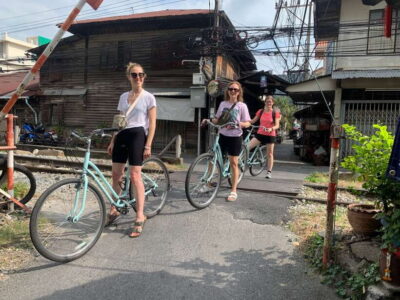 ★ 4.9Temples, Canals & Local Life Bike TourFrom $243,511 reviews
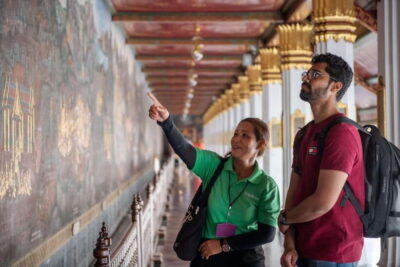 ★ 4.4Grand Palace and Wat Phra Kaew Guided Walking TourFrom $172,417 reviews
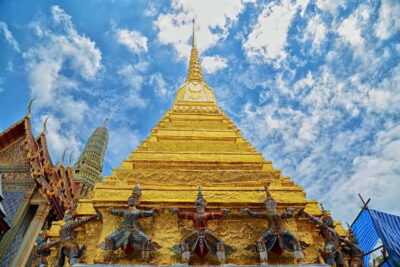 ★ 4.3Grand Palace, Wat Pho, Wat Arun Sacred & Local TourFrom $182,256 reviews
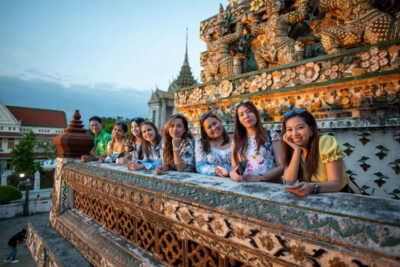 ★ 4.6Wat Pho and Wat Arun Guided Walking TourFrom $171,720 reviews
Browse the lists this tour appears in