
Review · KANCHANABURI & RIVER KWAI
Samut Prakan: The Erawan Museum Admission Ticket (NON THAI)
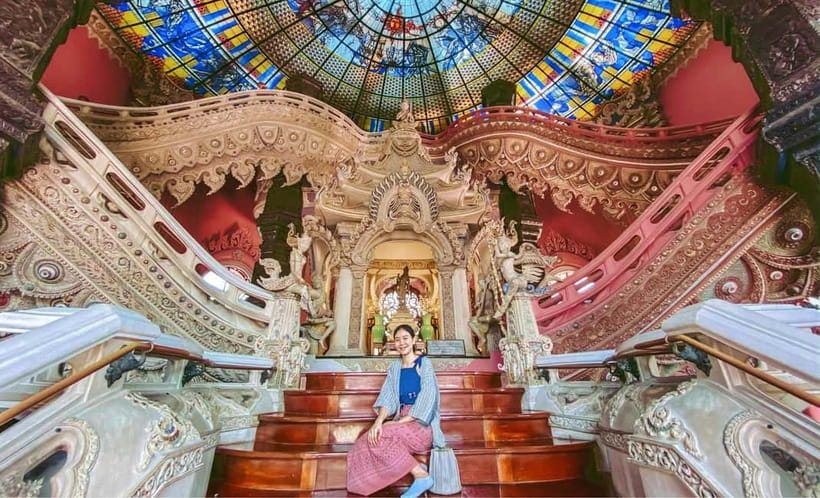
A three-headed elephant made me slow down. At Erawan Museum, I love seeing the massive bronze 3 headed elephant, and I also like how the museum splits into Underworld, Earth, and Heaven. The main thing to plan for is the strict dress code and site rules, including no shorts, no sleeveless tops, and no food or drinks.
What really makes this place click is the story behind the design. The elephant is based on Airavata, the mythic mount of the god Indra, and it is built standing on a sphere meant to symbolize the world he protects, with sacred objects inside meant to carry blessing and prosperity. This museum was created to preserve Lek Viriyapant’s antique collection for the next generation, with the build carried on by his family through Pagpean Viriyapant and beyond.
It is also a pretty simple visit to make happen. The ticket is priced at about $12 for non Thai visitors, you can enter only on your booked date and time, and it is designed for a long enough visit that you can take your time. To get there, I’d use the BTS Skytrain Green Line to Chang Erawan Station (E17), Exit 2, where there is a free shuttle tuk-tuk service every day.
Key things I’d watch for
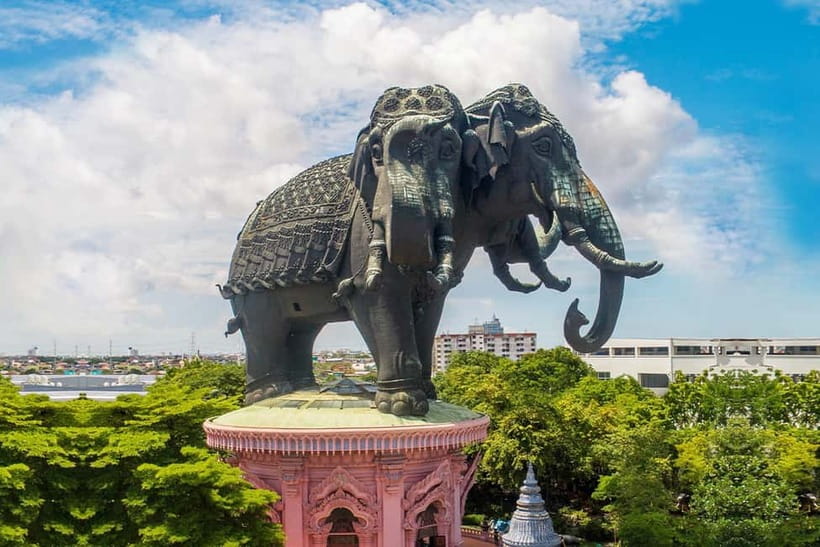
- A giant indoor icon: the 3 headed bronze elephant is the visual anchor the whole museum revolves around.
- Three worlds, one design: Underworld, Earth, and Heaven help you follow the symbolism instead of just wandering.
- Photo opportunities inside and out: the layout gives you many angles, but keep an eye on rules for respectful behavior.
- Ceremony items included: you get flowers, incense, and a lotus flower as part of the visit.
- Rules that affect comfort: modest clothing and no food or drinks can change how you plan your day.
- Easy rail access: BTS to E17, Exit 2, then the free shuttle tuk-tuk helps you avoid extra hassle.
Ticket value: why $12 feels fair for what you get
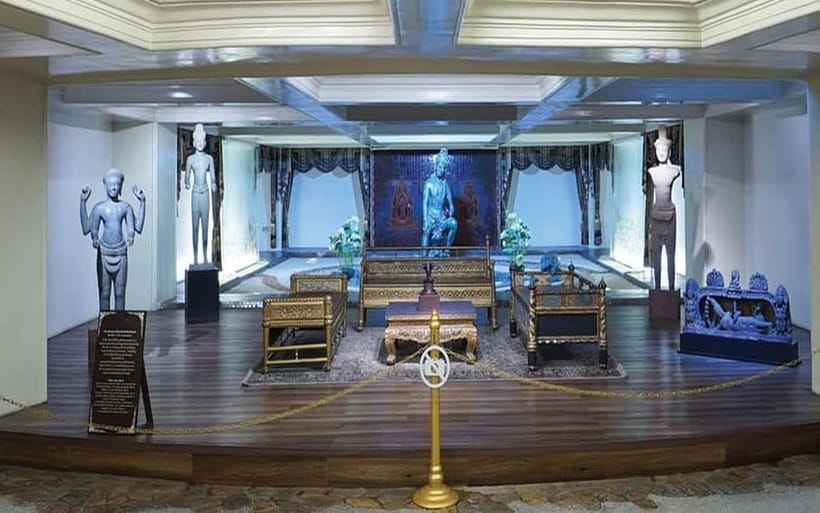
At about $12 per person for a non Thai ticket, this museum is a strong value if you like Hindu inspired art and large-scale Thai craftsmanship. You are paying for the ticket plus the experience setup: access to the areas around the museum, and entry into the main museum zones that are built around the elephant concept.
A key point is that this is not a quick “walk through and go” stop. Your ticket gives you an 8 hour window tied to the specific date and time you booked. That matters because you can move at your own pace, pause for photos, and still see the museum sections without rushing.
Also, you get small ceremony items included, like flowers, incense, and a lotus flower. Even if you are not planning to do much ritual, it adds to the atmosphere and helps you feel like you are stepping into a living cultural space rather than a random photo spot.
Out to the River Kwai, more Kanchanaburi trips
- Bangkok: Samut Prakan Ancient City and Erawan Museum Ticket
★ 4.4 · 73 reviews
Getting there from BTS: Chang Erawan Station Exit 2
I like the logistics here because it is straightforward once you know the last step. Take the BTS Skytrain Green Line, get off at Chang Erawan Station (E17), and use Exit 2.
From there, there is free pick-up service by shuttle tuk-tuk every day. That is one of the biggest time savers in Samut Prakan, because it prevents you from guessing how to get from the station to the museum site.
When you plan your timing, keep in mind the museum visit must match your booked date and time. So I’d build in extra buffer for the BTS ride and the tuk-tuk transfer, especially if you are trying to arrive right at your time slot.
First look at the Erawan Museum elephant: the star of the show
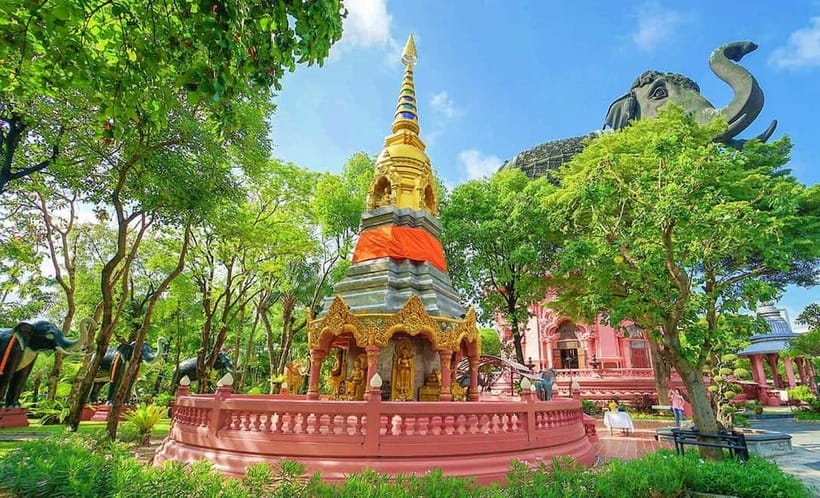
The museum’s big draw is hard to miss: a monumental 3 headed bronze elephant that acts like the centerpiece of the whole experience. The scale is the point. Even before you understand the symbolism, you can feel how this is designed to slow you down.
The elephant is modeled on Airavata from Hindu mythology, the mount of Indra. But the museum’s version adds a visual layer that turns the elephant into a kind of protective world symbol. The elephant stands on a sphere, meant to represent the globe, so the idea is that the creature is guarding the Earth and the sacred objects placed within.
For me, this matters because it changes how you look at the art. Instead of treating decorations like separate “things to photograph,” you start reading the museum as one unified design language, with the elephant as the framework.
The three zones: Underworld, Earth, and Heaven
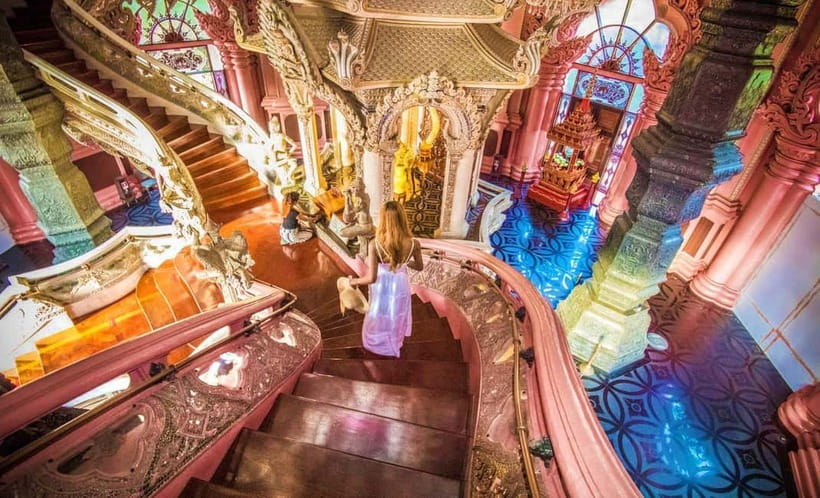
One reason this visit is more than just a famous statue is how the museum organizes space into three sections. You’ll be able to explore Underworld, Earth, and Heaven, all tied to the elephant concept.
Underworld: where symbolism takes the mood down a notch
The Underworld section is where you’ll likely feel the atmosphere shift. I’d treat this area as your “watch your step” zone for looking closely. The theme is built around sacred items and mythic ideas, so take your time rather than trying to sprint past.
Even if you do not read every label, you can still get value by noticing how the visual mood changes. Underworld spaces in religious or myth-based museums often use darker tones, denser composition, and more intense sacred imagery. Here, the payoff is in connecting those choices to the broader story of what the elephant represents.
Earth: the practical center of the myth
The Earth section is where the museum can feel most approachable. This is often the area where you get clearer visual cues and where the sacred objects feel more grounded in the overall design.
I like this section because it functions like a “breather.” You can re-center yourself after the symbolism of Underworld and then approach Heaven with a better sense of contrast. If you’re planning photos, Earth is typically where people naturally spend extra time because it is easier to frame the design without fighting lighting angles.
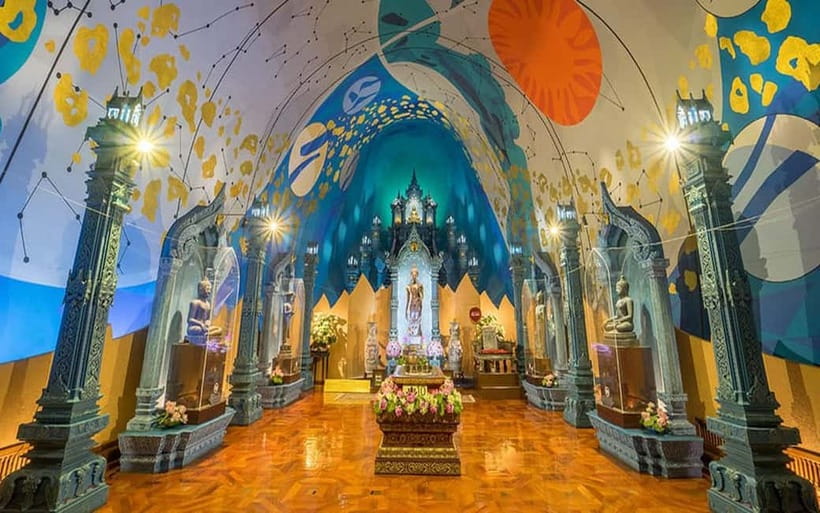
Heaven: the part that rewards slow looking
Heaven is where the museum leans into uplift. You’ll see the symbolism of prosperity and blessing visually expressed through sacred objects and the way the space is arranged around the central icon.
If you care about photography, Heaven can be a fun section because it tends to feel brighter and more “open” depending on the interior setup. Plan to take a few minutes just standing still. Even when you think you have the perfect shot, the best one might come a few steps later when your perspective lines up with the main forms.
Photo tips that keep you on the right side of the rules
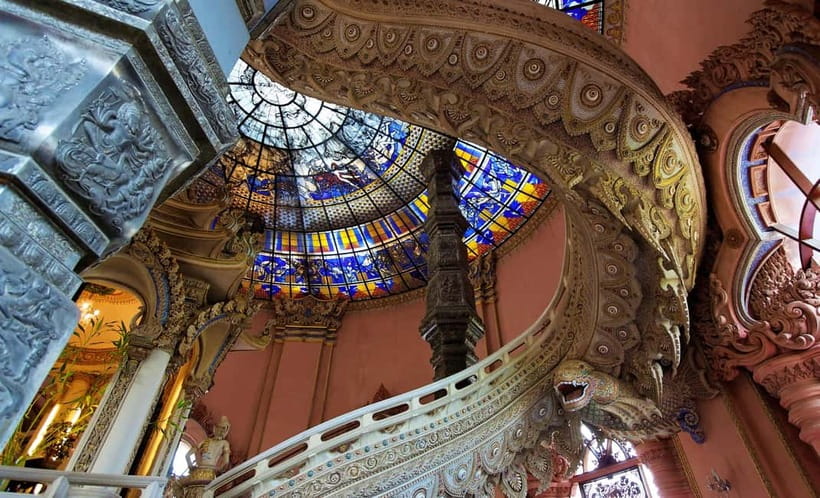
This is a place made for pictures, both inside and outside. I’d still recommend you follow the museum’s etiquette, because rules matter more here than at, say, a random outdoor viewpoint.
A few constraints you should know:
- Taking pictures or videos for commercial purposes is not permitted inside the museum.
- There are expectations for visitors to be quiet and respectful.
- Pets are not allowed, and food or drink is not allowed.
So for the best experience, I’d treat photos as personal souvenirs and move slowly. If someone is setting up ceremony items nearby, give them space. You will get better shots anyway, because you are not fighting crowd flow or distractions.
Also, check the rules on clothing before you leave home. If you arrive in something like shorts or a sleeveless top, you risk cutting your visit short or having to handle an awkward workaround. Dress modestly so you can focus on the elephant and the three zones.
What the included flowers and incense add to the visit
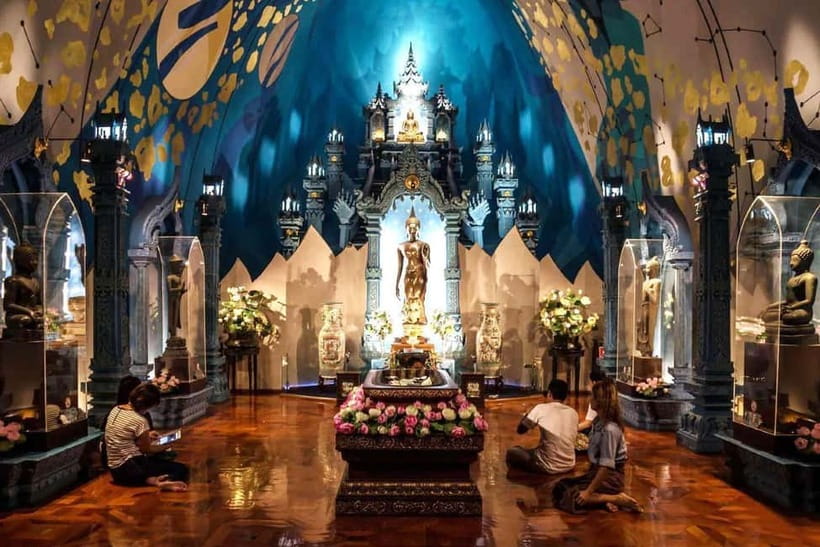
The ticket includes flowers, incense, and a lotus flower. That is not just a “freebie.” It nudges you into the mindset of the museum as a place of worship and memory, not only a display.
Even if you are not planning a full ritual, having these items makes the museum feel more intentional. You can still participate in a respectful way, light incense if appropriate to the setting, and offer flowers or a lotus flower where it fits the flow of the space.
This is also where the museum story becomes more than trivia. The whole concept was built to preserve sacred objects that, in ancient beliefs, were thought to bring blessing and prosperity to the land. That is why so much of the museum is structured around sacred items and ceremony moments.
Dress code and on-site rules that affect your comfort
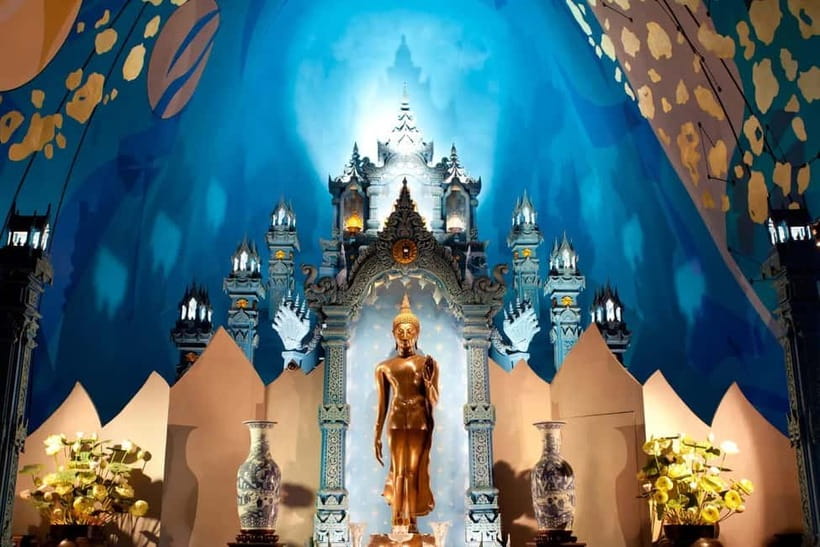
This museum has clear restrictions, and they affect what you do during your day.
Not allowed:
- Pets
- Shorts
- Food and drinks
- Short skirts
- Sleeveless shirts
- Alcohol and drugs
So the smartest move is to dress for the long interior time. Lightweight long sleeves or a longer top helps you stay comfortable in Central Thailand heat while still meeting the rules.
Also, plan around the fact that you cannot bring food and drink in. If you are turning this into an 8 hour day, I’d eat before you go and then keep your time inside focused on the exhibits and atmosphere.
Finally, be mindful of photography rules. Commercial use is not allowed inside, and that is worth respecting if you are making content for work.
Timing your 8 hours so you actually enjoy it
You can visit for up to 8 hours, but the key is how you structure that time. If you show up and immediately rush the three zones, you will likely miss what makes the place special: symbolism and scale.
Here’s a practical way to pace it:
- Start with the main elephant first, then take your time before moving into the sections.
- Visit Underworld, then Earth, then Heaven in order, so the symbolism “moves” for you.
- Leave enough time for multiple photo angles both inside and around the museum.
If you are the type who likes to read, you’ll probably want extra time in at least one zone. If you’re here mostly for the visuals, you can still enjoy it by slowing down for composition and perspective, not just by ticking items off.
And remember, you can only visit on your specified date and time after booking. So once you’re there, avoid treating it like a stop you can “drop in and out” of.
Who this museum suits best
This is a great fit if you like:
- Mythology and symbolism you can see in physical form
- Large-scale Thai craftsmanship and sacred art displays
- A museum with photo opportunities that still feel respectful
You might also enjoy it if you want something more atmospheric than typical temple sightseeing, because this is built around a single icon and three themed worlds rather than a standard route.
If you are traveling with kids, the elephant scale can be a strong draw, but the dress code and quiet expectation mean you’ll want to prep them before arriving. If you hate rules around clothing, plan to wear something modest right away.
Should you book the non Thai admission ticket?
I think this is worth booking if you want a focused museum experience built around the iconic three headed bronze elephant, with the added bonus of clear themed sections and photo-friendly angles both indoors and out. At around $12, the value is strong, especially because flowers, incense, and a lotus flower are included and you get a full 8 hour window to move at your own pace.
Book it if:
- You enjoy Hindu inspired symbolism and want to see it presented through big, physical design.
- You want a museum stop that is easy to reach from BTS and doesn’t require complex planning.
Skip it or reconsider if:
- You need to eat during your visit, because food and drinks are not permitted inside.
- You are not willing to follow the modest dress code like no shorts and no sleeveless shirts.
Either way, plan your outfit, arrive via BTS Green Line to Chang Erawan Station Exit 2, and set aside time to look slowly. This place rewards patience more than speed.
FAQ
How much is the Erawan Museum admission ticket for non Thai visitors?
The ticket price is listed as about $12 per person.
What is the visit duration for this admission ticket?
The ticket is valid for 8 hours, based on the availability for your selected date and time.
Can I visit any time I want on the day of booking?
No. You can only visit the Erawan Museum on the specified date and time after you booked.
What is included with the ticket?
Included items are admission to the Erawan Museum, flowers, incense, and a lotus flower, access to areas surrounding the museum, and all taxes and fees.
What is not included?
Transfers and other personal expenses are not included.
How do I get to the museum from Bangkok using BTS?
Take the BTS Skytrain Greenline and exit at Chang Erawan Station (E17), Exit 2. There is free shuttle tuk-tuk pick-up service every day.
Are food and drinks allowed inside the museum?
No, food and drinks are not permitted. Alcohol and drugs are also not allowed.
More Tickets in Samut Prakan
More Tour Reviews in Samut Prakan
Out to the River Kwai
Just In: Fresh Samut Prakan Reviews
Kanchanaburi & River Kwai, compared.
 ★ 4.5From Bangkok: Erawan Park & Kanchanaburi Small-Group TourFrom $591,582 reviews
 ★ 4.6From Bangkok: Historical Day Tour to River KwaiFrom $51868 reviews
 ★ 4.5Bridge on the River Kwai and Thailand-Burma Railway TourFrom $108658 reviews
 ★ 4.5Erawan Waterfalls and Bridge Over River Kwai Tour from BangkokFrom $56372 reviews
 ★ 4.5Bridge on the River Kwai and Thailand-Burma Railway Guided TourFrom $94353 reviews
 ★ 5.0Erawan Waterfall and Elephant Care: Private Tour to KanchanaburFrom $227339 reviews
 ★ 5.0Kanchanaburi Full Day Tour: River Kwai and Erawan FallsFrom $87327 reviews
 ★ 4.0Floating Markets and Bridge on River Kwai Tour from BangkokFrom $85253 reviews
Browse the lists this tour appears in