
Review · WALKING TOURS
CHOB Bangkok Walking Tour (Talking + Walking + Eating)
Bangkok clicks into place on foot. This half-day small-group walk blends live commentary with quick food breaks, so you can connect each landmark to real daily life. It is designed for first-time visitors, with a route that mixes classic temples, modern viewpoints, and the city’s after-dark energy.
I like two things most. First, the max 8-person group keeps it personal, so you can ask questions instead of shouting over a crowd. Second, you get snack time built into the tour, and I like that food is used as a shortcut to understanding Thai culture, not just as a random add-on.
One thing to consider: this is still street time. If you are sensitive to heat, crowded night areas, or sudden rain, plan for good shoes and a weather mindset, because the experience requires decent conditions.
Key Things That Make This Tour Worth Your Time
- Max 8 travelers means the guide can slow down when you want photos, questions, or explanations
- Live commentary ties history and modern life together as you walk past major landmarks
- Snacks are included, so you are not doing the tour hungry or relying on convenience stores
- A route across multiple neighborhoods gives you a fast orientation from parks to markets and river views
- Guides run it like a conversation, with examples like Joy being careful and courteous, and George keeping it more chatty and friendly
Why a 5-Hour Bangkok Walking Plan Works
Bangkok is a great city, and also a city that can overwhelm you fast. The best way to avoid that is getting your bearings early, then choosing where to go deeper later. This tour is built for that “first day or two” sweet spot, because it covers a lot of different Bangkok flavors in about five hours.
You get more than a list of photo stops. The guide points out what you are seeing and why it matters, from religion and city planning to everyday street life. That live narration helps the city stop feeling like random sights and start feeling like a connected story.
And the small-group size is a big deal. With eight people, you are more likely to have actual back-and-forth questions. That matters in Bangkok, where street signs, temple rules, and local customs can be confusing if you only read them in guidebooks.
Bangkok at walking pace, more routes
- Bangkok: City Highlights Temple and Market Walking Tour
★ 4.5 · 3,990 reviews - Bangkok: Grand Palace and Wat Phra Kaew Guided Walking Tour
★ 4.4 · 2,417 reviews - Bangkok: Wat Pho and Wat Arun Guided Walking Tour
★ 4.6 · 1,720 reviews
Starting at Silom, Finishing Near Pratunam: How the Route Feels
The tour starts at Silom MRT Station at 9:00 am. It ends near Pratunam Pier, and the overall route is organized around major areas you can later revisit on your own.
Even if you do not know Bangkok geography yet, this kind of route is useful. You get exposure to both “local everyday” Bangkok and the parts visitors talk about most. By the time you finish, you should be able to answer simple questions like where the river fits into your plans, where the big parks are, and what neighborhoods feel more nightlife-heavy versus shopping-heavy.
It also helps that it is close to public transportation. If your schedule is tight, you can usually plug this tour into a bigger day without needing complicated logistics.
Lumpini Park: A Peaceful First Look at Bangkok
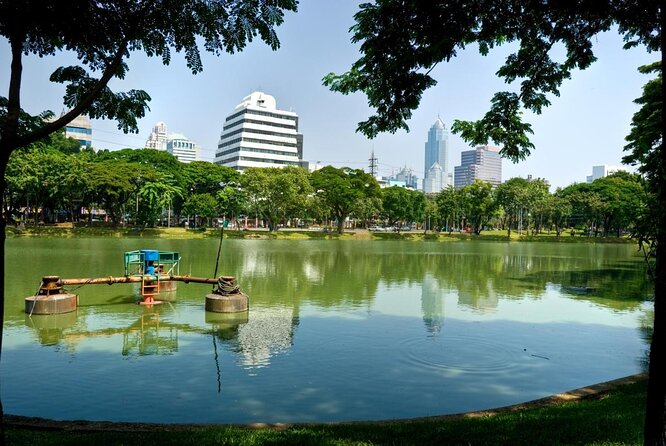
One of the first stops is Lumpini Park, described as the first public park in Bangkok. Even if you have never visited before, parks here feel like Bangkok’s version of a reset button.
This is not just “a place with trees.” A stop in Lumpini Park is a chance to notice how Bangkok uses public space, how people move through the city at different hours, and how locals mix exercise, relaxation, and daily routines.
Practical tip: if you are walking from the morning start into warmer midday light, take a few minutes here to slow down. It sets you up for the rest of the day, especially if later stops include markets and evening zones.
Giant Swing Area and Temple Landmarks: Seeing Religion and City Life Together
The tour includes classic Bangkok religious sights, including Giant Swing and viewpoints tied to the Golden Mount (Wat Saket). This matters because Bangkok temples are not isolated monuments. They are part of neighborhood life, with routes, offerings, and everyday behavior that you can understand better with a guide.
At places like the Giant Swing area, you will notice how ceremony and street traffic coexist. People plan prayers around their day, and tourists often miss the everyday flow because they are only focused on taking photos. A guide helps you slow down long enough to notice details you would otherwise gloss over.
At the Golden Mount, the emphasis is on that “why people come here” feeling. You are getting a city perspective, plus a sense of the spiritual draw behind the hilltop experience. If you later want to return at a different time of day for photos, this stop gives you a strong mental map for where to stand and what you are looking at.

Democracy Monument and Brahman Shrines: Bangkok’s Meaningful Center
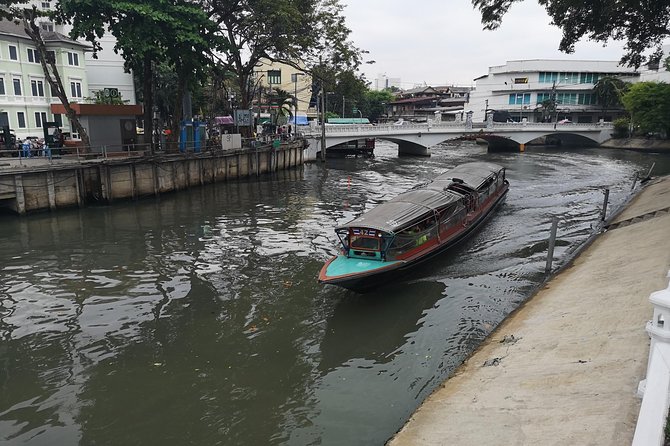
The walk also includes major civic and religious landmarks, including a public monument in the center of Bangkok and a Brahman religious structure. This is where the city’s identity becomes very clear.
A public monument teaches you how Bangkok tells stories about itself, and why certain spaces matter for public life. Brahman sites add another layer, showing the mix of belief systems you will see across the city, not just one single religious tradition.
You do not need to be a religion expert to get value here. What you need is someone to explain what you are seeing, so you do not treat these places like background decoration. On this tour, the guide’s live commentary helps you connect symbols to meaning.
Chao Phraya River and a Cable-Stayed Bridge View
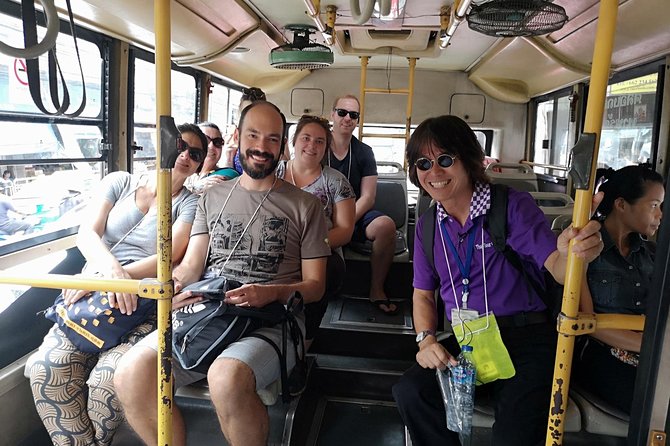
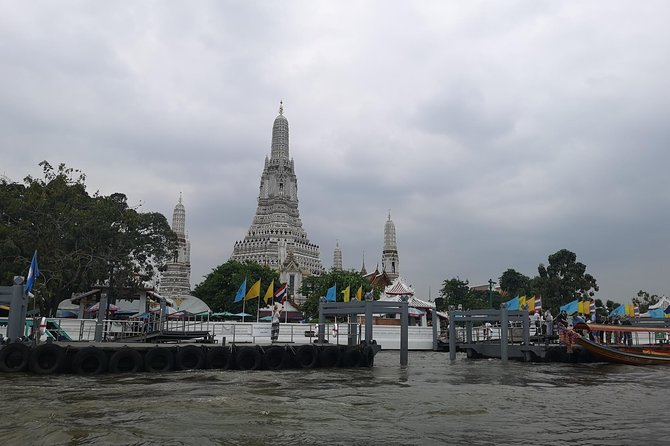
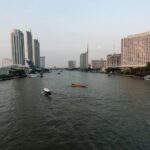
The tour takes you to the main river in Thailand, the Chao Phraya. The river is the backbone of Bangkok, and getting even one good river moment on your first visit can change how you think about distances and neighborhoods.
One of the standout route elements is a cable-stayed bridge crossing the Chao Phraya. Cable-stayed bridges are designed for long spans, and in Bangkok they also serve as a kind of visual divider between sides of the city. You get that “okay, now I understand the layout” feeling quickly.
If you are the type who likes to photograph city lines, this is a strong moment. If you are less into photos, it still helps you mentally place where future temple stops, markets, and viewpoints fit into your day.
Mahanakorn Skywalk and Thailand’s Tallest Building Area
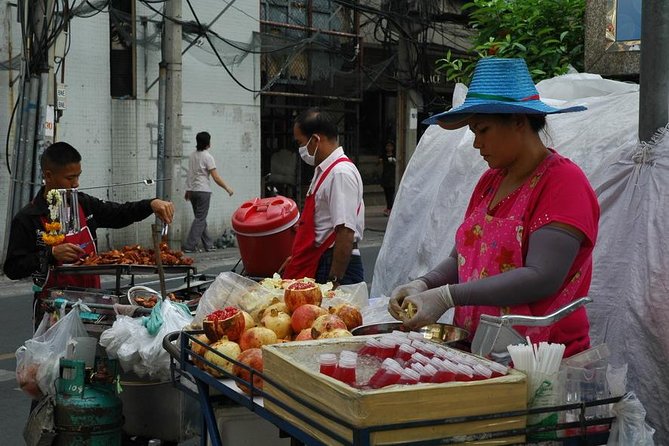
Modern Bangkok shows up with a stop tied to the tallest building in Thailand and Mahanakorn Skywalk. I like adding a high viewpoint at some point in a walking tour, because it gives context. From below, Bangkok can feel flat and confusing. From above, the city’s shape makes more sense.
This is also where the tour balances old and new. You are going from temple and civic spaces to a skyline experience. That contrast is one of Bangkok’s biggest appeals, and doing it with a guide keeps it from turning into random sightseeing.
Practical note: if you have a fear of heights, you should decide ahead of time whether you want to step into any skywalk-like areas. The tour mentions sky-related experiences, so it is worth checking your comfort level before committing.
Thai Foods and Dance Show: Eating as a Cultural Lesson
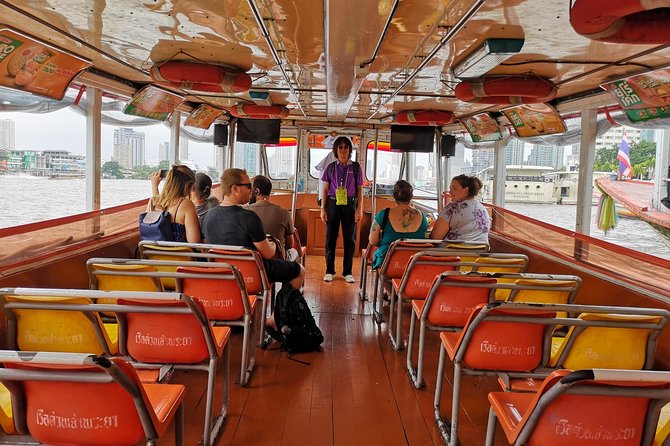
One of the tour inclusions is traditional Thai foods, plus a traditional Thai dance show. This part is valuable because food and dance are both windows into daily culture, not just tourist entertainment.
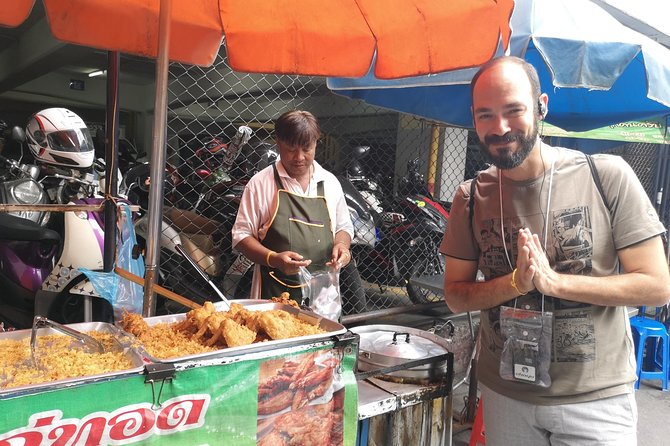
Even when you think you know Thai food from restaurants back home, Bangkok’s street-food approach is different. The guide helps you understand what you are eating and how it fits into local life, instead of treating it as a quick snack and moving on.
Also, snacks are included. That matters in a city where it is easy to forget to eat until you hit that crash of low energy and then you spend more than you meant to on random convenience stops.
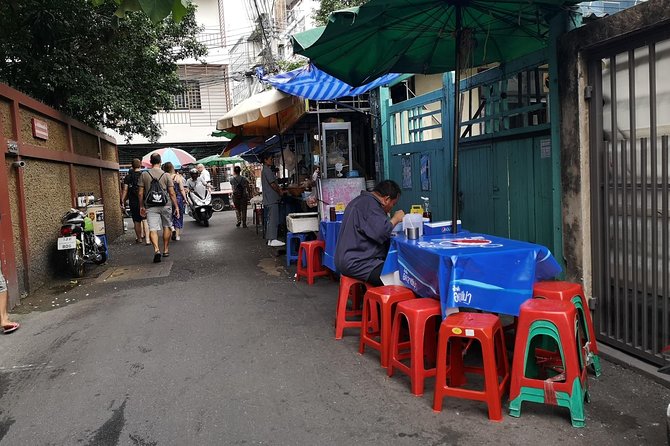
A fun detail from the experience: one guide, Joy, is noted for taking people along food streets and sampling dishes like glass noodle pork soup, plus coffee. That is the kind of snack-stop energy that makes a walking tour feel like a shared day, not a checklist.
Night Markets, Red-Light District Areas, and Khaosan Road
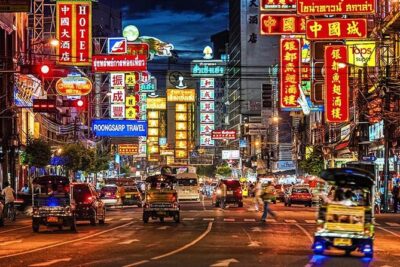
Later on, the tour includes night market and red light district areas and also Khaosan Road, which is known as a backpacker hub. This is the part of Bangkok that can feel intense for first-timers, so having a guide here helps with two things: context and boundaries.
You will likely see how nightlife and tourism overlap. Night markets can be lively and sensory, and they also reflect how Bangkok people shop, eat, and socialize after dark. Khaosan Road is a useful contrast point because it shows the global side of Bangkok tourism, right next to local street patterns.
My practical advice: keep your expectations flexible. This is not a “quiet museum” segment. If you want a calmer day, you can still enjoy it with the right mindset, treat it like a streetscape study, and focus on small moments like food stalls, signage, and how locals move through the space.
Asiatique Riverfront and Fancy Shopping Stops
The route includes Asiatique The Riverfront and also a stop described as the most fancy shopping mall in Bangkok, plus other shopping zones including a night bazaar and wholesale cloths and shopping mall areas.
I like including shopping time when it is done with purpose. Instead of “shopping because time passed,” you get an orientation to what kind of shopping Bangkok does well, from browsing and window shopping to wholesale-style finds. That makes it easier for you to decide later, like: do you want to return for a shopping afternoon, or skip it and spend that time elsewhere?
Asiatique adds another angle to the river theme. Riverfront spaces often blend food, entertainment, and casual strolling. Even if you do not buy anything, it is a good “what does Bangkok look like when it is packaging its river life for visitors” moment.
Sky Bars: Best Views Without Making It Complicated
The tour mentions best sky bars in Bangkok. Even if you do not plan to spend big on drinks, sky bar stopovers can be a fun way to see the city from angles you cannot get from street level.
I recommend using the sky bar moment for orientation. Look for landmarks, note directions, and identify neighborhoods you want to revisit. Then you can come back later when you have time to linger.
If a sky bar drink is on your wish list, budget for it. The tour includes snacks, but drinks and personal spending are not listed as included, so it is best to treat bar purchases as optional extras rather than expected parts of the package.
Price and What It Really Buys You
The price is $50 per person, and it runs for about five hours with a maximum group size of eight. In a city like Bangkok, that can be good value when you factor in live commentary, the ability to ask questions, and snack time.
The tour includes snacks, but it is not positioned as an all-expenses-paid mega day. That is fine. You should treat this as a guided orientation that helps you make smarter next-day choices. You can always spend your own money on a second visit to the areas you care most about.
Also, the timing matters. Booked about a month in advance on average, the tour is popular. If your travel dates are fixed, it is worth locking it in so you do not end up improvising a substitute when you finally get to Bangkok.
What You Should Bring (So the Walk Feels Good)
Even without a detailed packing list, this is still a walking tour in real street conditions. Come prepared with:
- Comfortable shoes for uneven sidewalks and lots of steps
- Water or a plan to buy it as you go
- Light sun protection, especially in the morning to midday transition
- A small rain plan, since weather can affect the experience
If you want the most from the day, bring curiosity. Bangkok rewards people who look up, look down, and notice how locals behave around temples, markets, and public spaces.
Who This Tour Suits Best, and Who Might Skip It
This tour is a strong match for:
- First-time Bangkok visitors who want a clear orientation fast
- People who like conversational guides and asking questions
- Travelers who want a mix of temples, river views, and night areas in one half-day
- Anyone who values food stops, not just photos
It might not be your best choice if you:
- Want a quiet, strictly daytime tour without any night market energy
- Have very limited tolerance for street walking and changing neighborhood scenes
- Prefer to fully research and DIY every stop without a guide’s explanation
The small group format helps a lot, but you still need to be okay with moving around the city.
Should You Book CHOB Bangkok Walking Tour?
If you want Bangkok to start making sense quickly, I think you should book it. The biggest reasons are the small-group size, the live guide commentary, and the way the day uses food and landmark variety to build context, not just a photo lineup.
I would especially recommend it if you are the type who likes structure but also wants room to ask questions. This is the kind of tour where a careful, courteous guide like Joy can turn snack and street moments into a genuinely enjoyable experience. And if you get a more chatty guide style like George, the tour can feel more like a conversation with a local-minded friend than a one-way lecture.
One final check: since the experience depends on weather, plan for the fact that you might need to reschedule if conditions are poor. If you can handle that and you want a practical first look at Bangkok, this is a very solid value at $50 for five hours with guided storytelling and included snacks.
FAQ
How long is the CHOB Bangkok Walking Tour?
It runs for about 5 hours.
How many people are in the group?
The tour has a maximum of 8 travelers.
What is the meeting point and start time?
The tour starts at Silom MRT Station, and the start time is 9:00 am.
Where does the tour end?
The tour ends near Pratunam Pier.
What is included in the price?
Snacks are included.
Do I need to use a mobile ticket?
Yes, the tour offers a mobile ticket.
What happens if the weather is bad?
The experience requires good weather. If it is canceled due to poor weather, you will be offered a different date or a full refund.
Is there free cancellation?
Yes. You can cancel up to 24 hours in advance for a full refund.
Bangkok on Foot: More Walks
More Tours in Bangkok
More Tour Reviews in Bangkok

Just In: Fresh Bangkok Reviews


Walking Tours, compared.
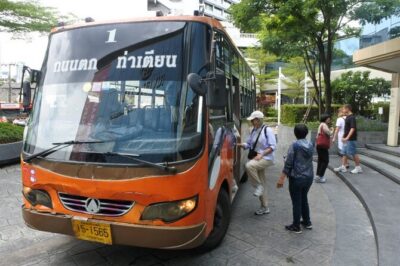 ★ 4.5City Highlights Temple and Market Walking TourFrom $423,990 reviews
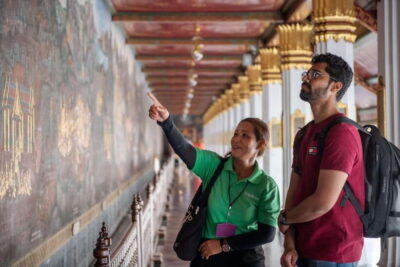 ★ 4.4Grand Palace and Wat Phra Kaew Guided Walking TourFrom $172,417 reviews
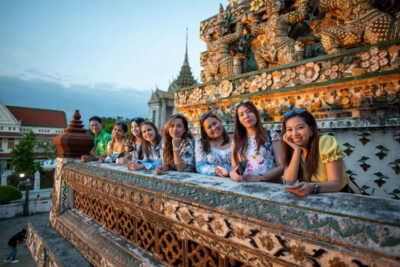 ★ 4.6Wat Pho and Wat Arun Guided Walking TourFrom $171,720 reviews
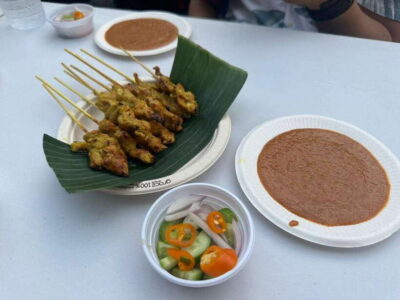 ★ 4.9Bangkok Authentic Tasting Thai-Chinatown Walking Food TourFrom $43852 reviews
 ★ 4.2Discover a Taste of Chinatown – 2 Hr Walking TourFrom $64152 reviews
 ★ 4.5Grand Palace and Wat Arun Guided Walking TourFrom $18118 reviews
 ★ 5.03-Hour Bangkok Walking Tour: Wat Pho and Wat ArunFrom $18102 reviews
 ★ 4.5Grand Palace, Wat Phra Kaew, Wat Pho and Wat Arun Walking Tour From BangkokFrom $9788 reviews
Browse the lists this tour appears in