
Review · AUDIO TOURS
Bangkok Self-Guided Audio Tour
Bangkok can feel like a maze, so this is a smarter way in. You get a self-guided audio route that hits 12 major sights while letting you start and stop on your own schedule. I like that you can follow the plan at your pace, including offline audio options. One catch, though, is that some listeners have criticized the audio as fairly general, even close to a Wikipedia-style rundown, and they also flagged translation quality.
My second big plus is the interactive map setup. Each location links directly to its own audio track, so you are not fumbling through apps all day. If you like structure but hate rigid group tours, this format fits well, but you should treat it as a navigation and context tool rather than a deep, detailed guide.
Key highlights to know before you go
- 12 stops, built as an order you can break: you can follow the suggested sequence or skip what you want
- Click-to-play audio per attraction: the map points link straight to the matching track
- Offline listening is supported: useful in places where mobile signal can be unpredictable
- A mix of old temples and modern culture: you cover classic Bangkok plus contemporary art spaces
- Small time blocks by design: each stop is paced around about 10 minutes
Price and setup: what you really pay for
This tour costs $9 per person and runs about 3 hours total, with 12 attractions on the audio playlist. That is inexpensive, but you are also not paying for a live guide or transport. The money mostly goes toward the audio tracks, the linked itinerary map, and giving you private access to the content for a limited window.
The format is simple: before your start time on your selected date, you receive an email with two links. One is your audio access link, hosted via a secure SoundCloud web link. The other is a secure Google My Maps link that shows all 12 locations. Each map point connects to its matching audio guide, so you can treat the map like your day-of dashboard.
You get a mobile ticket, but you should understand what that means in practice. This is not a “scan and enter” ticket for attractions. Attraction entry fees are not included, and you still need to pay onsite when admission applies.
More Bangkok days with a guide
- From Bangkok: Ayutthaya Temples Guided Tour with Lunch
★ 4.7 · 10,535 reviews - Bangkok by Private Guide: Full Day Tour In and Around
★ 5.0 · 4,323 reviews - Bangkok: Grand Palace, Wat Pho, and Wat Arun Guided Tour
★ 4.8 · 3,632 reviews
How the audio works day-to-day (and what to bring)
The tour is built around you tapping into audio right as you arrive. The provider says you can listen to the individual attraction guides or play the entire tour to plan your route in advance. That matters because Bangkok sightseeing can be a lot of walking, street crossings, and last-minute decisions.
Your best workflow is usually this:
- Use the map link first to get your bearings and confirm the order you want.
- Use the audio link either to preview the tracks or to plan how long you want to linger.
- At each stop, click the map point and press play right on your phone.
One important practical detail: the tour does does not include audio devices. You will need earphones and your phone, and you are responsible for internet access if needed. The tour also states you can listen offline, which is great, but it is still smart to make sure your phone is ready before you head out.
This is also listed as a private tour activity, meaning it is for your group only. Since it is self-guided, that translates to fewer “shared pace” headaches and more control.
Stop 1 to 2: Wat Traimit and Chinatown on the same thread
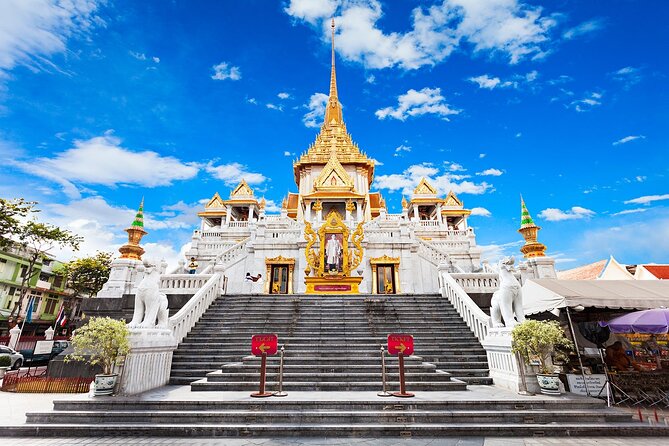
Temple of the Golden Buddha, Wat Traimit
Your first stop is the Temple of the Golden Buddha (Wat Traimit), where the big headline is the world’s largest solid gold Buddha statue. The audio guide focuses on the temple’s significance in Thai Buddhism and how the statue was discovered in an almost accidental way. That story is a good opener because it gives you a reason to look closely instead of just snapping photos.
This is also a quick-hit stop, paced at about 10 minutes. In a self-guided format, that time box is helpful, because it encourages you to keep moving. If you find yourself staring longer than planned, you can always pause and come back to the audio when you are ready.
Admission is not included, so expect to pay entry if there is a fee during your visit.
Worth putting side by side before you book this Bangkok tour:


Chinatown, Bangkok
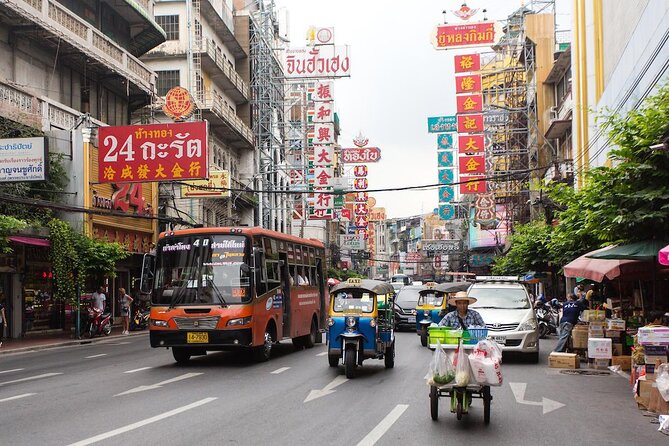
Next comes Chinatown (Bangkok), positioned as the cultural heart of Bangkok’s Chinese community. This part of the audio is less about a single monument and more about what you can observe around you: the markets and the street-food scene. The audio is designed to give you context while you wander.
Even if you only have a short window here, this stop can be the most memorable because you get sensory input, not just architecture. Again, the stop is about 10 minutes, so you might want to treat it like a “walk-through orientation,” then decide later if you want to return for more time on your own.
Entry fees are not listed as included, but for this type of area, you are mostly dealing with normal city spending like snacks.
Stop 3 to 4: Wat Pho and Wat Arun, Bangkok’s temple contrasts
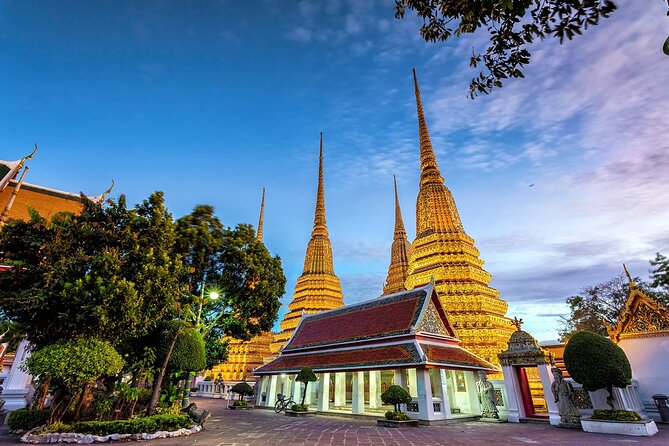
Wat Phra Chetuphon, Reclining Buddha and Thai medicine tie-in
Your third stop is Wat Phra Chetuphon Wimon Mangkhalaram Rajwaramahawihan, known for being Bangkok’s oldest and largest temple complex in this route. The highlight is the famous Reclining Buddha. But what makes the audio route more interesting here is the tie to traditional Thai medicine and massage.
That detail is practical because it turns the visit into more than “see the statue.” You are given a lens for understanding why these temple spaces also connect to broader ideas of healing and care.
This stop is free for admission on the route information you have, and the audio time is again about 10 minutes.
Temple of Dawn, Wat Arun
Then you move to Wat Arun (Temple of Dawn), one of the most recognizable temple silhouettes on the river side of the old city. The audio focuses on the temple’s intricate porcelain decorations and what the architecture symbolizes in Thai Buddhism. It also covers how the temple evolved across historical periods.
Wat Arun can look best when you slow down, but your audio block is about 10 minutes. If you want a more relaxed approach, use that as a minimum. Start the audio, then keep looking at the details after the track ends. With porcelain decoration, small visual patterns are usually what reward your attention.
Admission is not included for Wat Arun based on the route notes.
Stop 5 to 6: The Grand Palace and the Emerald Buddha
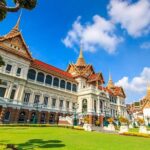
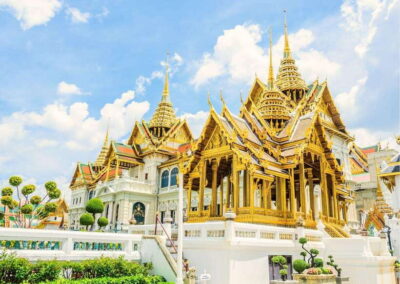
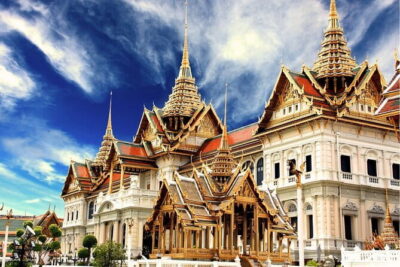
The Grand Palace
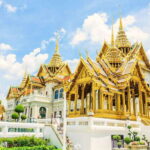
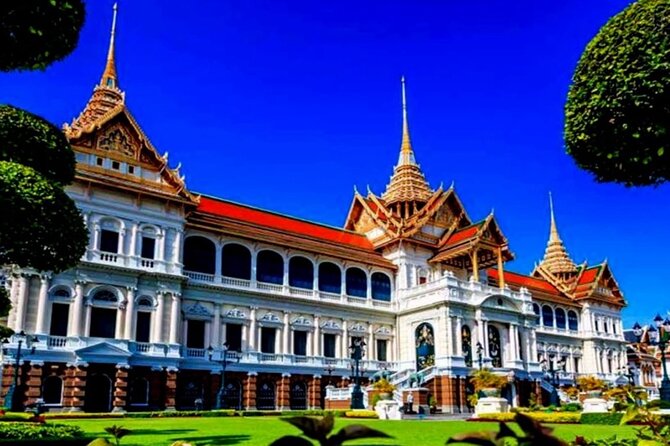
Next is the Grand Palace, the core of Thai royalty in this route. The audio is built to explain the Grand Palace’s role in Thai history and governance. That “why it mattered” context helps because it reframes the visit from a pretty set of buildings into a site with political purpose.
This stop also sits around 10 minutes in the itinerary. The Grand Palace is big, so if you only give it one tight pass, you will get the overall feel but maybe not every detail. Use the audio as your compass, not as a checklist.
Admission is not included.
Temple of the Emerald Buddha, Wat Phra Kaew
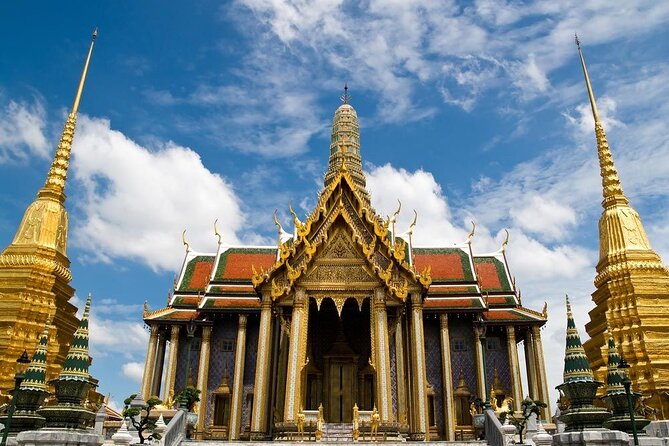
Inside the palace complex is your next stop: Temple of the Emerald Buddha (Wat Phra Kaew). The audio guide’s focus here is Thailand’s most sacred Buddhist temple and the legend of the Emerald Buddha.
This is exactly the kind of moment where having an audio narrative helps you notice what you otherwise might overlook. Even without a live guide, you can walk into the space with a few key ideas in your head, then look for them in the sights.
Admission is not included, and your audio time is about 10 minutes.
Stop 7 to 8: National Museum Bangkok and the Golden Mount views
National Museum Bangkok
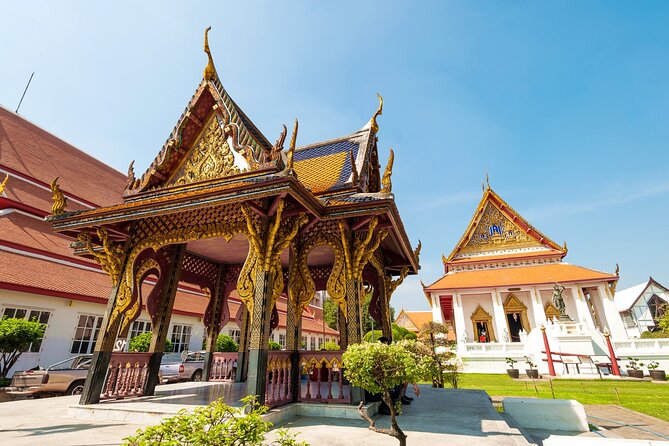
Then you head to the National Museum Bangkok, where the audio shifts from temple stories to broader timelines. The guide is designed to take you through Thai history from prehistory to the Bangkok period, using artifacts as your stepping stones.
This is a smart change of pace after palace and temple stops. Temples can compress your brain into “look, look, look.” A museum day segment resets that by giving you structured context and a clear sequence of time.
Admission is not included, and the planned audio time is about 10 minutes, which is short for a museum. If you like museums, you can always extend your visit after the audio track ends, but the tour will at least get you started with the right themes.
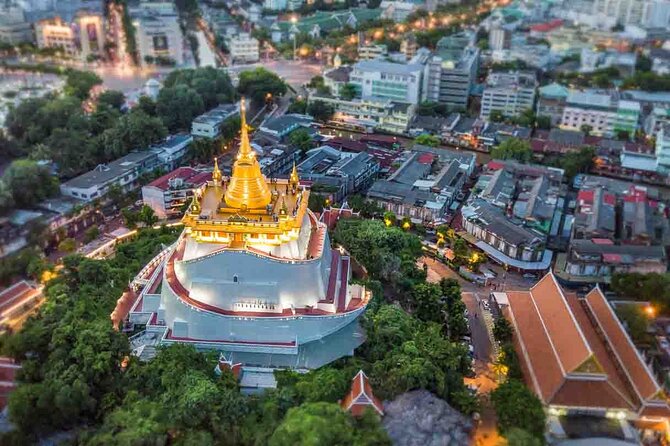
Golden Mount (Wat Saket)
Your next viewpoint stop is the Golden Mount (Wat Saket). The audio guide highlights its artificial hill and focuses on its construction during the Ayutthaya period and its significance in Thai Buddhist cosmology.
The practical value here is obvious: this is one of the few stops on the route designed for panoramic views. Even if you only spend the planned 10 minutes with audio, the climb plus the view can act as a mental reset for the rest of your day.
Admission is not listed as included.
Stop 9 to 10: Marble Temple architecture and a contemporary art hub
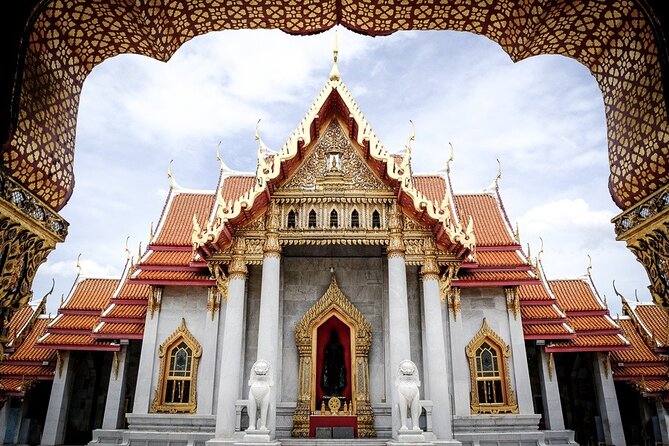
Wat Benchamabophit, The Marble Temple
Next is Wat Benchamabophit (The Marble Temple), famous for its use of Italian marble. The audio explains the unique blend of Thai and European architectural styles.
This stop is a useful palate cleanser because the texture and geometry of marble buildings can feel different from gilded temple gold or porcelain ornamentation. The route uses architecture and materials as the story, so you know what you are meant to pay attention to while you walk around.
Admission is not included.
Bangkok Art & Culture Centre
Then you move to Bangkok Art & Culture Centre, which the audio describes as a modern hub for contemporary Thai art and culture. The guide frames it as part of Thailand’s evolving art scene and its place in the global contemporary art world.
This is the kind of stop that can be a bonus if your trip includes downtime in hot weather. It is also a nice pivot from “heritage heavy” temple day into modern creative expression.
Admission is listed as free on the route information.
Stop 11 to 12: Lumpini Park breaks and MOCA’s private museum angle
Lumpini Park
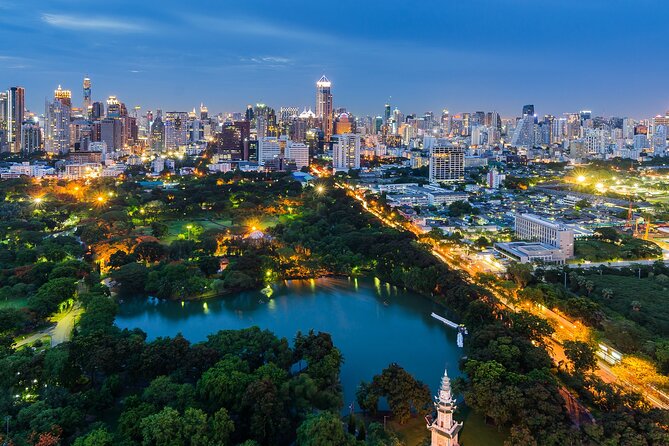
For a breather, the route includes Lumpini Park. The audio highlights it as a green oasis in the heart of the city, plus its history as a royal gift to Bangkok and its importance as a recreational space for city residents.
This is more than a filler stop. After a string of major monuments, a park segment gives your feet a break and helps you see the city as a place people live, not just a place people visit. The audio time is about 10 minutes, but you can stretch it if you feel yourself slowing down.
Admission is listed as free.
Museum of Contemporary Art (MOCA)
Your final stop is the Museum of Contemporary Art (MOCA). The audio positions it as Thailand’s largest private museum of contemporary art and focuses on modern artistic movements and their cultural significance.
Admission is not included on the route information you have, and the audio time is about 10 minutes. That is short for a museum, but as a self-guided add-on, it can work well. You can use the audio to identify themes you care about, then stay longer in the sections that catch your eye.
Best use cases: who this tour fits (and who should skip it)
This tour is best for you if:
- You like having a route and context, but you do not want to pay for a live guide.
- You are comfortable navigating using Google Maps and you want an easy plan for major landmarks.
- You want flexibility to skip stops and adjust time on the fly.
- You enjoy short audio tracks that give you the story behind what you are seeing.
It may not be the best fit if you want:
- Deep, highly specific explanations that go beyond the basics.
- Very polished translation quality.
- A guide who can answer questions on the spot.
One more point to keep your expectations realistic: the audio content is described as general by at least one listener, even to the level of feeling like a quick reference page. So if you want “learn everything,” this is not that. If you want “get oriented fast and understand the headlines,” it can be a good match.
Practical tips to make it feel worth $9
Here are a few ways to squeeze more value out of the self-guided format:
- Preview the audio tracks once before you start. Listening to the whole tour can help you choose a tighter route.
- Use the map as your main guide. When you click the stop on the map, you get the matching audio, which reduces decision fatigue.
- Plan for attraction fees. Since entry tickets are not included, check what you might need to pay so you are not surprised mid-walk.
- Treat the 10-minute blocks as defaults. If a temple grabs you, stay longer. The whole point is you set the pace.
- Bring earphones. No audio device is included, so you want that ready before you leave.
So, should you book this Bangkok audio tour?
If you want a low-cost way to hit Bangkok’s biggest landmarks and get enough story to understand what you are looking at, yes, it can work. The best reason to book is the combination of an interactive map and linked audio per stop, which makes planning and navigation easier than trying to patch it together yourself.
But book with the right mindset. This is a self-guided, audio-first plan, not a live guide experience. If you are the type who demands detailed explanations and very high translation quality, you might find the audio too general. If you are okay using it as a helpful reference while you explore, it is a practical way to spend your time in Bangkok without paying a lot.
FAQ
How much does the Bangkok self-guided audio tour cost?
It is priced at $9.00 per person.
About how long does the tour take?
The duration is listed as 3 hours (approx.).
Is it a guided tour with a person?
No. It is a self-guided audio tour. You decide your own starting point and ending point in Bangkok.
Can I start and finish whenever I want?
Yes. The tour is designed so you can start and end on your own schedule, and you can explore at your pace.
Can I listen to the audio offline?
The tour description says you can listen to the audio tour offline.
Do I get an audio device or earphones?
No. Audio devices (earphones and internet or Wi-Fi) are not included, so you will need to bring your own setup.
Are entry fees included for temples and museums?
No. Entry fees are not included. Where admission is listed as free (like some stops), you still follow the site rules on the day.
How do I access the audio guides?
On your selected date and before your starting time, you receive an email with two links: one to the audio guide playlist (via SoundCloud web link) and another to an interactive Google My Maps itinerary where each point connects to its audio.
Is the tour refundable if I cancel?
No. This experience is non-refundable and cannot be changed, and you cannot receive a refund if you cancel or request an amendment.
Smoother With a Guide



More Tours in Bangkok



More Tour Reviews in Bangkok




Just In: Fresh Bangkok Reviews




Audio Tours, compared.
 ★ 4.0Audio guides for Bangkok, Ayutthaya & Chiang MaiFrom $938 reviews
 ★ 3.8Bangkok Grand Palace & Emerald Buddha Flexible Pass w/ AudioFrom $2935 reviews
 ★ 5.0Bangkok’s Wireless Road: A Self-Guided Audio TourFrom $75 reviews
 ★ 3.5Bangkok Grand Palace & Emerald Buddha Flexible Entry with AudioFrom $283 reviews
Browse the lists this tour appears in