Review · BANGKOK
Bangkok: Must things to see in China town, Small group
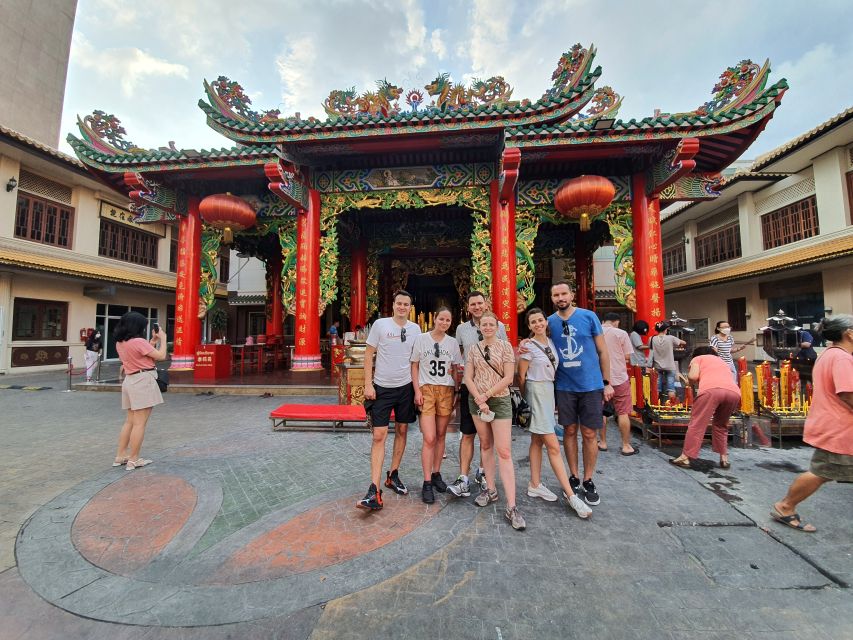
Chinatown gets personal on this walk. You get a guided tour through Bangkok’s Thai Chinese neighborhood, with Mee pulling the threads from temples to street corners. I especially liked the story-led guidance and the food moments, including snack, coffee, and a local lunch. One catch, a Chinese temple stop includes steep stairs, so you need careful footing.
Plan for an easy walking loop, about 4 kilometers, mostly flat. You’ll meet at MRT Hualampong Exit 1 (look for the guide in an Eatwalktalktour shirt), start at Tang Hua Pug Building, and finish back at the same meeting point. During May to September, bring an umbrella, and dress for temple visits, meaning no short shorts or short skirts.
Key Highlights You’ll Actually Feel on the Walk
- Mee’s guidance connects temples, markets, and daily life into a clear story you can follow
- 15+ Chinatown stops so you see more than just the obvious streets
- Sampeng Market gives you a real sense of trade and local browsing in an older market area
- Temple time plus a viewpoint adds variety beyond shopping alleys
- Snack, coffee, and local lunch keep the tour from becoming a nonstop walk without breaks
Getting Oriented Fast: MRT Hualampong, Tang Hua Pug Building, and First Footsteps
If you want Chinatown without getting lost on your own, the start matters. You’ll meet at MRT Hualampong Exit 1, then link up with your guide in an Eatwalktalktour shirt. From there, you head toward the first big landmark of the walk, the Tang Hua Pug Building area.
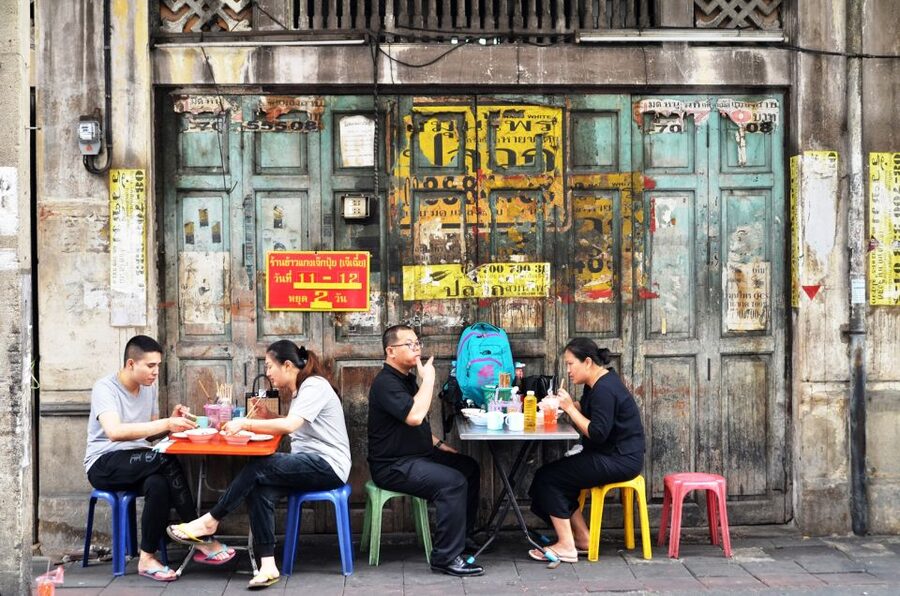
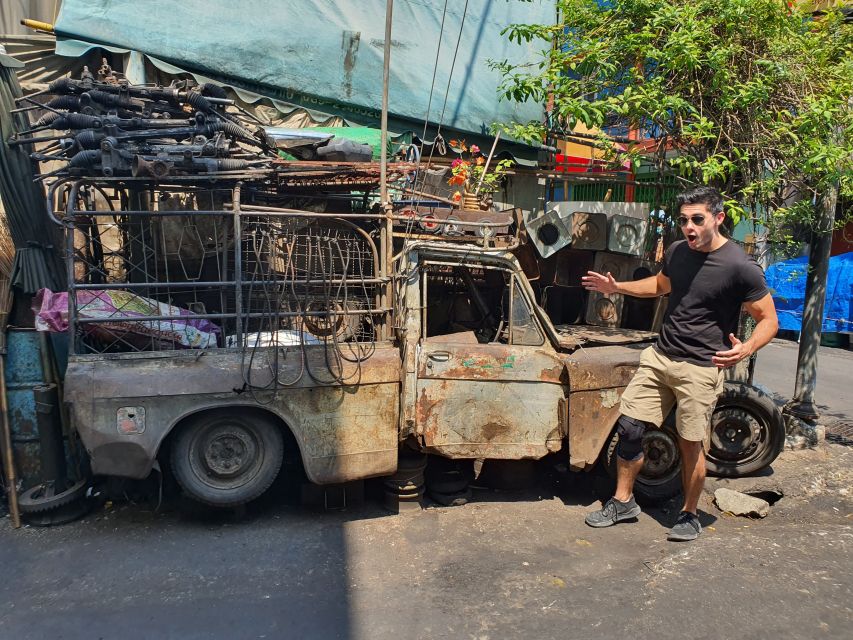
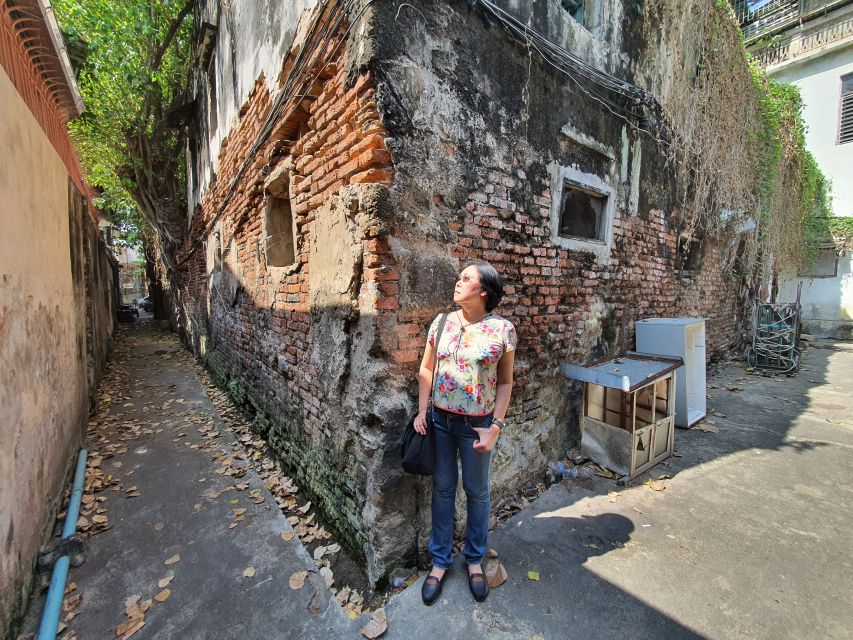
This matters because Tang Hua Pug Building sets the tone. Chinatown here is not one tidy postcard street. It’s layers, old buildings, narrow lanes, and community spaces where people actually live and shop. Having a guide at the front helps you understand what you’re looking at before you wander too far.
Also, the tour is built around a short day format. The total time is 3.5 hours, and the walking distance is about 4 kilometers. That’s a manageable chunk, even if you only start out with casual curiosity and not deep planning.
Still deciding? Line this one up against a few Bangkok favourites first.
- Bangkok: Damnoen Saduak Market and Maeklong Railway Market
★ 4.5 · 26,723 reviews - The Old Siam: Damnoen Saduak and Maeklong Railway Market
★ 4.5 · 10,992 reviews - From Bangkok: Ayutthaya Temples Guided Tour with Lunch
★ 4.7 · 10,535 reviews
The Heart of Chinatown: Colorful Lanes, Street Art, and That Thai Chinese Perspective
Once you’re inside Chinatown proper, the streets shift from broad sidewalks to tighter alleys. This is where the tour feels most useful. You’re not just passing scenes, you’re getting context for them.
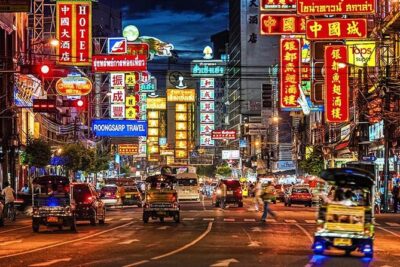
You’ll see colorful streets and narrow walkways, with street art and visual details that you might miss if you’re just scrolling a map. The point is less about finding a perfect photo angle and more about learning how the neighborhood reads. Shop signs, temple fronts, residential-style buildings, and community places sit close together, so the whole area feels like one living network.
What I liked most here was how the guide’s explanations help you spot patterns. Even without needing to memorize anything, you start noticing how the neighborhood blends Thai life and Chinese heritage. That’s the central theme: you’re looking at a Thai Chinese community through everyday scenes, not only through monuments.
Temple Stops You’ll Need to Respect: Stairs, Modest Dress, and a Quiet Moment
Temples change the rhythm of a walking tour. You slow down. You focus. You pay attention to what you’re wearing.
You’ll visit temples during the tour, and that means a simple rule: no short skirts or short pants. Even if the weather is hot, plan for modest clothing. You’ll also be dealing with one important practical issue, the Chinese temple stop has steep stairs. So wear shoes with grip and expect you’ll need a careful step or two.
This temple segment is one of the most valuable parts of the tour because it’s not just sightseeing. It’s a reminder that Chinatown isn’t only street food and shopping. It’s also belief, community space, and tradition that still shapes daily life.
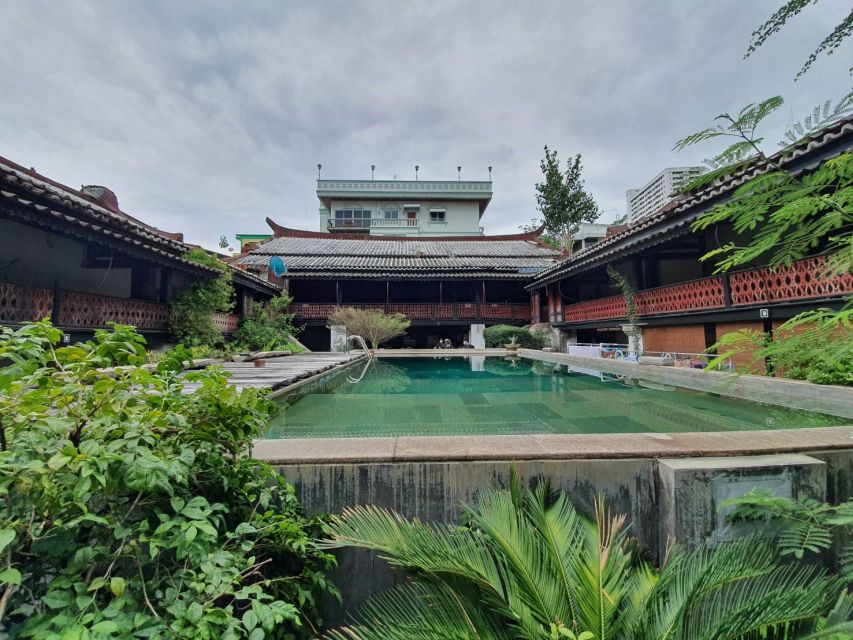
You may also visit a more tucked-away temple moment and a viewpoint as part of the route. These stops help you break up the alley walking and add a change of pace, so you don’t feel like you’re stuck in one type of scene for the entire 3.5 hours.
Sampeng Market: Where Chinatown Feels Older Than the Photos
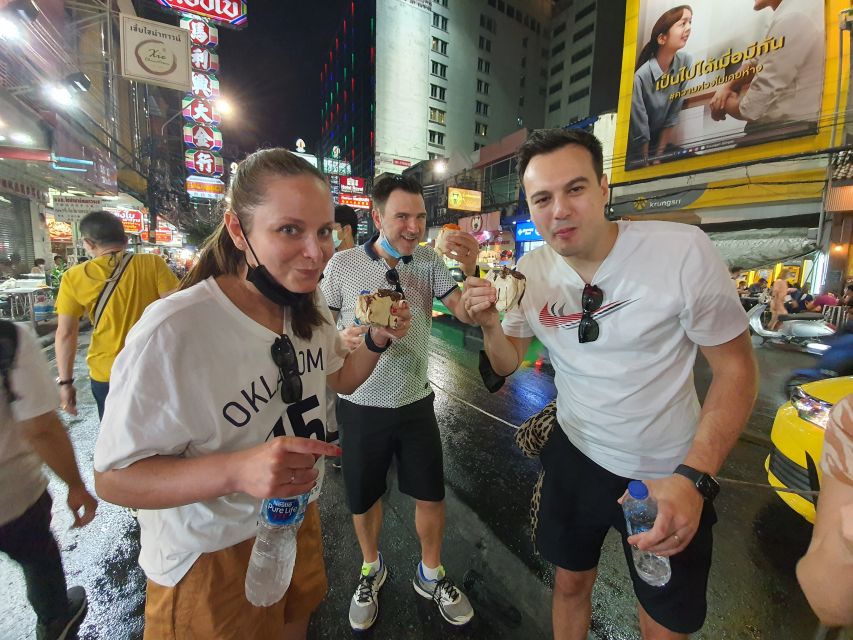
One of the tour’s core attractions is Sampeng Market. This is described as one of Bangkok’s oldest open markets and also one of the lesser-known areas, which is exactly why it works on a guided walk.
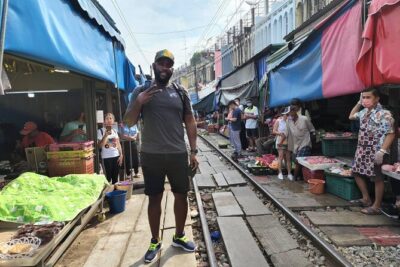
Sampeng Market is not about one signature building. It’s about movement through narrow lanes filled with goods. You can browse, pause, and watch how people move through their regular shopping world. If you’ve only seen Chinatown through main streets, Sampeng can feel like a different Chinatown, quieter in scale but richer in day-to-day texture.
Here’s why a guide matters at a market like this. You might see shops and stalls, but you won’t automatically know what’s important about the place or where to look for the story. Your guide helps you connect the market environment to the neighborhood’s long timeline and the kind of community that keeps these lanes active.
Also, this is where the tour naturally balances your time. Market walking can be tiring if you go long on your own. On this route, you get stops structured around what you can handle comfortably during a half-day.
Food and Coffee Breaks: Snack, Local Lunch, and Real Stops for Your Stomach
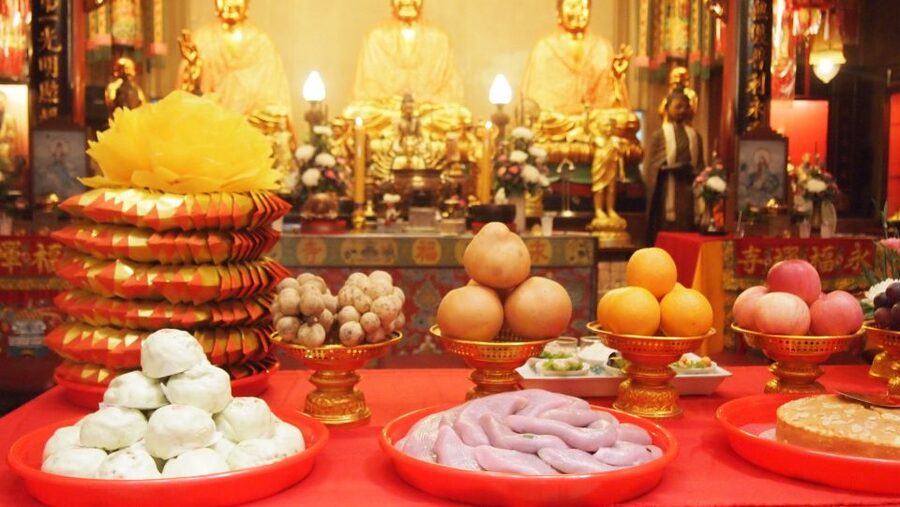
A Chinatown walk without food can turn into a shuffle. This tour avoids that mistake by building in food and break moments that feel integrated, not tacked on.
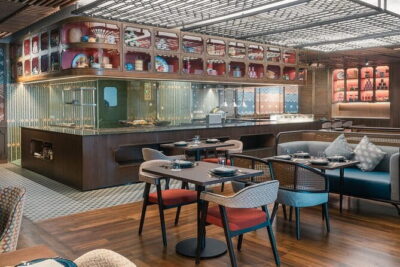
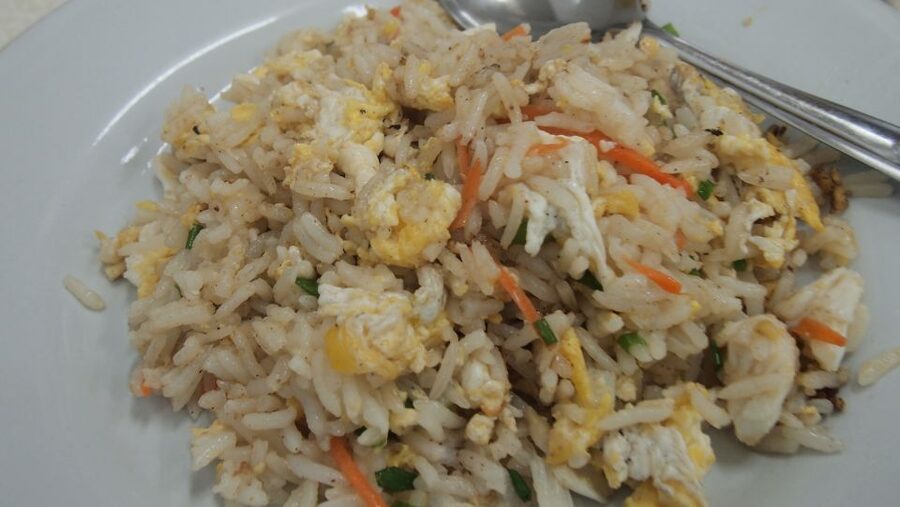
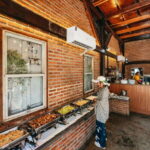
You’ll get snack and coffee, plus a local lunch at a renowned local restaurant. Along the way, there are food tasting moments too, so you can sample without having to commit to one huge meal too early. For me, that’s the right pacing. You can taste a bit, keep moving, then settle into lunch once you’ve worked up an appetite.
One of the standout themes from the experience is that the food portion is not random. The tour is designed around local eating, and the guide keeps it tied to the neighborhood. That’s why the lunch feels like a reward instead of a detour.
If you’re the type of traveler who wants more than just street snacks, this is a good fit. You’ll still walk enough to see the area, but you’ll eat like you’re part of the community for a while.
The Route Rhythm: Break Time, Photo Stops, Shopping, and a Comfortable Pace
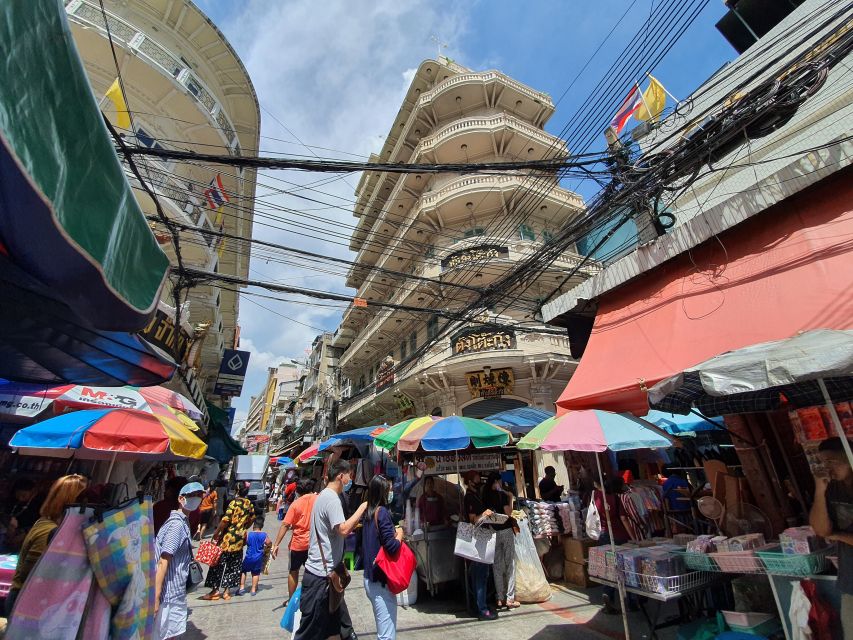
A walking tour can either feel like a sprint or like a guided stroll. This one aims for the second option, with a structure that reduces decision fatigue.
During the Chinatown segment, you’ll have break time and photo stops. You’ll also do guided touring, walk through multiple areas, and there’s time for shopping if you want it. That last part matters because Chinatown shopping is a big part of the draw, but if you don’t plan for it, you can lose focus on everything else.
You’ll also get a scenic viewpoint segment during the route, which helps reset your eyes after long stretches of alleys.
One practical benefit: the pace includes adequate rest opportunities. That’s a big deal on a half-day, especially if the weather is warm or if you’re not used to navigating dense neighborhoods.
Price and Value: Is $41 Worth It in Chinatown Time?
At $41 per person, this is priced like a practical half-day experience. The value case is pretty straightforward when you look at what’s included.
You’re getting:
- A live tour guide in English and Thai
- 15+ places visited in Chinatown
- Snack, coffee, and local lunch
- Organized route time for temples, markets, and street-level scenes
Now, compare that to doing it on your own. If you simply walk Chinatown without a guide, you’re paying for lunch and snacks anyway, and you still might spend extra time figuring out what to see and where to go next. The tour helps you make that time count by packing in multiple stops with context and a smoother flow.
The other value is the human part. Several people highlight that Mee’s guidance is serious and expert, but also friendly and enthusiastic. That mix matters because Chinatown can be confusing when you’re not sure what you’re looking at. When the guide explains what matters, you feel like you’re paying attention, not just following.
Alcoholic drinks are not included, so if you like beer or cocktails with a meal, you’ll need to plan for that separately.
Who This Tour Fits Best, and Who Should Skip It
This tour is a good match if you:
- Want Thai Chinese heritage stories tied to actual places
- Like walking through alleys and markets without worrying about getting turned around
- Prefer a guide-led pace with food built in
- Care about temple etiquette and respectful visiting
It may not be right for you if you:
- Need wheelchair access, because it is not suitable for wheelchair users
- Are traveling with a baby under 1 year
- Are pregnant, since it is not suitable for pregnant women
- Have limited mobility and want to avoid steep stairs, since the Chinese temple stop has steep steps
- Are over 95 years old, since the tour is not suitable for people over 95
Also, pack for the weather. From May to September, bring an umbrella. The walking is mostly flat, but rain can still make narrow lanes slippery.
Practical Tips So Your Day Feels Easy
Use these checks before you leave:
- Wear easy on-and-off shoes (flip-flops are recommended in the tour info, but stairs mean you still want something that feels secure)
- Dress for temples, meaning no short skirts or short pants
- Bring an umbrella in the rainy season (May to September)
- Expect about 4 kilometers of walking, mostly flat with one temple stair segment
- If you want language support, the guide works in English and Thai
If you do those things, the tour feels smooth. If you ignore the temple clothing and footwear advice, you’ll feel it fast during the stairs.
Should You Book This Bangkok Chinatown Walk?
I’d book it if you want Chinatown with structure, not just wandering. The big reasons are the guide, especially Mee, and the way the tour mixes temples, Sampeng Market, street-level art, and real food stops into a 3.5 hour plan. You’ll leave with a clearer sense of how Thai Chinese community life shapes this part of Bangkok, not only a pile of photos.
Skip it if you strongly prefer fully accessible routes, or if steep temple stairs are a dealbreaker for you. If that’s your situation, you’ll be better off finding a different Chinatown option with fewer stair steps.
Otherwise, for first-time Chinatown visitors and repeat visitors alike, this is one of the most sensible ways to spend half a day: guided, practical, and fed.
FAQ
How long is the Bangkok Chinatown small-group tour?
The tour lasts about 3.5 hours.
How much walking is involved?
The total walking distance is about 4 kilometers (around 2 miles). It is flat almost everywhere except at the Chinese temple.
Where do I meet, and where does the tour end?
You meet at MRT Hualampong Exit 1. The tour ends back at the meeting point.
What’s included in the price?
The tour includes the tour guide, snack, coffee, and a local lunch, plus visits to 15+ places in Chinatown.
What should I wear for temple visits?
You should not wear a short skirt or short pants because you’ll be visiting temples. Bring shoes that are easy to put on and take off, and be careful on steep stairs.
Is the tour okay during the rainy season?
From May to September, it’s rainy season, so you may want to bring an umbrella.