
Review · CHINATOWN TOURS
Bangkok: Magical Chinatown At Night With A Local Host
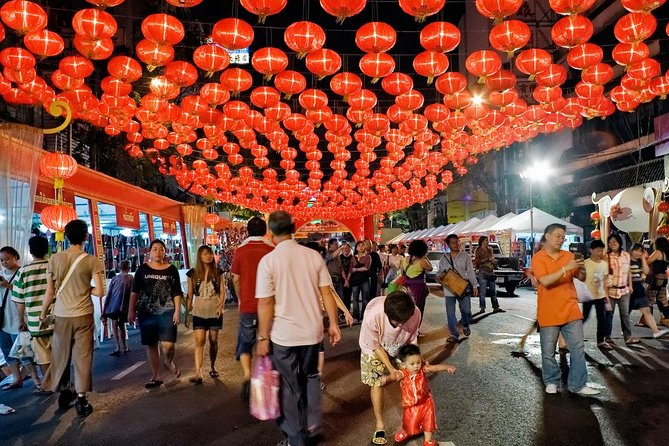
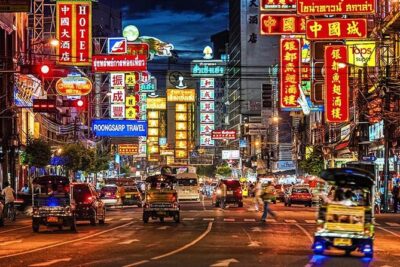
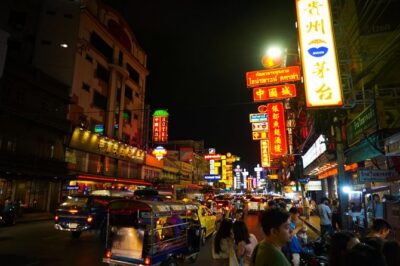
Chinatown at night feels like a maze. This private 4-hour walk mixes temple and shop stops with street-food tastings and a local host who keeps things moving at your pace. You get about eight tastings plus one drink, but the main tradeoff is that it is mostly on foot, so wear comfy shoes.
I also like that you start with landmark sights such as China Gate and the area connected to the city’s largest Golden Buddha, then shift into the best snack trail. That sequence helps you make sense of the neighborhood, so you are not just following smells.
If you want an easy start, the meeting point is flexible, and hotel meet-up can be requested for central locations, which helps once it is dark. In one standout experience, a host named Ping arrived on time and escorted the guest from their hotel, the kind of detail that makes the evening feel smooth.
Key things you’ll notice on this Bangkok Chinatown night outing
- Street food tastings you can actually compare (about 6 to 8 local specialties, plus one drink)
- A landmark-first route starting around China Gate, then moving toward the Golden Buddha area
- Crocodile Temple viewpoints for a break from crowds and a change in perspective
- Night market time for shopping and haggling with a guide beside you
- Only your group on a private, personalized format, not a shared bus tour
Why this Chinatown night tour feels personal fast
This is set up as a private experience, meaning you are not stuck in a big group line. In a neighborhood like Chinatown, where alleyways branch off in every direction, that one change matters. Your host can slow down when you want to read signs, speed up when you just want the next bite, and steer you around confusion.
Another big win is the mix of stops. You are not doing a food-only shuffle, and you are not doing temple sightseeing with zero street life. You get landmark moments like China Gate, then you move into the actual rhythm of street stalls, shops, and night markets.
The tour also includes practical guidance while you walk, so you are not left guessing which stall to trust or what to ask for. If you like learning by watching, this format fits you.
Deeper into Yaowarat after dark
- Bangkok Authentic Tasting Thai-Chinatown Walking Food Tour
★ 4.9 · 852 reviews - Bangkok: Tuk Tuk Adventure Chinatown Michelin Food & Temples
★ 4.3 · 725 reviews - Bangkok Tuk-Tuk Tour by Night with Chinatown Street Food Meal
★ 5.0 · 635 reviews
Price and value: what $105.20 buys in real-world comfort
At $105.20 per person for about 4 hours, you are paying for three things: time, local interpretation, and guided sampling. If you tried to copy this on your own, the “hidden cost” is your mental energy. You would need to pick a route, decide which stalls are worth it, and manage the pacing yourself while everything is happening at night.
Here, the sampling helps you eat smarter. You are set to receive about 6 to 8 local specialities at a night market, plus one drink at an outdoor local bar. That turns a chaotic food scene into a structured tasting run, where you can decide what you want to return to later.
You also get a host who adds commentary as you go. Even when food looks straightforward, the context is what makes it fun. You learn what you are eating and what makes it typical, then you can shop or order with more confidence.
Private format matters for value too. If you are traveling as a couple or small group, paying for a host to tailor your pace often ends up feeling more efficient than joining a generic group tour that moves on one schedule.
Getting there: meeting near Rama I, but not stuck there
The default start point is near Starbucks at 388 Rama I Rd, which is useful if you like a clear “find it fast” anchor. That said, the meeting point is flexible and arranged with your local host. You can request a meet-up at your hotel or accommodation for central locations.
That flexibility is more than convenience. It affects how you experience the first 15 minutes. If you have to drag yourself across town and hunt for the meeting spot after dark, you lose the smooth start that makes the whole evening feel easy. One experience in the feedback highlighted that a host named Ping escorted a guest directly from their hotel, which is exactly the kind of practical care that helps.
The tour ends back at the meeting point, so you are not left wondering how to get home from wherever the night takes you.
The route sequence: China Gate, the Golden Buddha area, then street food
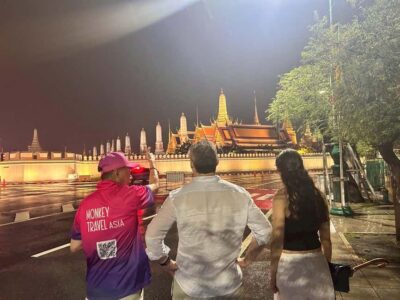
Your evening is organized around a clear flow. It starts near China Gate, then it moves toward the area associated with the city’s largest Golden Buddha. This is a smart opener. You get an orientation to the neighborhood before the food scene takes over.
Other ways into a Bangkok evening
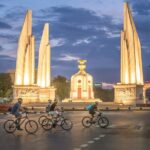
China Gate: an easy “start point” landmark
China Gate is the kind of site that gives you immediate bearings. Even if you have never been in this part of Bangkok, you can start to see the shape of the district and how people actually move through it at night. It also sets expectations for the mix of temples, shops, and street life you will face over the next hours.
A downside to know: landmarks do not automatically mean quiet. Nighttime Chinatown can be crowded around major features, so expect some shoulder-to-shoulder moments before things thin out into smaller lanes.
The Golden Buddha area: why this stop helps your food choices
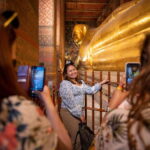
Next, you pass through the area tied to the largest Golden Buddha. Even if your main goal is eating, this matters because it gives the neighborhood a spine. You are not floating from stall to stall. You have a sense of what the area is centered around.
It also changes your pace. Temple areas give you a brief visual break from only food, and that improves your appetite, not just your photos. You can regroup, look up, and then step back into the alleys.
The street food scene: Thai and Chinese classics in a guided tasting run
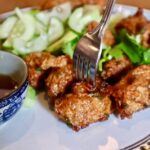
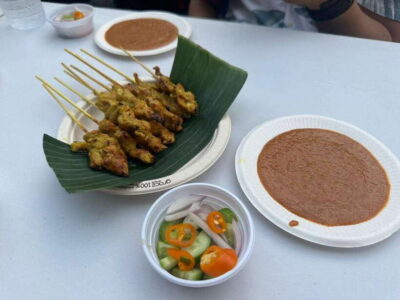
After the landmark stops, the tour focuses on the street food scene in Bangkok, including classic Thai and Chinese street delicacies. You are guided through what to try and when, and you get about 6 to 8 tastings over the evening.
This is where the “others miss” idea really pays off. With a guide, you spend less time guessing and more time sampling. It also keeps you from over-ordering early and getting too full before the best stalls.
If you are a nervous first-time eater, this pacing is helpful. You can taste a variety without committing to huge portions right away. Just remember that street food at night can include spicy options, so go slow the first few bites.
Crocodile Temple viewpoint: a breather with a reason to stop
One of the standout named stops is the Crocodile Temple viewpoint. You do not just pass by. You get a moment to look and enjoy the view.
Why that matters: it is not “another photo stop” tacked on to the food. It creates a break in the walk, so your feet and senses reset. It also shifts your attention upward and outward for a second, which is a relief after lots of close-up alley wandering.
A practical consideration: viewpoints can be affected by crowds and visibility depending on the night. If you want clean photos, bring a bit of patience and expect a short wait while groups move through.
Night market time: shopping, street bargains, and a bar break
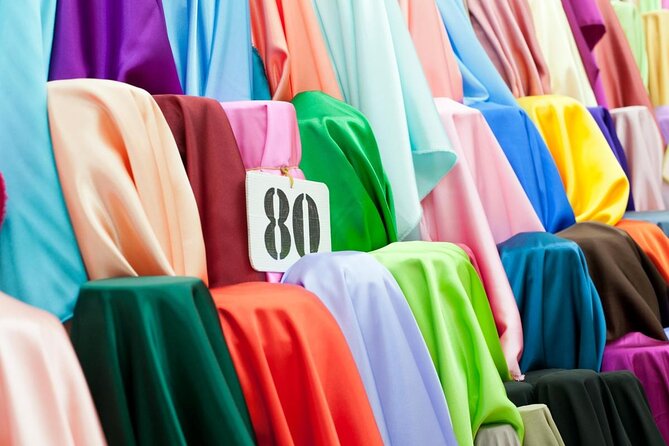
After the temple and viewpoint segment, you head into maze-like streets where you stroll through a night market and browse while your guide helps. This is the part where you can shift from eating to shopping.
The shopping here is not just window browsing. You can haggle for bargains, and having a host nearby changes how the interaction feels. You will understand what you are being shown, what it is likely worth, and how to ask questions without getting stuck in awkward silence.
Then there is the bar stop. You get one drink at an outdoor local bar. This gives you a social pause in the middle of the evening, and it is a nice way to settle your energy before the final stretch of walking.
If you are using the evening as a photo run, this segment can be especially useful. Outdoor bars often have lighting and street-level energy that feels cinematic, without needing expensive tickets.
What you eat: how to make the most of 6 to 8 tastings
Because you are getting multiple local specialties, you do not need to plan a full dinner before you go. The tasting amount is designed to keep you satisfied without turning the tour into a food coma.
Still, you should think strategically:
- Go hungry enough to enjoy variety, but not so hungry that you are overwhelmed by the first few tastings.
- If you know you avoid certain ingredients, be ready to mention it in your pre-tour questionnaire so your host can match your preferences.
- Expect both Thai and Chinese flavors, so if you love mix-and-match street cuisine, this will feel like a greatest-hits playlist.
One excellent thing from the feedback you do not want to miss is that a host named Ping was accommodating with a guest who had dietary restrictions. That is not a guarantee you should assume for every situation, but it does suggest that the guides pay attention to needs and can adapt when possible.
Walking pace and practical comfort for a 4-hour evening
This is a walking experience. If you want other transport options, they can be arranged for an additional cost. That is a helpful safety net, especially if you are dealing with mobility issues or want to avoid being on your feet the entire time.
Even if you are comfortable walking, Chinatown nights can mean:
- lots of uneven sidewalks
- sudden stops for viewpoints and tastings
- crowd density around popular features
Bring water if you tend to get thirsty easily, and consider something light for the weather. Also, keep your phone accessible for navigation and photos, but not in a way that makes you stop every ten steps. The route works best when you stay in motion.
Who should book this, and who might not love it
Book this if you want a night that feels like a guided hangout in one of Bangkok’s most active neighborhoods. It is especially good for:
- first-timers who want orientation plus food
- food lovers who want structure, not random guessing
- travelers who like shopping but want help with haggling
Skip it if you want a slow, sit-down pace. This tour is built for walking and tasting. Also skip it if temple viewing and viewpoints are not your thing. The food is the headline, but the route includes landmark stops for a reason.
Should you book Magical Chinatown At Night with a Local Host?
If you want the best version of Chinatown at night, I think this is a strong choice. The value is real because you are not just paying for “time in a neighborhood.” You are paying for a private host, a route that hits specific landmarks like China Gate and the Golden Buddha area, a guided tasting run of about 6 to 8 street specialties, plus a bar stop and night market browsing with bargaining help.
The main question is simple: do you feel good walking for about four hours and trying a mix of Thai and Chinese street foods? If yes, book it. You will come away with more than souvenirs, you will understand how the neighborhood fits together at night.
FAQ
How long is the Chinatown night tour?
It runs for about 4 hours.
What food and drinks are included?
You get about 6 to 8 local specialties at a night market, plus one drink at an outdoor local bar.
Where does the tour start and where does it end?
It typically starts near Starbucks at 388 Rama I Rd in Bangkok, and it ends back at the meeting point. Your exact meeting point is flexible and agreed with your local host.
Is this a private tour?
Yes. Only your group participates.
Are attraction tickets included?
No. Tickets to attractions are not included.
Can I cancel for a full refund?
Yes, you can cancel for a full refund up to 24 hours before the experience starts.
When the Night Market Lights Up
More Tour Reviews in Bangkok
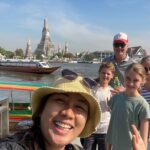

Deeper Into Yaowarat
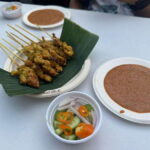
Just In: Fresh Bangkok Reviews
Chinatown Tours, compared.
 ★ 4.9Bangkok Authentic Tasting Thai-Chinatown Walking Food TourFrom $43852 reviews
 ★ 4.3Tuk Tuk Adventure Chinatown Michelin Food & TemplesFrom $18725 reviews
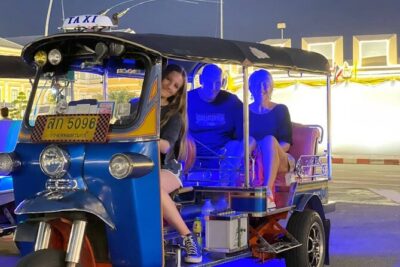 ★ 5.0Bangkok Tuk-Tuk Tour by Night with Chinatown Street Food MealFrom $40635 reviews
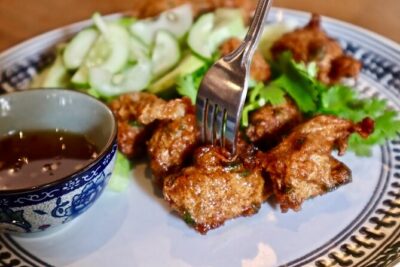 ★ 5.0Bangkok by Night Food Tour with 10+ Tastings in ChinatownFrom $46545 reviews
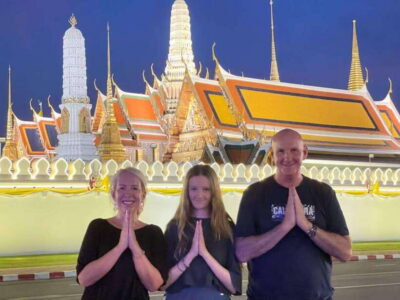 ★ 4.6Bangkok Tuk-Tuk by Night with Chinatown Street Food MealFrom $40263 reviews
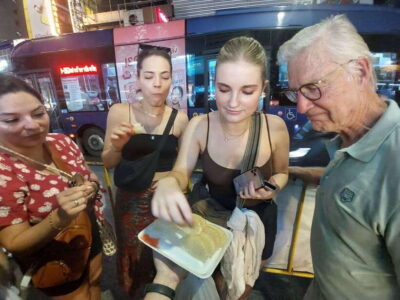 ★ 4.8Chinatown Food Tour with Michelin Food StallsFrom $36226 reviews
 ★ 5.0Bangkok Night Michelin Foodie Tour in Chinatown with 15+ tastingsFrom $56189 reviews
 ★ 5.0Night Street Food Tour of Bangkok’s ChinatownFrom $58173 reviews
Browse the lists this tour appears in