
Bangkok rewards slow steps and smart detours. I love how this walk links iconic temples with real neighborhood markets, and the guide keeps the stories clear and practical. My one caution: with so many stops (and ticketed sights along the way), you may not get long, quiet time inside every place you pass.
What makes it easier to manage is the flexibility. You can use a flexible 2 day ticket style plan, and your pass stays valid for 3 days from first use, so you are not forced to rush everything on day one. You also get the Vox City app with 7 self-guided walks and audio commentary in 5 languages.
Key things I’d circle before you go
- Two guided themes: Historic Siam and Bangkok Cultural Gems, so you can spread the walking across days
- Vox City app included: 7 self-guided routes plus audio commentary in 5 languages
- Tons of faith and food stops: major temples, Chinatown area markets, plus a Michelin-rated street food meal stop
- Easy-to-follow structure: a set route of famous landmarks and smaller local sites
- Small enough groups: maximum 99 travelers, with a guided pace that keeps you moving
- Budget reality check: entry fees, transportation, and food are not included
How the Historic Siam and Cultural Gems idea actually helps
This experience is really about orientation. Bangkok can feel like a pile of facts and signage until someone connects the dots for you. Here, you get a guided walking tour format that mixes grand religious sites with ordinary life, plus an app for when you want to keep exploring on your own.
You can do it in a way that fits your energy. The guided parts run about 1 to 2 hours, so it is not a full-day endurance challenge. Then, if you cannot hit every stop the same day, your ticket lets you come back within 3 days from first use. That flexibility matters in Bangkok, where plans can shift fast.
Bangkok at walking pace, more routes
- Bangkok: City Highlights Temple and Market Walking Tour
★ 4.5 · 3,990 reviews - Bangkok: Grand Palace and Wat Phra Kaew Guided Walking Tour
★ 4.4 · 2,417 reviews - Bangkok: Wat Pho and Wat Arun Guided Walking Tour
★ 4.6 · 1,720 reviews
Getting oriented fast, with audio and a mobile ticket
I like experiences that help you navigate without turning the trip into paperwork. This one comes with a mobile ticket and includes the Vox City app plus audio commentary in 5 languages. That means you can still get context even if you are a bit behind the group, or if you want to linger in a temple courtyard for photos and details.
If you are the kind of person who likes to pause, read, and then move on, the app component is useful. The tours are guided, but you also get 7 self-guided walking tours for main areas, so you can keep the momentum after the official walk ends.
Old Bangkok’s Buddhist temples, gold details, and marble exteriors
The tour starts in old Bangkok’s temple world, with stops that focus on how Thai Buddhism looks and feels in everyday architecture. One of the early highlights is a temple tucked among traditional Thai buildings, featuring an ornate marble exterior and a gold Buddha. Even if you have seen temples before, this kind of specific visual detail is what makes Bangkok click.
At this point, listen for the guide’s way of explaining why these places are designed the way they are. The goal is not just name memorization. It is understanding how devotion shows up in materials, layout, and daily use.
Practical note for you: plan your pace here. Temples can be crowded, and you will want time for respectful viewing, not speed-walking.
Pi Kun Bridge and the old city moat connection
Next you are walking past a pedestrian overpass across Khlong Khu Mueang Doem, better known as Khlong Lot, or tube canal. This is the kind of stop that teaches you to read Bangkok as a city shaped by water control and historic boundaries.
Bridges sound like filler until someone explains what the canal system meant. Here, it helps you understand why temples, communities, and fortifications clustered where they did.
Deeper into old Bangkok

Fort Mahakan and the city’s 18th-century backbone
Then comes Fort Mahakan, built in the 18th century and listed as one of Bangkok’s oldest structures. This is a good shift in tone. After ornate temple design, you get a structure that connects to political history, defense, and how old capitals protect themselves.
If you like “why this place exists” explanations, this stop tends to land well because it frames the city as something built for real-world survival, not just beauty.
Rommaninat Park, a floral pause, and prison history
One of the stops is Rommaninat Park, a place to relax amid flowers, plants, and trees. The tour also points out that this area was used for punishment in the past, and that the old Bangkok prison is now a museum tracing Thailand’s prison system history.
That mix is worth your attention. It is easy to treat parks like breaks only, but here you get a reminder that public space often carries older purposes. You do not need to become a history student to appreciate it. You just need to notice how the meaning of a place changes over time.
A preserved old street, Buddha shop browsing, and monastery art
You also get time in an old neighborhood where a well-preserved street is full of shops selling Buddha statues and other memorabilia. I like these stops because they show the commerce side of faith. You see what people buy, how items are displayed, and how spiritual objects are part of daily life.
After that, the route includes a monastery described as integrating Thai and European culture, considered a masterpiece of art in Buddhist monasteries. This is one of those Bangkok moments that helps you avoid stereotypes. Bangkok’s religious art did not develop in isolation, and you can see that through design choices.
Ayutthaya ruins in the mix: Wat Racha Burana
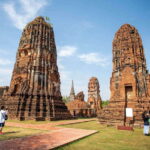
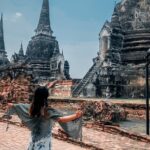
One stop shifts to Wat Racha Burana, described as a restored ruin of a monastery located on the city island in the Historical Park of Ayutthaya. It is a reminder that Bangkok’s story connects to earlier centers of power and worship.
If you are the type who loves temple architecture details, keep your eyes open for restoration work, color, and sculpture placement. Ruins can feel fragmented until you see how restoration helps them speak again.
Drum Tower, Wat Pho, and the reclining Buddha
Back in Bangkok proper, you encounter the Drum Tower, presented as one of the first buildings in the new city capital. It includes architectural elements from both Chinese and Thai styles and is modeled after a drum tower from the Ayutthaya period.
Then you get to Wat Pho, one of Thailand’s largest and most important temples. The complex includes more than 1,000 Buddha images and statues. The most famous is the reclining Buddha, Phra Buddha Saiya.
This is where the tour delivers maximum meaning for effort. Wat Pho is big, so having a guide help you prioritize where to look first is a real time-saver. You get context on how the temple functions, not just what it looks like.
Phahurat Market, Bangkok’s Little India, and Sampheng in Chinatown
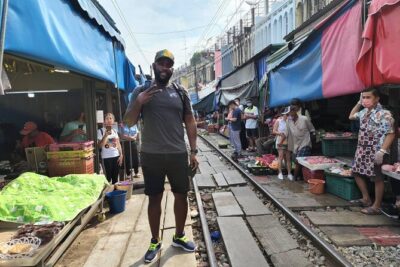
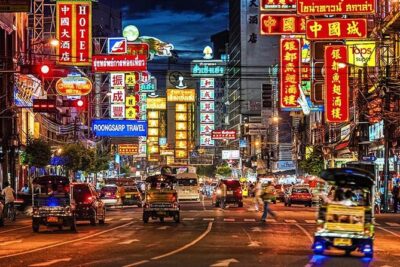
Next, you head into market life. Phahurat Market is known as Bangkok’s Little India, focused on Indian life in the area. Then the route continues into Sampheng, a historic neighborhood and market in Chinatown.
These stops help you understand Bangkok as a patchwork of communities, not one single culture. You will see food, signage, shops, and the rhythm of street commerce that keeps the city alive.
Museum of Siam, plus how museums fit a walking day
A stop at the Museum of Siam adds perspective. It is described as Thailand’s first national discovery museum, established in the mid-2000s. A museum stop during a walking tour sounds risky, because it can turn into one more timed ticket in your schedule.
But it works here because you are already learning the big themes: culture, religion, and Thailand’s evolving political story. The museum is a way to connect those themes into a bigger picture so the next temple or market stop makes more sense.
Wooden bridge, a gold shop with King Rama VI roots
The route includes a wooden bridge described as the longest in Thailand and the second longest in the world. Since the name is not provided here, think of this as a visual milestone: look for how the bridge shape changes the feel of the walk, and how it frames movement across an urban area.
Next is an ancient gold shop dating back to the reign of King Rama VI, still trading today, with a visitors museum as well. For me, this is one of those stops that feels practical. You get a living business plus a chance to see context behind it.
Wat Mangkon Kamalawat, Chinese temple scale, and Khlong Toei’s reality check
Wat Mangkon Kamalawat is next, described as the largest and most important Chinese temple in Bangkok, established in 1871 and originally named Wat Leng Noei Yi. This is a big shift in architecture and symbolism, and the scale helps you see how Chinese religious practice has shaped the city.
From there, the route mentions an entertainment complex and red-light district in Thailand, in the Khlong Toei District, describing itself as the world’s largest adult playground. This part is clearly part of the story of what the city is like beyond temples and markets.
If that theme is not your vibe, it is good to know it is included as a contextual stop. You can simply slow down, look once, and move on with the rest of the walk.
Siam Square, malls, shophouses, and shopping energy
The tour touches shopping zones like Siam Square, described as a mix of massive malls and lanes with street vendors. It is the kind of area where you can feel Bangkok’s modern momentum without losing the street-level texture nearby.
There is also a stop at Krungthong Plaza, a shopping centre with nearby areas including City Complex Pratunam and close to Hong Gi Seafood, plus Phrarajasatta Pavilion at Wat Pathum Wanaram.
That gives you a nice balance: sacred architecture, then the modern commercial side right next to it.
Erawan Hindu shrine and Talat Phlu railway-station street life
One of the most recognizable central landmarks is the Erawan Hindu shrine. It is described as built in 1956 to ward off bad luck from a nearby hotel under construction, and it is said to be the best known of several nearby Hindu shrines.
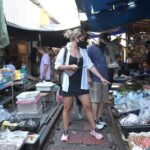
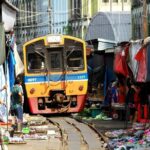
Then you get Talat Phlu, centered on a railway station ringed with food stalls and shophouses. This kind of stop is great for people who want to see how Bangkok eats and how neighborhoods function day to day, not just on monument postcards.
King Prajadhipok Museum and political history you can walk through
The King Prajadhipok Museum is housed in an early 1900s neoclassical mansion dedicated to King Prajadipok (Rama VII). His reign is described as overseeing Thailand’s transition from outright monarchy to constitutional monarchy in 1932.
This stop adds political context to the temple and fort material you saw earlier. If the city stories started to feel scattered, this helps connect the dots.
UNESCO-listed Wat Ratchanatdaram and the 75-meter climb to Wat Sa Ket
Wat Ratchanatdaram is described as listed among UNESCO World Heritage Sites, with 37 bronze golden spires plus other pavilions nearby.
Then comes a much more physical highlight: Wat Sa Ket, on top of a 75 meters (246 ft) artificial hill. The tour says the view is worth the effort, and that the interior includes vibrant colored walls, detailed paintings, and miniature sculptures. You also learn about the bell-shaped design.
This is one of those stops you should plan for mentally. It is the kind of place where you earn your view, and the payoff is in the photos but also in the sense of scale.
Wat Suthat, the Giant Swing, and Pak Khlong Talat at flower-market time
The tour includes the Giant Swing, described as a massive religious structure in front of Wat Suthat, one of Bangkok’s oldest and most impressive Buddhist temples. Even if you do not get inside Wat Suthat itself, standing near the swing helps you visualize how faith is staged in public space.
Then you reach Pak Khlong Talat, a flower market described as open 24/7. It sells fruits and vegetables too, but is best known for flowers sold from all over Thailand. This is where you see Bangkok’s supply chain for celebration, daily rituals, and gifting.
Saranrom Palace Park and a rare royal-history pause
Another thoughtful stop is Saranrom Palace Park, once an outdoor relaxation area reserved for members of the Thai Royal Family. It is described as hosting rare native plants, centuries-old trees, colorful flowers, and memorials, located a short distance from Grand Palace.
This is your breathing space on a long cultural route. You are not only looking at plants, you are getting a feel for how green space can be part of power and memory.
Berlin Pharmaceutical Museum, Chinatown Gate, and the science-meets-street angle
The route includes the Berlin Pharmaceutical Museum, which pays tribute to Western-style medicine introduced to Bangkok in the 1700s. It commemorates Dr Chai Chaiyanuwat and is located in the exact building where his medical practice happened.
This is a clever change of pace. You go from temples and trade to healthcare history, and it makes you realize Bangkok absorbs outside influences and then makes them local.
Later you pass the Chinatown Gate, described as a large red Chinese gate functioning as a roundabout, marking the center of the city’s Chinatown. There are plaques with information about the history of the Chinese community.
Street food stop: Kuai Chap Uan Photchana
The experience includes a stop at Kuai Chap Uan Photchana, described as a Michelin-rated street food restaurant. The main claim to fame is Kuai Chap soup and taco-style dishes, with vegetarian options also mentioned.
This is where I like to slow down. Food stops are not just a reward. They also help you anchor the day. After temples and markets, a clear, recognizable dish makes the entire route feel human.
Wat Traimit Withayaram and the solid-gold statue finale
Near the end, you visit Wat Traimit Withayaram Worawihan, described as one of the most visited temples in Bangkok. The big headline is a massive golden Buddha statue made of solid gold, weighing 5.5 tonnes (5,500 kg) and standing 3 meters (16 ft) tall.
If you have ever struggled to get a “wow” moment at the end of a walking tour, this delivers one. The story of solid gold at this scale turns a temple visit into a real visual spectacle.
Price and value: what $24 really buys (and what it does not)
At $24 per person, the big value is that you are paying for guided walking time, plus the Vox City app with 7 self-guided walks and audio commentary in 5 languages. That can stretch your day, especially since your ticket stays valid for 3 days from first use.
What is not included is important:
- Transportation
- Entry to attractions
- Food and drinks
That means you should budget separately for temple or museum ticket fees and for meals. On the upside, the tour itself builds in food context, and it includes the street food stop at Kuai Chap Uan Photchana, so you are not completely on your own for eating.
The best match: who will enjoy this most
This tour fits you best if you like a guided route that teaches you how Bangkok “works.” It is ideal if you want a mix of temples, markets, and cultural context, without having to plan each leg yourself.
It is also a good choice if you want flexibility. You can use the pass over multiple days and lean on the Vox City app for extra walking when you feel ready.
Should you book this Bangkok walking tour?
Yes, if you want a structured way to see both headline sights and everyday neighborhoods, and you like the idea of using the Vox City app to keep going after the guided time ends. The $24 price is reasonable for two themed walking tours plus audio support, as long as you are comfortable paying separate entrance fees and arranging your own transport.
Skip it or keep expectations realistic if you hate walking, or if you want long, slow time inside every temple and museum. This route moves through a lot of places, so your best strategy is to treat it as orientation plus highlights, then go back on your own where you feel pulled.
FAQ
How long is the Bangkok walking tour experience?
The guided walking tours are listed as about 1 to 2 hours.
Is the ticket only valid for one day?
Your ticket is valid for 3 days from first use, so you can use it over multiple days if you do not have time to join on the same day.
What’s included with the tour besides the guided walking?
You get the Voxcity app with 7 self-guided walking tours, plus audio commentary in 5 languages.
Are temple, museum, or other attraction entry fees included?
No. Entry to attractions is not included.
Is transportation included in the price?
No. Transportation is not included.
Is this tour suitable for most people?
It says most travelers can participate, and it is near public transportation. Service animals are allowed.
Bangkok on Foot: More Walks
More Tours in Bangkok
More Tour Reviews in Bangkok



Just In: Fresh Bangkok Reviews
Historical Tours, compared.
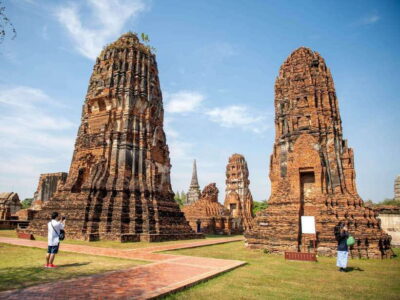 ★ 4.6From Bangkok: Ayutthaya Historical Park Guided Day TripFrom $283,020 reviews
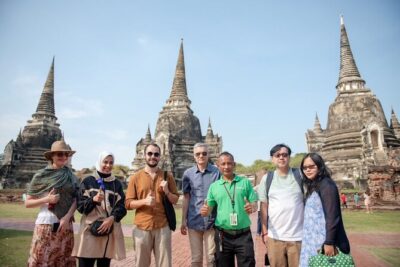 ★ 4.5UNESCO’s Ayutthaya Historical Park: Full-Day Tour from BangkokFrom $281,559 reviews
 ★ 4.6From Bangkok: Historical Day Tour to River KwaiFrom $51868 reviews
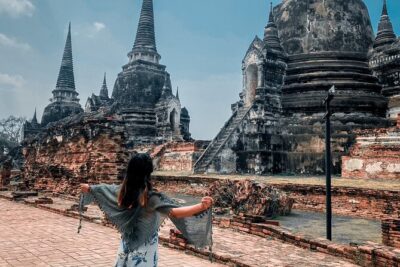 ★ 5.0Historical City of Ayutthaya – Unesco Full Day Tour From BangkokFrom $41847 reviews
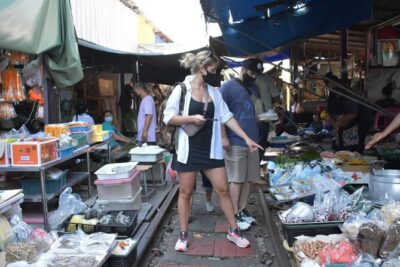 ★ 5.0Private Excursion to Floating Market and Ayutthaya World HeritageFrom $184515 reviews
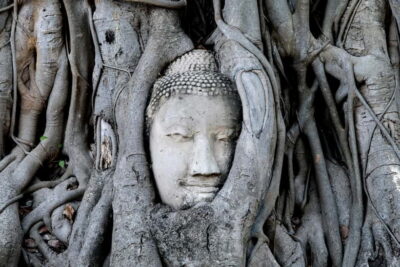 ★ 4.5From Bangkok: Ayutthaya Heritage Tour with Sunset Boat RideFrom $32490 reviews
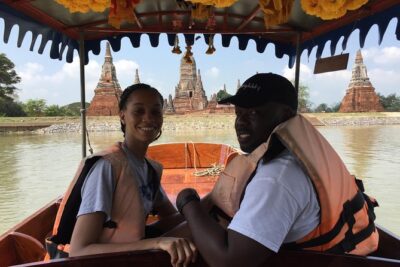 ★ 5.0Private Excursion to Ayutthaya, UNESCO World Heritage site with Boat TourFrom $159460 reviews
 ★ 4.5River Kwai Day Tour from Bangkok – History, Scenery & CultureFrom $97206 reviews
Browse the lists this tour appears in