Review · BANGKOK
Bangkok Cultural Experience
Temples and street food in one focused loop is hard to beat. This Bangkok Cultural Experience strings together Wat Arun, Wat Pho, and Chinatown in a way that feels practical, not rushed, with an English-speaking guide and a public boat ride.
I especially like the pairing of Wat Arun and Wat Pho, because the architecture and the reclining Buddha give you two very different sides of Bangkok temple life. I also like that you get transport handled for you via public transit plus a few built-in extras like snacks and soft drinks.
One consideration: lunch is not included, so you’ll want to plan on eating on your own or using Chinatown time to make it a full meal.
Key things to know before you go
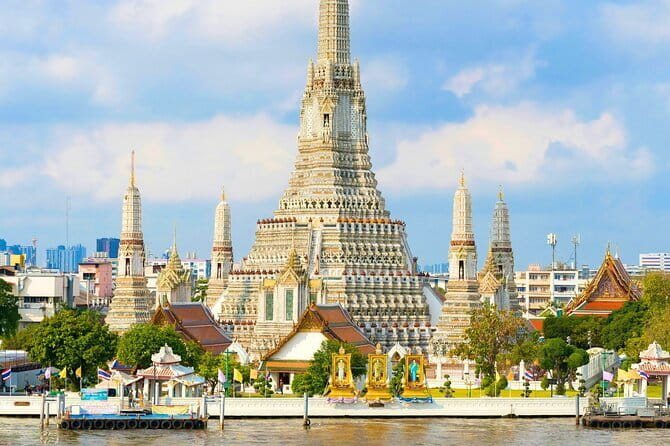
- Public boat ride on the Chao Phraya River (Orange Line): you get real Bangkok river scenery before you even reach the temples.
- Wat Arun plus Wat Pho admissions included: fewer tickets to worry about, and your guide helps you time the visits.
- Chinatown (Yaowarat) is food-first: you spend real time here, with plenty of options and no admission cost for the area.
- English-speaking guide with small group size: the tour caps at 15 travelers, which makes it easier to ask questions and move as a unit.
- Snacks and soft drinks are included: helpful if you hit Chinatown hungry.
- Finish near Wat Mangkon MRT: you end in a convenient spot to continue exploring or head out by train.
A half-day Bangkok plan that actually makes sense
This tour is built around a simple idea: hit the big, iconic temple sights with enough context to understand what you’re looking at, then shift gears into food and neighborhood energy. The start time is 11:00 am, which is a smart compromise between morning temple crowds and late-day fatigue.
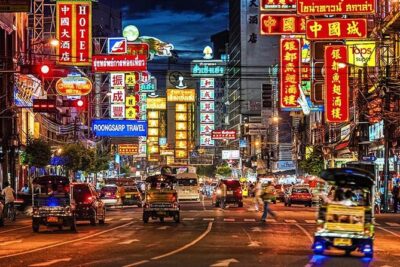
The route also helps you avoid the “temples, then what?” problem. After Wat Arun and Wat Pho, you’re not just wandering in a separate world. Chinatown, or Yaowarat, is close enough to keep the momentum going, and it’s where Bangkok’s street-food culture shows up in full force.
Logistics are a big part of why this feels good value. You’re not buying a pile of individual tickets on your own, and public transport is included. That matters because Bangkok can be confusing when you’re tired and hungry. A guide, a small group, and a clear finish point cut down on decision fatigue.
Also, based on how guides are described by guests, the day is not just about the checklist. Names that come up often include Wanna, Angie, and Meow, and the common thread is practical help: answering questions, giving recommendations, and pitching in with day-flow so you’re not stuck figuring things out midstream.
Still deciding? Line this one up against a few Bangkok favourites first.
- Bangkok: Damnoen Saduak Market and Maeklong Railway Market
★ 4.5 · 26,723 reviews - The Old Siam: Damnoen Saduak and Maeklong Railway Market
★ 4.5 · 10,992 reviews - From Bangkok: Ayutthaya Temples Guided Tour with Lunch
★ 4.7 · 10,535 reviews
Sathorn Pier to Wat Arun: the Orange Line river ride
One of the most enjoyable parts of this experience is the start. You meet at SathornSi Lom, Bang Rak, Bangkok 10120, then head to Sathorn Pier. From there, you ride a public boat on the Orange Line along the Chao Phraya River to reach Wat Arun.
Why I like this approach: you’re seeing Bangkok as it actually functions. The river isn’t just scenery, it’s part of daily life. Even if you’re only on the water for a portion of the day, that boat segment gives you a visual reset from street-level traffic and helps set the mood for the temples ahead.
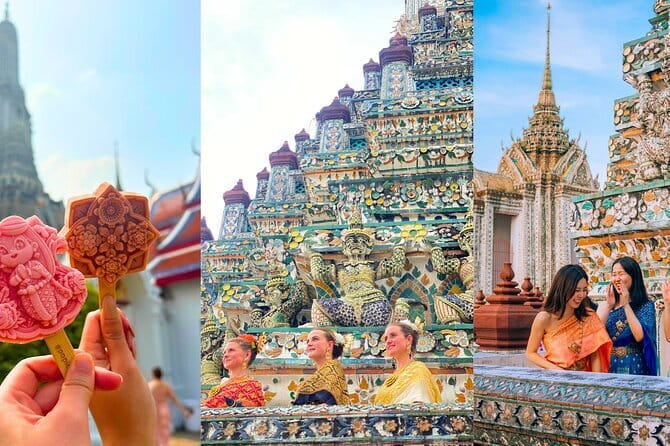
Wat Arun is a dramatic first stop. Even before you start looking closely, you can feel why it’s so photographed. The tour includes admission, and you get about 2 hours at the site, which is enough time to slow down instead of sprinting from one photo angle to the next.
One practical note, since this is outdoors part of the day: wear something comfortable for walking and heat. Snacks and soft drinks help, but temple grounds still mean sun, steps, and time spent outside.
And because the group is small, it’s easier for the guide to keep everyone together and point out what’s worth your attention. In past comments, guides like Angie and Meow are described as taking care of small details, like helping with photos and keeping the day moving smoothly.
Wat Arun, Temple of Dawn: more than a postcard
At Wat Arun, the focus is on stunning temple architecture and the feeling of scale. This is the sort of place where your photos look good, but only because the real visual impact is bigger than what a phone camera captures.
You’ll have roughly 2 hours, and admission is included. That time window matters. If you only had 20 to 30 minutes, you’d mostly absorb the silhouette. With more time, you can notice patterns, materials, and the way different sections of the temple interact visually.
What your guide adds is context. Even from the tour description alone, the intent is clear: you’re not just there to look, you’re there to understand why this temple is iconic in Bangkok culture. Guides are also praised for giving clear, direct explanations that make the visit feel personal rather than scripted.
In a day itinerary like this, Wat Arun sets the tone. It’s visually bold, and it gives you a mental anchor for the rest of the temple visit. Then the tour heads to Wat Pho, where the feel shifts from exterior architecture to religious art and symbolism you’ll see up close.
Wat Pho and the reclining Buddha you can’t miss
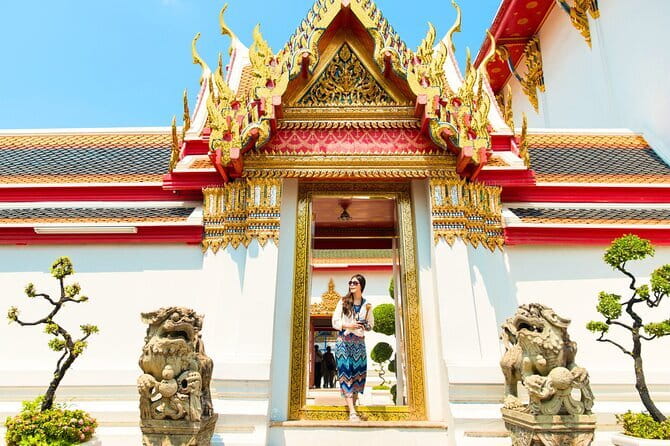
Next comes Wat Pho, officially described here as Thailand’s first-class royal temple, and it’s the home of the 46-meter-long Reclining Buddha, gilded in gold leaf. Admission is included, and you’ll spend about 1 hour at this stop.
This is one of those Bangkok experiences where the headline attraction is also the reason the visit works. The reclining Buddha is so large that you get an instant wow factor, but the guide’s job is to help you see the rest of the site with the same attention.
Even if you’ve seen pictures before, the real value is in orientation: what you’re looking at, what it represents, and how the temple is tied to Thailand’s royal and religious traditions. The tour description specifically notes that the guide shares history, including the temple’s establishment by a Thai king, which gives you a better framework for why this place looks the way it does.
A one-hour slot is also realistic. Wat Pho is big, and temple visits can become a blur if the schedule is too long. This length tends to keep you focused on the most meaningful highlights without burning through the day before Chinatown.
Also, based on the way guides are described, expect a guide who actively helps you move, take photos, and ask questions. Guests name Angie and Wanna as especially attentive and supportive, including taking lots of pictures and assisting with needs throughout the day.
Chinatown (Yaowarat) food time that doesn’t feel random

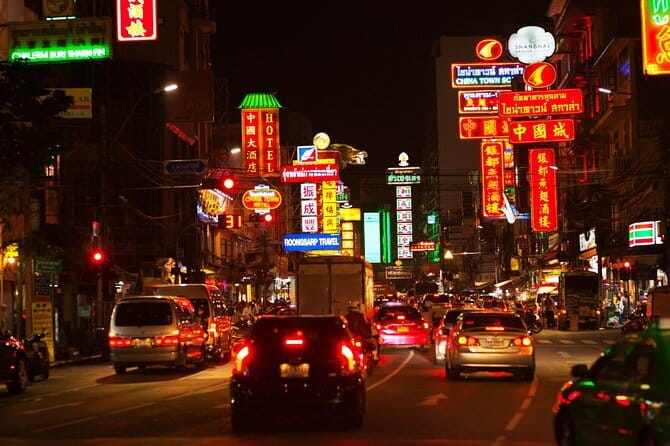
After the temples, you shift into a very different side of Bangkok. The tour gives you about 2 hours in Chinatown (Yaowarat), and the description makes it clear this is about street food.
Admission here is free, but that doesn’t mean the time is light. This is where you get to actually use your senses. Expect a range of dishes: savory noodles, dumplings, fresh seafood, and sweet treats. If you’re the kind of traveler who likes to snack and wander, this portion fits your style.
Here’s how to make this time work well: pace yourself. The tour includes snacks and soft drinks earlier, so you may not feel ravenous at the start of Chinatown. Still, street food can stack up quickly. I’d choose a few “signature” items rather than trying to sample everything.
If you have dietary limits, Chinatown is still doable, but you’ll need to be ready to ask what’s in dishes. The good news is the guide can help with recommendations, and guests mention that some guides go the extra mile with advice, including helpful detour guidance after the tour.
This is also where the small group matters. You’ll move as a unit, but you’ll still get time to stop, look, and eat. And since the tour ends near MRT, Chinatown isn’t the end of your day unless you want it to be.
Price and value: what $74 buys you in Bangkok
At $74 per person, this tour is priced like a solid Bangkok deal because several high-ticket friction points are handled for you.
What you get that usually costs extra on your own:
- Public transport in Bangkok included
- English speaking guide
- Admission tickets included for the Wat Arun and Wat Pho portions
- Snacks and soft drinks provided during the trip
What you do not get:
- Lunch and other meals
- Additional activities
- Personal expenses
So you’re mostly paying for guided temple time plus the logistics of getting around efficiently. In Bangkok, that combination can save you both time and stress, especially if you’re not sure how to connect river rides and transit.
Also, with a max group size of 15 travelers, you’re not stuck in a giant crowd that forces you to go with the flow blindly. That makes a difference at temples, where people often drift if there isn’t a strong guide presence.
Is it the cheapest option? Maybe not. But it’s also not one of those tours where you spend most of the time sitting in transport with minimal real value. The time split here is focused: two hours at Wat Arun, one hour at Wat Pho, and two hours for Chinatown food.
Meeting point, where the tour ends, and how to plan onward
The day starts at SathornSi Lom, Bang Rak, Bangkok 10120. The guide meets you there and then accompanies you to Wat Mangkorn MRT Station, which is close to Chinatown and Yaowarat.
The official end point is listed as Wat Mangkon 530 ถ. เจริญกรุง Khwaeng Samphanthawong, Khet Samphanthawong, Krung Thep Maha Nakhon 10100. In plain terms: you finish in an area that’s easy to continue exploring or to take a taxi from if you’d rather not ride transit right away.
A detail that helps: you get a mobile ticket, which is convenient if you don’t want to hunt for printed vouchers.
One more thing to think about is timing for your next meal. Since lunch isn’t included, decide early whether you’ll eat before the tour or turn Chinatown into your main meal. The guide can also steer you toward places that make sense for your tastes and schedule, and guests mention that some guides provide practical help if you need advice right after the tour.
Finally, bring a little buffer for temple time and street food shopping. Even with a planned route, you might want extra minutes to take a better photo or to try one more item in Chinatown.
Who this tour suits best (and who might want a different plan)
This experience fits best if you want a guided, efficient introduction to Bangkok temple highlights plus Chinatown food culture.
It’s a strong match for:
- First-timers who want the big sights with context
- People who prefer a small group and an organized day flow
- Travelers who like food walks and want a guided nudge toward good choices
- Anyone who benefits from help with logistics, including navigating from temple zones to a neighborhood like Yaowarat
It may be less ideal if you:
- Want a very slow pace and lots of free time at each temple
- Plan to rely on the tour for all meals, since lunch is not included
- Are looking for a fully flexible, private experience (this has a set schedule and a group cap)
Should you book the Bangkok Cultural Experience?
I’d book it if you want a tight, satisfying half-day that combines Wat Arun, Wat Pho, and Chinatown without forcing you to figure out transport and admissions on your own. The value is in the package: guide time, boat transit, admissions, and snacks all bundled for a reasonable price.
I’d hesitate if you’re picky about food or meal timing and you don’t want to plan lunch on your own. Chinatown can be a great meal solution, but it’s still on you to choose what you eat.
If you’re deciding today, my practical checklist is simple: pack for heat, confirm your comfort with walking around temples, and decide how you want to handle lunch. If you do those things, this is the kind of Bangkok day that leaves you with real sights and real tastes, not just a set of distant photos.
FAQ
What sights are included on the tour?
You visit Wat Arun, Wat Pho, and Chinatown (Yaowarat).
What time does the tour start, and how long does it last?
It starts at 11:00 am and runs for about 7 to 8 hours.
Is admission included for the temple stops?
Yes. Admission tickets are included for Wat Arun and Wat Pho. Chinatown is listed as free admission.
What’s included in the price?
The tour includes public transport in Bangkok, snacks and soft drinks, and an English-speaking guide. Admission for Wat Arun and Wat Pho is also included.
Is lunch included?
No. Lunch and other meals are not included, so you’ll need to pay on your own.
Do I get a ticket for entry or check-in?
Yes. You receive a mobile ticket.