
Review · HISTORICAL TOURS
Bangkok China Town ,a Bangkok historic neighbourhood
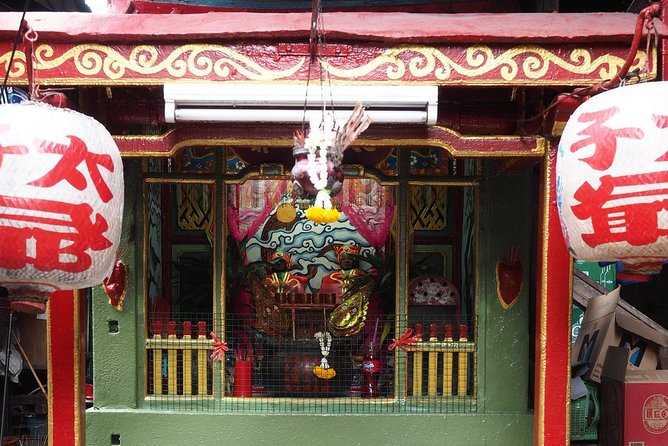
Chinatown has a quieter side in Talat Noi. In just 3 hours, you get a guided route that connects the neighborhood’s earliest immigrant waves to the sights you can still see today, including prayers at Kuan Yim Shrine and the Portuguese story behind the Holy Rosary Church. I especially loved the chance to see the 900-year-old Guan Yin statue up close and to hear how Portuguese settlers shaped this part of Bangkok, with the church traced back to 1786.
A possible drawback: the tour starts at 3:00 pm, so you should plan for an afternoon pace and bring shoes that handle walking through tight streets. Also, this is a history-and-sights walk, not a long all-day market crawl.
Key highlights to know before you go
- Small group size (max 8) keeps the tour from feeling rushed
- Kuan Yim Shrine (Thian Fa Foundation) with a 900-year-old Guan Yin statue
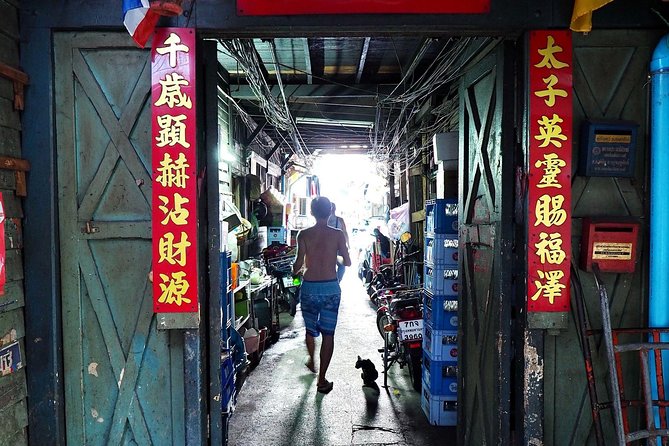
- Talat Noi’s immigrant history, including Portuguese roots and later Chinese, Vietnamese, and Khmer residents
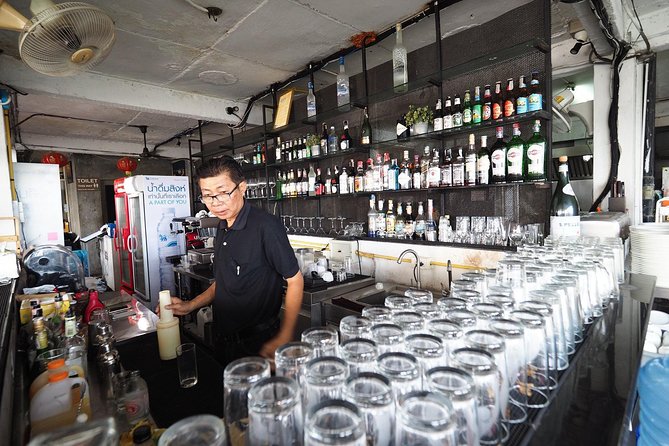
- Earsae Coffee, a 94-year-old coffee shop stop
- Street art in Talat Noi where graffiti overlaps with everyday local life
- Holy Rosary Church (Kalawar Church) on the Chao Phraya River’s eastern bank, tied to a Portuguese church from 1786
Why Talat Noi is the Chinatown detour worth your time
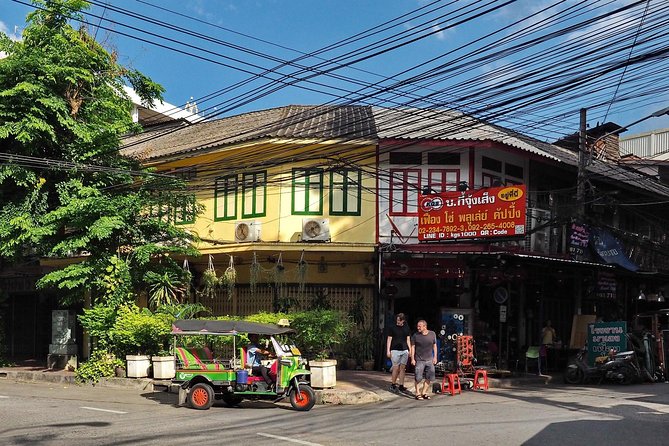
Bangkok’s Chinatown gets most of the attention, but Talat Noi is where I’d send you if you want the neighborhood’s layers. This area predates the founding of Bangkok, and it functioned as the city’s first port, the place where immigrants landed and started new lives. That matters, because it turns what could feel like just another tourist loop into a place with a timeline.
What you’ll learn here is that Talat Noi was never one single community. Early Portuguese settlers came from Ayutthaya and, later, other groups followed, including Chinese, Vietnamese, and Khmer residents. When you connect that history to the places you visit, the sights stop feeling random. They start feeling like evidence.
You also get a nice mix of the sacred and the everyday. One stop is about prayer and faith, another is about local coffee and street life, and another is about a church that reminds you Catholic Europe once had a foothold here. That blend is exactly why this tour is a smart way to understand Chinatown beyond storefronts.
Deeper into old Bangkok
- From Bangkok: Ayutthaya Historical Park Guided Day Trip
★ 4.6 · 3,020 reviews - UNESCO’s Ayutthaya Historical Park: Full-Day Tour from Bangkok
★ 4.5 · 1,559 reviews - From Bangkok: Historical Day Tour to River Kwai
★ 4.6 · 868 reviews
Getting oriented: meeting on Charoen Krung, ending at River City Bangkok
The tour meets at 552 ถ. เจริญกรุง in Pom Prap Sattru Phai, then finishes at River City Bangkok in Talat Noi, near Soi Charoen Krung 24. The start time is 3:00 pm, which is a practical slot if you like exploring in the later afternoon and still having time for dinner afterward.
You’ll also have a mobile ticket, which is one less thing to manage. And since it’s described as near public transportation, you’re not stuck with the headache of trying to cross Bangkok without options.
For your day planning, I’d treat this as an “early evening anchor.” Once you’re done, River City Bangkok is a convenient place to continue on your own, whether you want river views, a meal, or a new neighborhood.
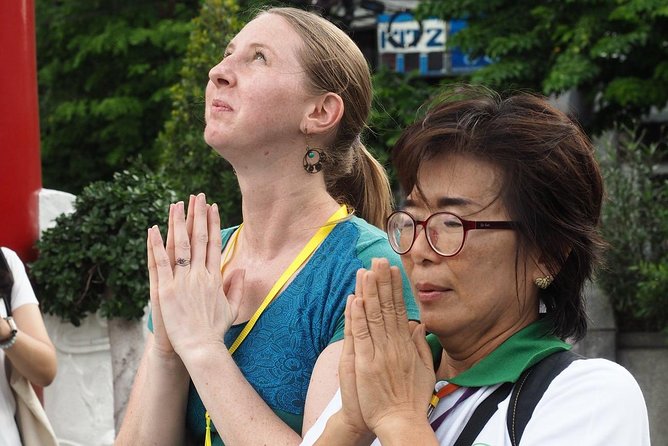
Stop 1, Kuan Yim Shrine (Thian Fa Foundation) and the 900-year-old Guan Yin
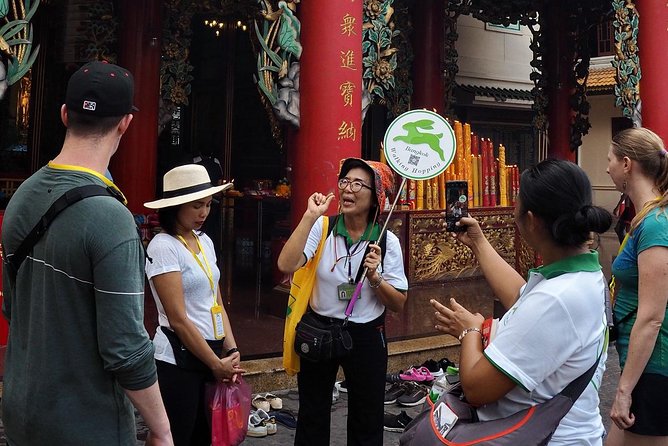
This is the kind of stop that changes the whole mood of your Chinatown visit. At Kuan Yim Shrine, also connected with the Thian Fa Foundation, you’ll meet a side of the neighborhood that feels deeply local. The main focus is Guan Yin, the Chinese Goddess of Mercy, and the statue is said to be 900 years old, positioned on the altar inside the shrine.
What I like about starting here is how it sets context. Before you walk past walls and churches, you’re reminded that this area has long served communities that came seeking safety, new homes, and spiritual grounding. And because the shrine draws thousands of locals who come to pray, you’re not just looking at a museum object. You’re watching a living practice.
Practical tip: keep your phone away until you’re sure it won’t interfere with worship. If you’re photographing, keep it respectful and low key. You’ll get more out of the moment if you treat it like a place where people are doing something meaningful, not just sightseeing.
Time on this stop is about 30 minutes, which is just enough to understand what you’re seeing and then move on without losing momentum.
Stop 2, Talat Noi wall art plus Earsae Coffee, 94 years old
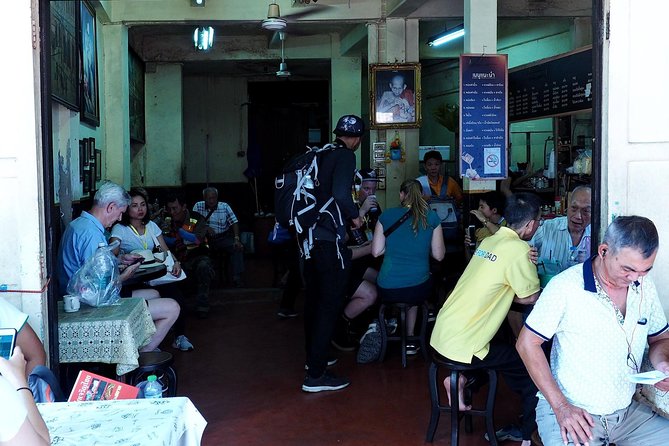
After the shrine, you shift into street-level Talat Noi. This part focuses on Talad Noi wall art, and you’ll also get a stop at Earsae Coffee, a 94-year-old coffee shop. That short coffee moment matters more than you might think.
A neighborhood story sticks when you experience more than one pace. Coffee shops are where regular people pause. A long-running place like Earsae Coffee is one of those “how has this area survived?” answers you can feel with your senses, even if you’re not tasting something specific as part of the tour.
The wall art stop also helps you read Talat Noi as a layered place. Graffiti here is not just decoration. It’s a visible, modern layer laid over a neighborhood that has been shaped by migration and trade for a long time. You’ll likely notice how the art coexists with everyday lanes instead of replacing them.
This stop runs about 20 minutes, so I’d treat it as a quick sensory reset. You’re meant to look, listen, and take notes on what feels different about Talat Noi compared with the broader Chinatown atmosphere.



Stop 3, Talat Noi wall art: why locals keep their speech, food, and beliefs
This is where the tour leans harder into Talat Noi’s cultural identity. You’ll spend about one hour on Talad Noi wall art and the idea that the area functions like a living timeline.
Today, Talat Noi is often described as a cultural attraction, but the key point you’re given is that locals still maintain their ways of speaking, their food, and their folk beliefs in the patterns they’ve held for generations. Then you look around and see how that continuity meets the present-day scene, including graffiti that’s popular with teenagers and hipsters.
I like framing it this way for you: street art gives you a shortcut to emotions. It tells you what people are talking about, wearing, celebrating, or resisting. When the tour explains that the older community customs are still present, the walls become a conversation between past and present.
Possible drawback to consider: if you’re expecting only classic temples and no modern street culture, you may find this portion more “neighborhood observation” than “big landmark.” That’s not a flaw, it’s a choice in focus. Talat Noi is a place where you learn by watching daily life.
Stop 4, Holy Rosary Church (Kalawar Church) and the Portuguese 1786 connection
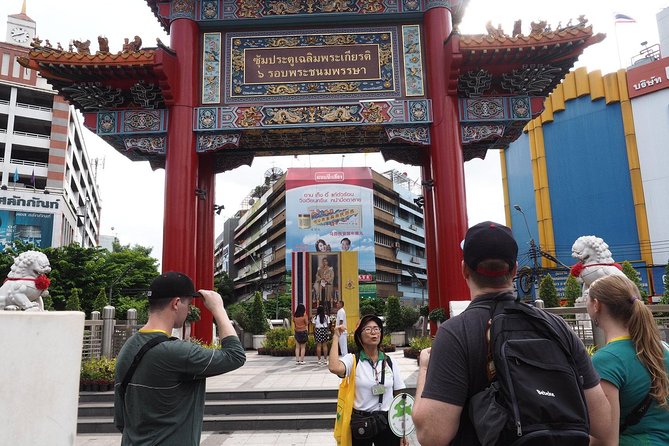
The last stop is Holy Rosary Church, also called Kalawar Church. You’ll learn it’s a Roman Catholic church in Bangkok, located in Samphanthawong District on the eastern bank of the Chao Phraya River.
This is the stop that ties the earlier history together in a satisfying way. The neighborhood’s story includes Portuguese settlers from Ayutthaya, and they built a Portuguese church in 1786. Today, you know it through the Holy Rosary Church identity, with a Thai name referenced as Wat Kalawa.
For me, the reason this matters is simple. Bangkok looks overwhelmingly Buddhist and Thai in many areas, but the city’s history is bigger than one cultural lens. When you walk into a church with Portuguese-era roots in a Chinatown-adjacent neighborhood, you feel how trade, migration, and survival made Bangkok into a crossroads.
Practical tip: dress modestly. Churches tend to be strict about covered shoulders and respectful clothing, even for casual visitors. Keep your behavior calm and quiet, and you’ll get the full respect of the space.
This stop runs about 30 minutes, and that pacing is useful. You finish with a powerful anchor, then you’re out at River City Bangkok, ready to end your day without rushing.
How the 3-hour pace fits first-time Bangkok days
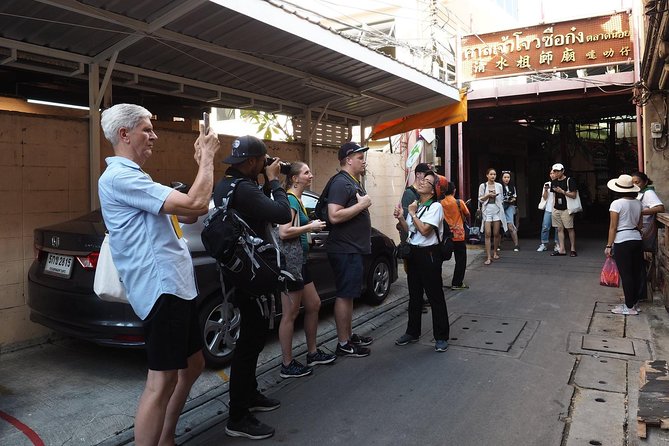
This tour is about three hours total, with short chunks at each major stop: 30 minutes, 20 minutes, one hour, and 30 minutes. That structure helps you because Chinatown can be overwhelming if you let it become a free-for-all.
Instead, you get a guided sequence that moves between:
- a major spiritual landmark,
- a classic local coffee moment and street art,
- a longer street-art and culture walk,
- and a historic church tied to Portuguese roots.
Also, the group size is capped at 8 travelers. That matters for real life. With a small group, questions don’t vanish into the air. And the better the guide, the more you learn in a short time.
From what’s shared about the tour experience, the guide can be very responsive and question-friendly. In one case, the guide named Kaew stood out for answering lots of questions and making the history feel usable, not just recited. Even if you do not get the same guide, you can still expect the tour style to support discussion.
If you’re on your first Bangkok trip, this is a good “set the scene” activity. If you’re returning and want something more unusual than the usual temple list, Talat Noi and its Portuguese-Chinese-Vietnamese-Khmer layers give you that change of flavor.
Price and value: what $78.73 buys you in Talat Noi
The price is $78.73 per person for a 3-hour guided outing, and the big value point is that admission tickets are included at the stops you visit. That means you’re paying for more than a walk. You’re paying for access and interpretation at the shrine and church, plus the structured time at Earsae Coffee and the wall-art areas.
In plain terms, you’re buying:
- local historical context that helps you connect the dots,
- a paced route that avoids decision fatigue,
- and included entry where it counts.
Will it feel expensive if you’re used to cheap DIY sightseeing? It might. But Bangkok can be sneaky. Lost time, crowded lanes, and confusing logistics add up. A guided, small-group visit that already builds in the main stops and entries often ends up being good value, especially when your time is limited.
If you’re traveling solo and prefer to spend every baht yourself, you could DIY this area. But if you want the story made clear without guessing, the guided format justifies the price.
Who should book this Talat Noi Chinatown tour?
Book this if:
- you want Chinatown history beyond stereotypes,
- you like a mix of sacred sites and street-level culture,
- you enjoy street art when it’s tied to real community meaning,
- you want included admissions and a guided pace in about half a day.
Skip it if:
- you’re only interested in markets and shopping time,
- you hate walking and prefer long indoor museum sessions,
- you want a full-day food crawl with lots of repeated stops.
This tour is also a strong match for couples and small friend groups. With a max of 8, it feels social but not chaotic.
Should you book it? My practical take
I’d recommend booking this Talat Noi Chinatown walk if you want Bangkok to feel like a story you can follow. The standout ingredient for me is how the tour connects multiple eras and communities, from Portuguese church roots tied to 1786 to the spiritual draw of Guan Yin inside Kuan Yim Shrine.
It also works well if you like “why does this place exist?” moments. Talat Noi’s identity as a first port neighborhood and immigrant landing zone is the kind of context that makes the streets make sense.
One last check: because it starts at 3:00 pm, make sure it fits your energy level and dinner plans. Wear comfortable shoes, bring something light for the afternoon, and be ready for a route that balances history, prayers, and the visual language of street art.
If that sounds like your kind of Bangkok, this is an easy yes.
FAQ
How long is the tour?
The tour lasts about 3 hours.
How much does it cost?
It costs $78.73 per person.
What’s included in the price?
Admission tickets are included for the stops on the route.
When does the tour start?
The start time is 3:00 pm.
Where does the tour start and end?
It starts at 552 ถ. เจริญกรุง in Pom Prap Sattru Phai and ends at River City Bangkok, Soi Charoen Krung 24, in Talat Noi.
Is there a mobile ticket?
Yes, the tour uses a mobile ticket.
What group size should I expect?
The tour has a maximum of 8 travelers.
Is this tour accessible for most people?
Most travelers can participate.
What is the cancellation policy?
You can cancel for a full refund up to 24 hours in advance of the experience start time.
The Old Bangkok, Toured Properly


More Tour Reviews in Bangkok

Just In: Fresh Bangkok Reviews



Historical Tours, compared.
 ★ 4.6From Bangkok: Ayutthaya Historical Park Guided Day TripFrom $283,020 reviews
 ★ 4.5UNESCO’s Ayutthaya Historical Park: Full-Day Tour from BangkokFrom $281,559 reviews
 ★ 4.6From Bangkok: Historical Day Tour to River KwaiFrom $51868 reviews
 ★ 5.0Historical City of Ayutthaya – Unesco Full Day Tour From BangkokFrom $41847 reviews
 ★ 5.0Private Excursion to Floating Market and Ayutthaya World HeritageFrom $184515 reviews
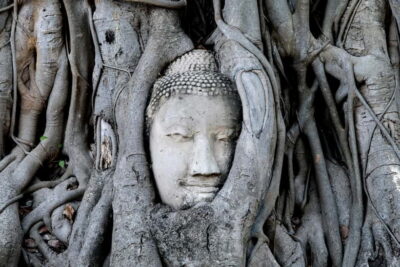 ★ 4.5From Bangkok: Ayutthaya Heritage Tour with Sunset Boat RideFrom $32490 reviews
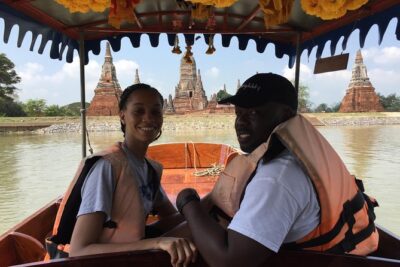 ★ 5.0Private Excursion to Ayutthaya, UNESCO World Heritage site with Boat TourFrom $159460 reviews
 ★ 4.5River Kwai Day Tour from Bangkok – History, Scenery & CultureFrom $97206 reviews
Browse the lists this tour appears in